Caltech’s Einstein Papers Project Is a Window Into Einstein’s Mind
In a small building near Caltech, scholars have spent decades collecting and annotating everything Albert Einstein wrote, from physics breakthroughs to letters to Freud and Gandhi. Much of it is free online.
Updated
We wrote a piece a while back about the three winters Albert Einstein spent in Pasadena, a little-known chapter in the life of a man who changed how we understand the universe. Einstein really liked it here. It’s easy to picture him wandering the streets lost in thought, or laughing it up with his friend Charlie Chaplin, two geniuses, one in physics and one in comedy.
Einstein’s connection to Pasadena didn’t end when he left. It lives on in a small, nondescript building near Caltech, where a team of scholars spends its days with his papers.
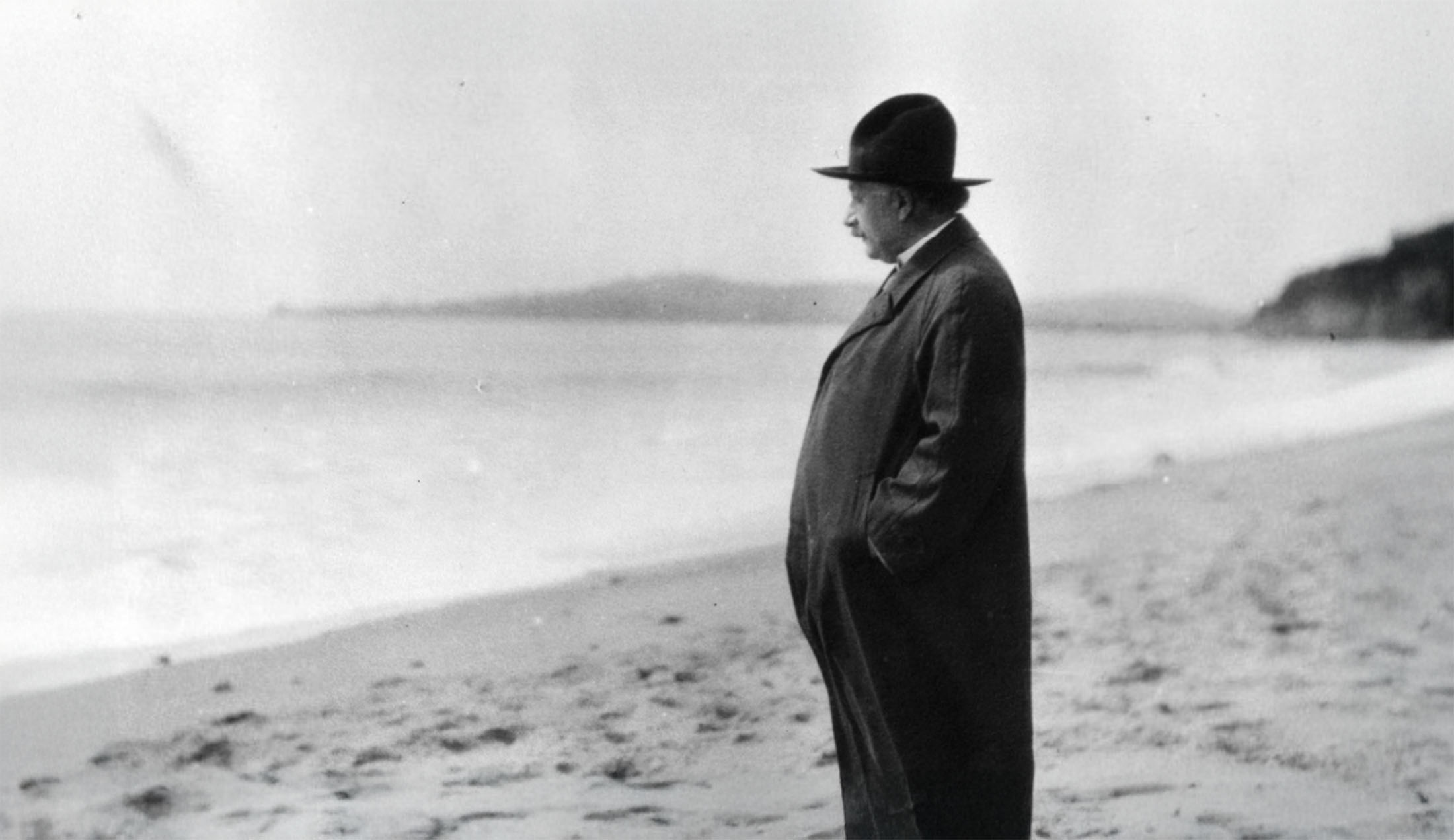
 Einstein at the Santa Barbara home of Caltech trustee Ben Meyer on Feb. 6, 1933.
(The Caltech Archives)
The Einstein Papers Project (EPP) is one of the biggest editing projects in the history of science. Since the late 1970s, scholars have been collecting, translating and annotating every significant document Einstein left behind. It’s based at the California Institute of Technology, working with Princeton University Press and the Hebrew University of Jerusalem, which holds the original manuscripts.
The Harvard physicist and historian Gerald Holton was one of the first to push for a complete collection of Einstein’s scientific papers, letters and musings. That became the effort to publish The Collected Papers of Albert Einstein, now 17 volumes and counting. The goal is everything, from his student notebooks to the letters he wrote at the end of his life.
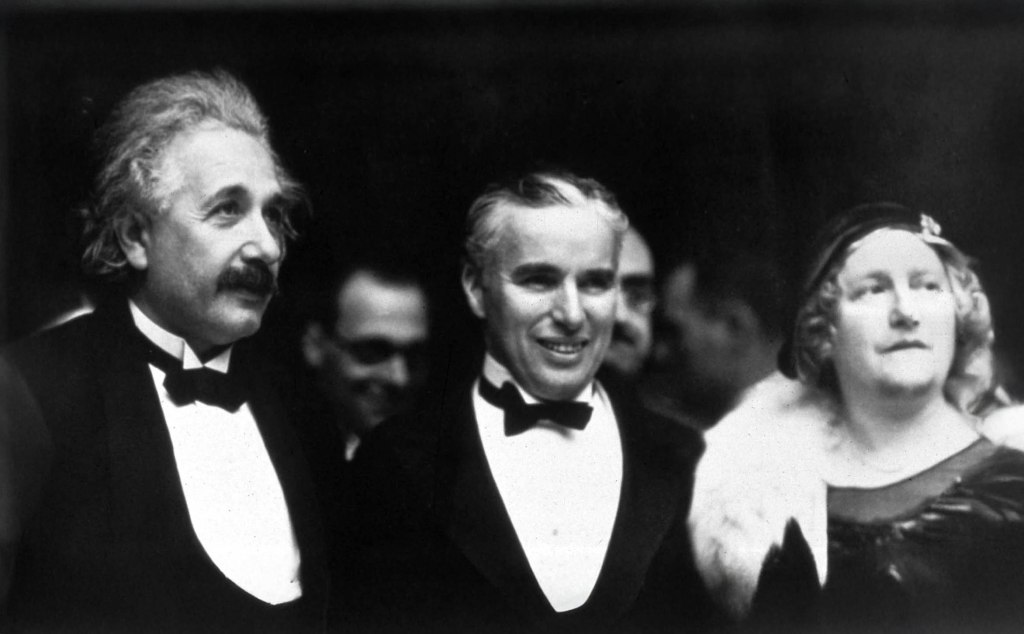 Albert Einstein and Charlie Chaplin during the premiere of the film ‘City Lights’. (Wikipedia)
It’s a treasure trove. There are the famous 1905 “miracle year” papers that helped lay the foundations of quantum mechanics, a theory Einstein later spent decades arguing with, and special relativity. There are handwritten drafts, scribbled calculations and long exchanges of letters with world leaders and old friends. The documents show how science actually happens: false starts, doubts, rewrites and the occasional flash of brilliance.
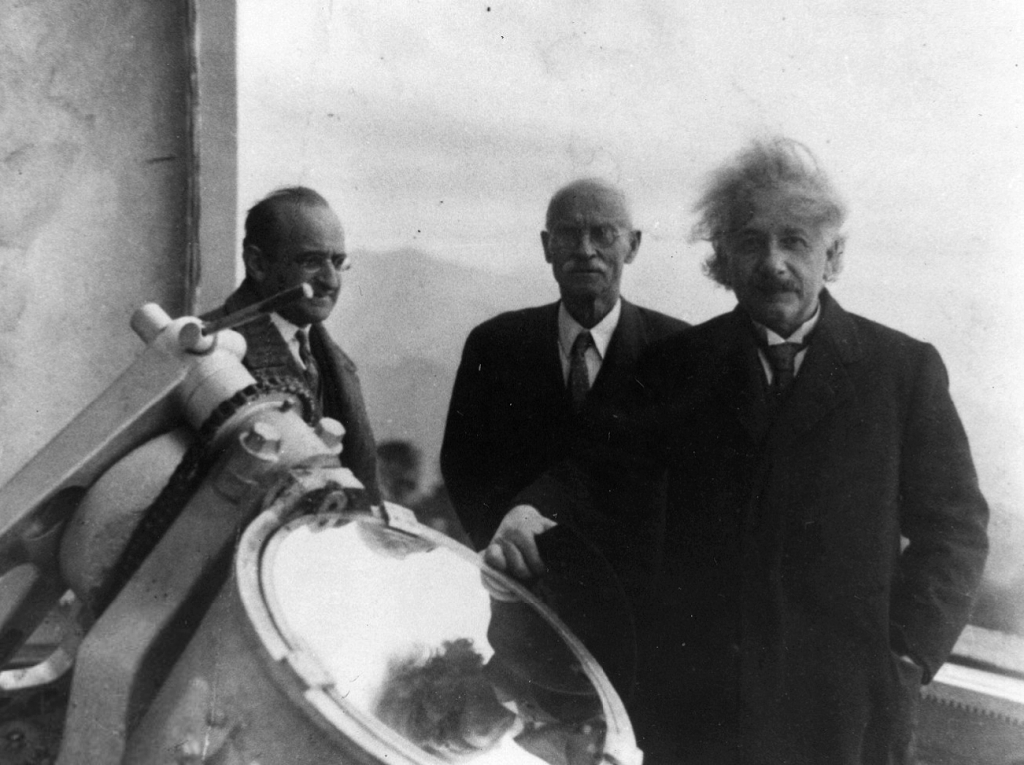 At the Mount Wilson Observatory with the Austrian mathematician Walther Mayer, left, and Charles St. John of the observatory staff. (The Caltech Archives)
Some of the most interesting material is about Einstein’s long hunt for a unified field theory, a single theory combining gravity and electromagnetism. He never found it, but you can watch him trying, for decades.
The papers also show Einstein the person: the political thinker, the pacifist, the refugee, the celebrity. He cared a lot about justice, writing about anti-Semitism in Europe and segregation in the United States. He exchanged letters with Sigmund Freud about why people go to war, with Mahatma Gandhi about nonviolence, and with presidents and schoolkids alike.
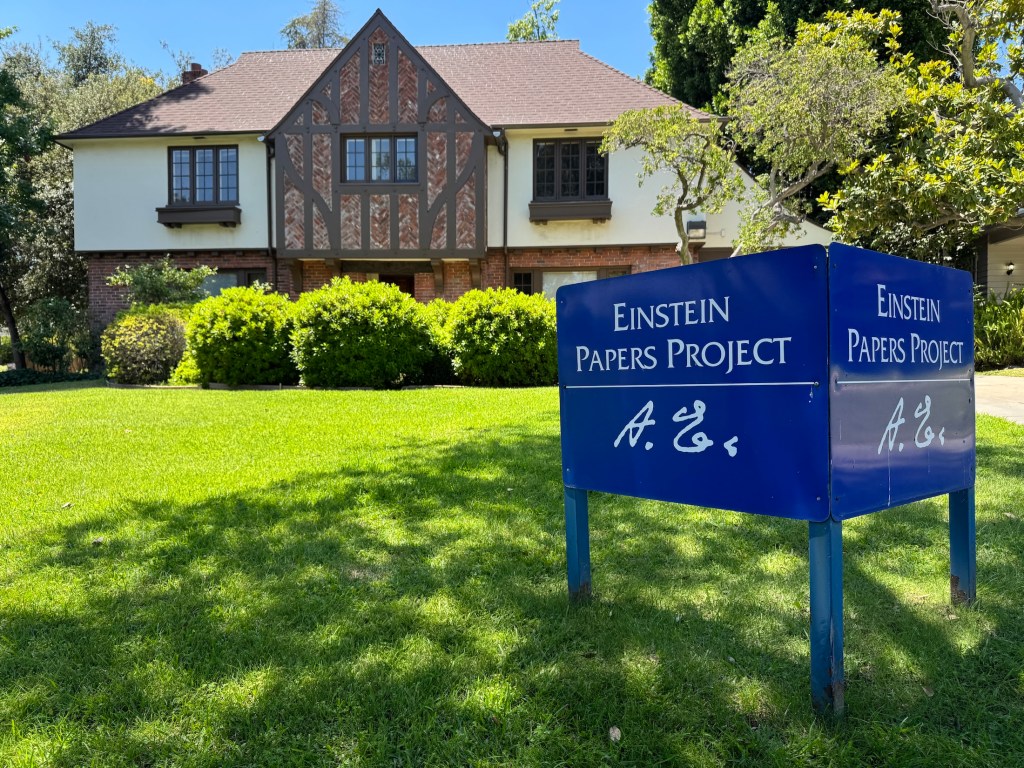 The Einstein Papers Project home near Caltech in Pasadena (Photo: Erik Olsen)
Best of all, much of it is now online for free. Thanks to Princeton University Press, a large part of the Collected Papers is available through the Digital Einstein Papers website, where students, teachers, historians and science nerds anywhere can browse Einstein’s documents, many translated and annotated. The latest release, Volume 17, covers June 1929 to November 1930, when Einstein was mostly in Berlin, traveling around Europe to conferences and to collect honorary degrees. It ends just before his first trip to Pasadena. Princeton has a nice story on of that particular volume by project editor Josh Eisenthal.
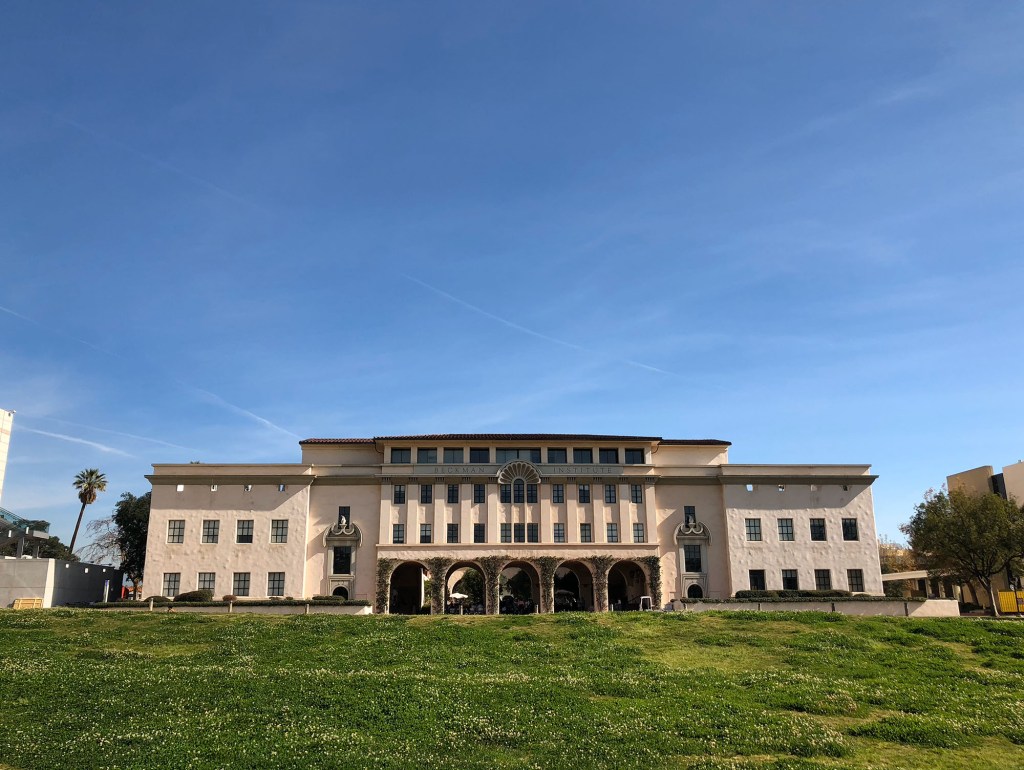 The California Institute of Technology, CalTech (Photo: Erik Olsen)
For historians, it’s a goldmine, and not just about Einstein. His collaborations, rivalries and reactions to world events open a window on the whole 20th century. And there’s plenty of fun stuff too: his love of music, his jokes and his habit of thinking in pictures.
It makes sense that it’s at Caltech. As of January 2025, there were 80 Nobel laureates who have been affiliated with Caltech, the most per capita of any institution in the country. Einstein spent three winters on that campus. It’s nice that part of him is still there.
More California science, photography and wild places on Instagram @californiacuratedus