
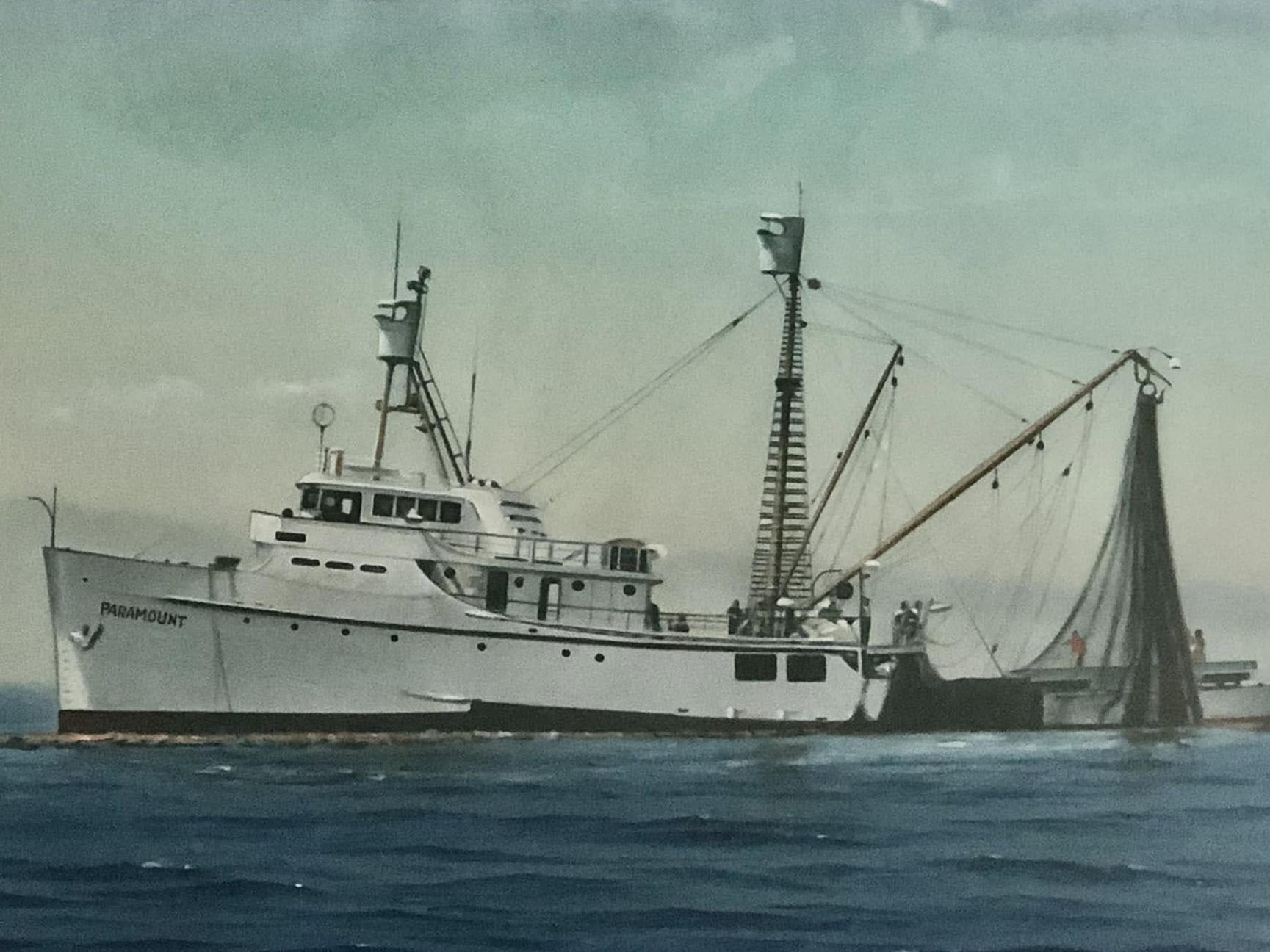
The Tuna Wars That Helped Redraw the World’s Oceans
How San Diego’s tuna fleet became caught in an international battle over fishing rights that helped redraw the map of the world’s oceans.
I’ve been reading a lot lately about how we’ve exploited California’s natural resources, from redwoods and gold to sea otters, sardines, and tuna, often pushing them to the brink of collapse. It’s what my former New York Times colleague Andy Revkin recently called the “enough problem” in a conversation we had here on Substack. It’s closely related to the tragedy of the commons, a concept made famous by ecologist Garrett Hardin: When a resource is available to everyone, at what point do we decide we’ve taken enough?
That question was at the heart of a fascinating international dispute in the 1970s, which I came across reading Joseph Ogilvy’s excellent book Tin Can Coast. How did San Diego’s powerful tuna fleet become caught in a battle over fishing rights that helped redraw the map of the world’s oceans?
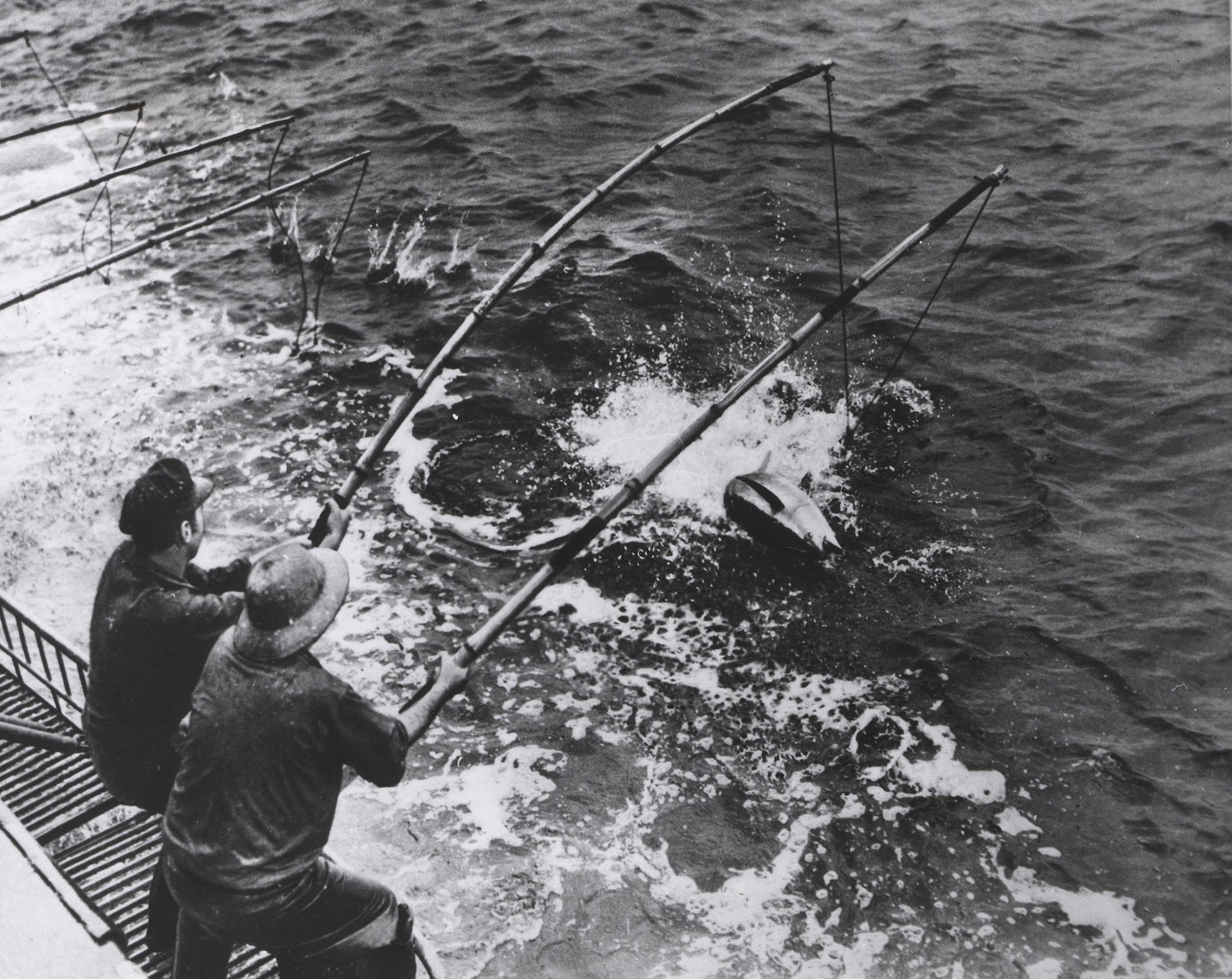
Fishermen landing a two-pole tuna from a live-bait boat in the eastern tropical Pacific Ocean. (NOAA Central Library Historical Fisheries Collection)
By the 1920s, San Diego had become home to a thriving community of Italian and Portuguese fishermen. Many had come from the fishing villages of Liguria, along Italy’s northwest coast, and the Azores, a Portuguese archipelago in the Atlantic. They had generations of seafaring experience between them and came to dominate San Diego’s rapidly growing tuna fleet, landing mostly albacore and helping turn San Diego into the tuna capital of the world. But as local tuna stocks declined, the fishermen began venturing farther south, motoring thousands of miles in search of the rich tuna grounds off Central and South America.
In 1945, President Harry Truman declared the United States’ rights to the natural resources of the continental shelf and called for greater control over fishing in the waters off its coast. A bunch of other countries with large coastlines soon followed, but went much further. In 1952, Chile, Ecuador, and Peru claimed rights over waters extending 200 nautical miles from their shores. That included all the fish in them. The U.S. refused to recognize those claims. American tuna boats kept fishing in them, and the South Americans reacted aggressively. What followed became known as the Tuna Wars.
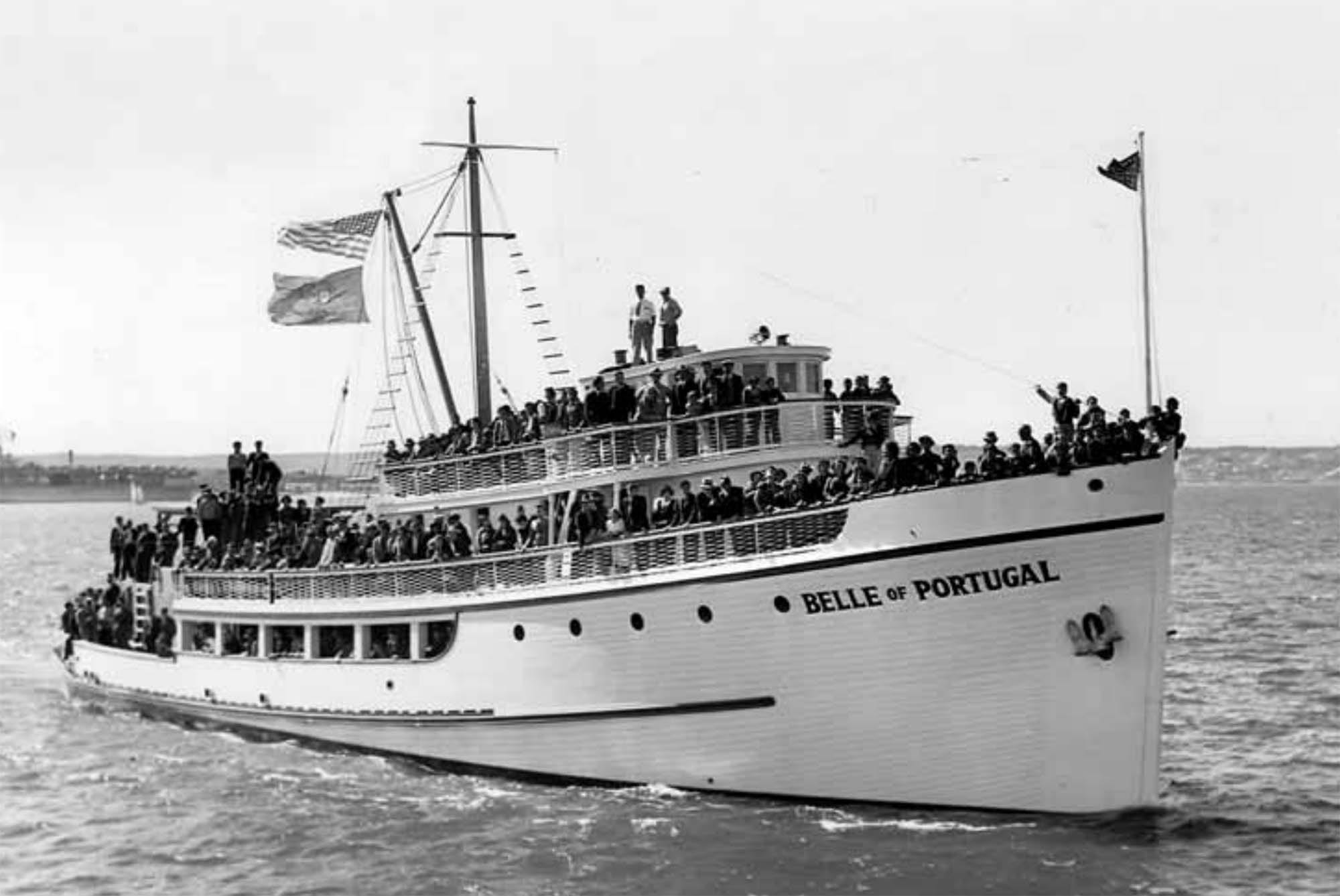 Tuna clipper baitboat Belle of Portugal, built in 1937 at Campbell Machine during WWI. (Photo: Maritime Museum of San Diego)
In 1971, Ecuadorian naval forces seized 23 American tuna boats in an intense 18-day spree. Most of the boats were from San Diego. The boats were fishing between 60 and 120 miles offshore. Ecuador claimed those waters. The United States insisted they were international waters. The fishermen became furious, and so was Washington.
The result was a major international dispute over who had the right to exploit fish in the world’s oceans, and the Southern California tuna boats were at the center of it.
For decades, the oceans had largely been open to anyone who could get to them. Up to that point, most countries claimed territorial waters extending just three nautical miles from shore. Beyond that, foreign fishing fleets were generally free to operate.
It rankled the South Americans that U.S. fishermen were taking millions of dollars’ worth of fish off their coasts, when their own countries didn’t have the tuna fleets to compete.
And so American tuna boats kept fishing. Ecuador and then Peru seized them, imposed fines, and confiscated catches (The U.S. paid the bills). Sometimes there were armed confrontations. (Ironically, some of the Ecuadorian ships had been given to them by the Americans).
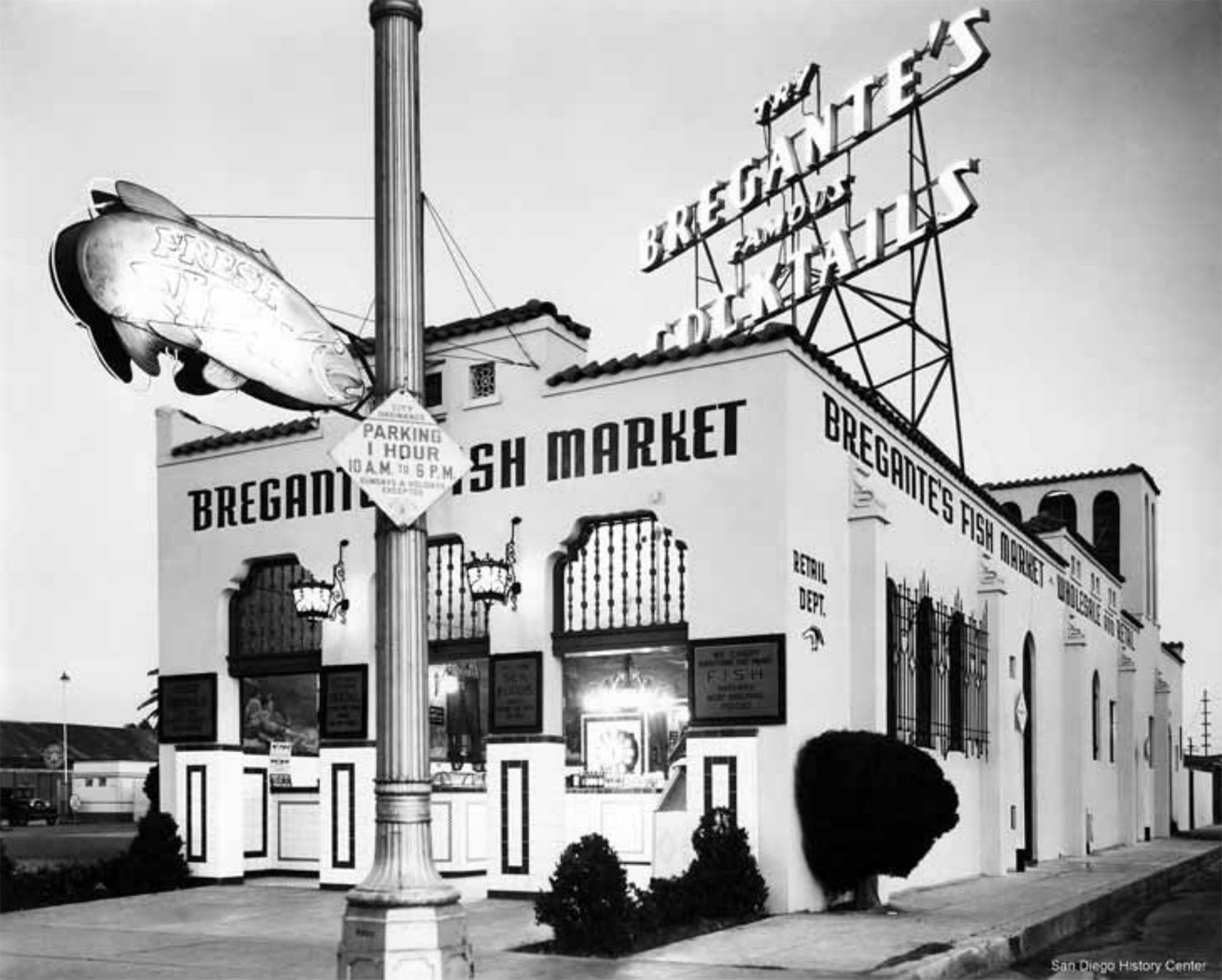 Bregante’s Fish Market, 1938. (Photo: San Diego Historical Center)
There was an odd contradiction in the American position. Washington was protecting the freedom of its fishermen to operate off South America while seeking control over fisheries closer to home. Tuna was the big exception. To protect its powerful tuna industry, the U.S. argued that the fast, migratory fish should be excluded because they crossed international boundaries constantly and no single country should have exclusive rights to them. Remember, these other countries did not have big, expensive tuna fleets at the time.
The 200-mile limit became increasingly embraced by other countries around the world, which began staking their own claims to large stretches of ocean off their shores. It wasn’t just about fish. Offshore oil and valuable minerals were becoming increasingly important to national economies.
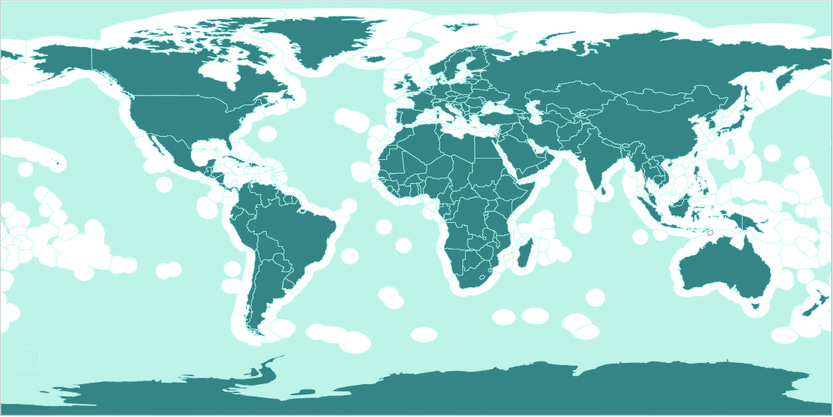
Global map of Exclusive Economic Zones or EEZs.
The dispute helped launch a series of international negotiations over a new Law of the Sea. These eventually produced the United Nations Convention on the Law of the Sea, or UNCLOS, which remains at the heart of today’s debate over deep-sea mining.
The eventual compromise was this: Coastal nations would get 12 nautical miles of territorial sea (about 13.8 statute miles), in which they would have sovereignty, similar to land, although foreign ships would still get the right of passage…what’s called “innocent passage,” meaning foreign ships go through as long as they didn’t do things like fishing, military exercises, or spying. They would also get exclusive economic rights extending 200 nautical miles offshore. Within those EEZs, they controlled fishing and the natural resources, like oil and minerals.
However, there was still a key sticking point for the U.S.: tuna.
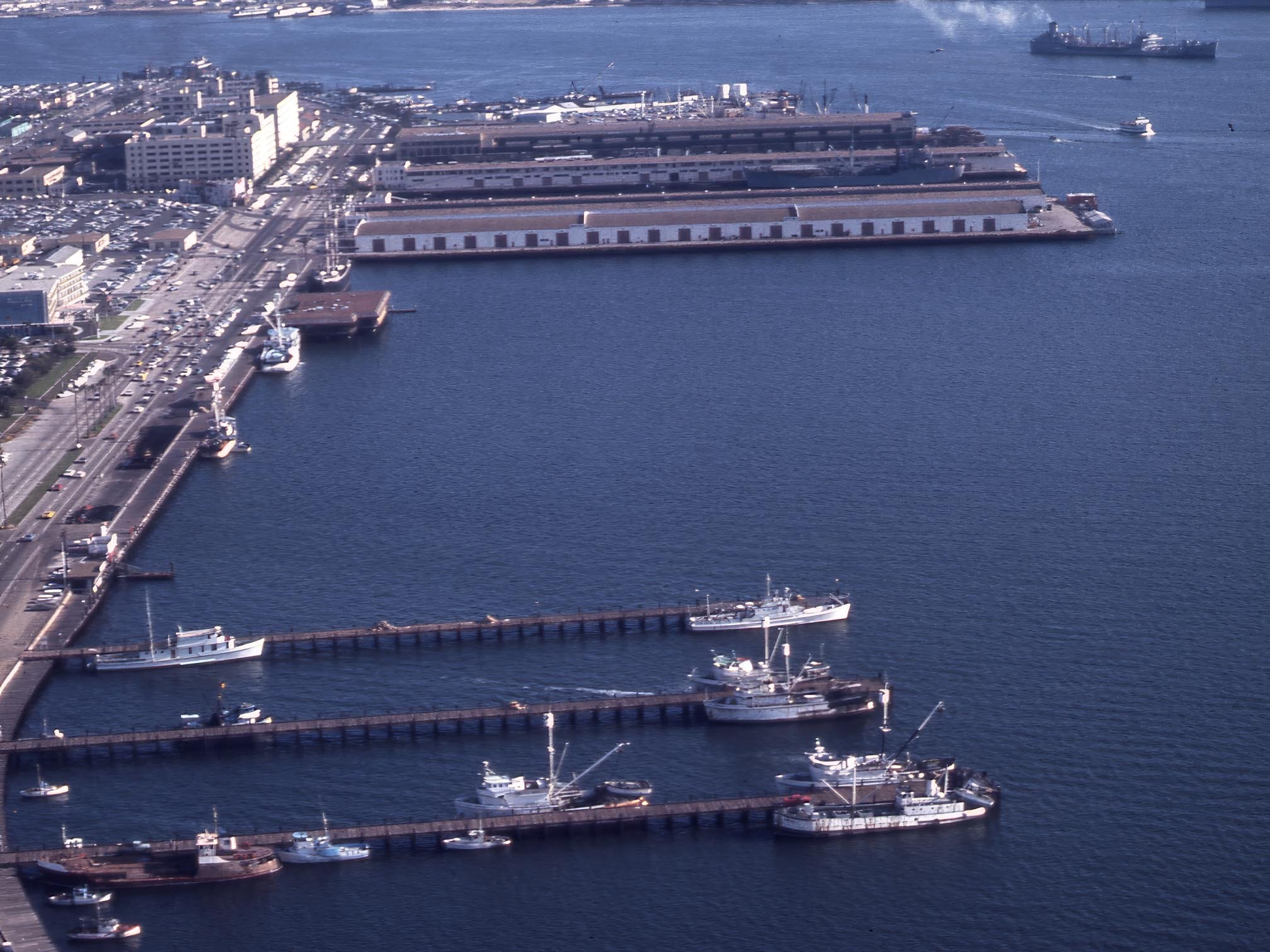
View of Harbor Drive, going south from Hawthorn Street to Broadway Pier, tuna boats docked. San Diego was once the tuna capital of the world. (San Diego archives)
The U.S. demanded that tuna be excluded in order to protect the San Diego fleet. But other countries refused to accept the exemption, and so the final agreement gave coastal nations the right to control tuna fishing within their own 200-mile zones.
The U.S. never joined the Law of the Sea Treaty, mostly over the question of deep-sea mining, which is a very important issue today. But as time passed, San Diego’s tuna industry went into decline. There was increased foreign competition, rising costs, and new stringent restrictions aimed at protecting dolphins, which were being caught and killed in stunning numbers by the increasingly widespread use of purse-seine nets. Fishermen often deliberately surrounded schools of dolphins because yellowfin tuna frequently swam beneath them. Millions of dolphins were killed in the nets.
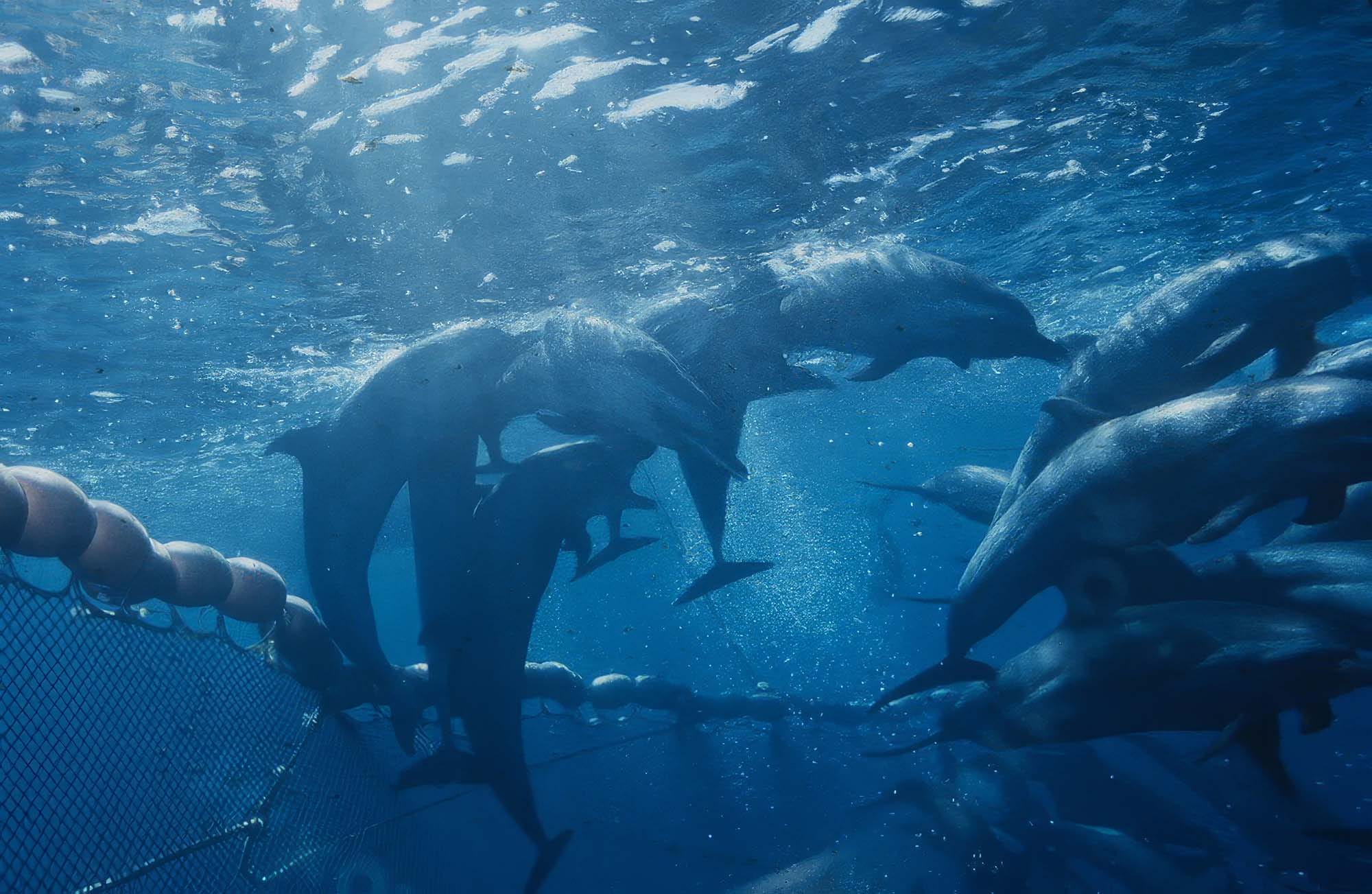 Dolphins caught in purse seine nets. (Photo: NOAA fisheries)
With San Diego’s fleet much diminished, the American position did eventually change. In 1990, Congress passed legislation recognizing other countries’ rights to control tuna within their own 200-mile zones. The U.S. began exercising the same authority over tuna in its own waters in 1992.
As Joseph Ogilvy puts it: “It was the refusal of California’s tuna fishermen to accept the boundary and the insult to national pride that forced the world to confront the question, cementing the line in place.”
And so here we are today, with nearly every coastal country claiming a 200-mile EEZ. It has dramatically changed the world. China and the Philippines are fighting over maritime rights in the South China Sea. Tiny Pacific island nations like Kiribati now earn hundreds of millions of dollars by selling foreign fleets the right to catch tuna in their waters. Iceland fought its own battles with Britain to control the cod fisheries off its coast.
All of this grew out of a much larger struggle over who had the right to exploit the oceans. And remarkably, a fleet of tuna boats from San Diego played an important role in how it all turned out.