Inside a Collection of 117,000 Shells and the World’s Deadliest Snail
Hidden at Occidental College, the Cosman Collection holds nearly 117,000 shells, possible undiscovered species, preserved DNA, and some of nature’s deadliest venom.
Behind a nondescript door in the Bioscience Building at Occidental College is one of the more remarkable scientific collections in Los Angeles. The room, tucked beside the laboratory of biology professor Joseph Schulz, contains cabinet after cabinet filled with seashells. Schulz is the curator of the collection. There are nearly 117,000 specimens in all, collected from the Caribbean, Hawaii, the Gulf of Mexico, the Indo-Pacific, and other waters around the world.
I first became intrigued by the Cosman Collection several years ago, after reading about it online, and reached out to Schultz to see if we could arrange a visit. He graciously offered up a date, and so last week I was joined by my California Curated colleague Tod Mesirow and my son Finn. I came away impressed not only by the astonishing variety of shells in the collection, but also by the fascinating research Schulz and his students are conducting in the lab next door.
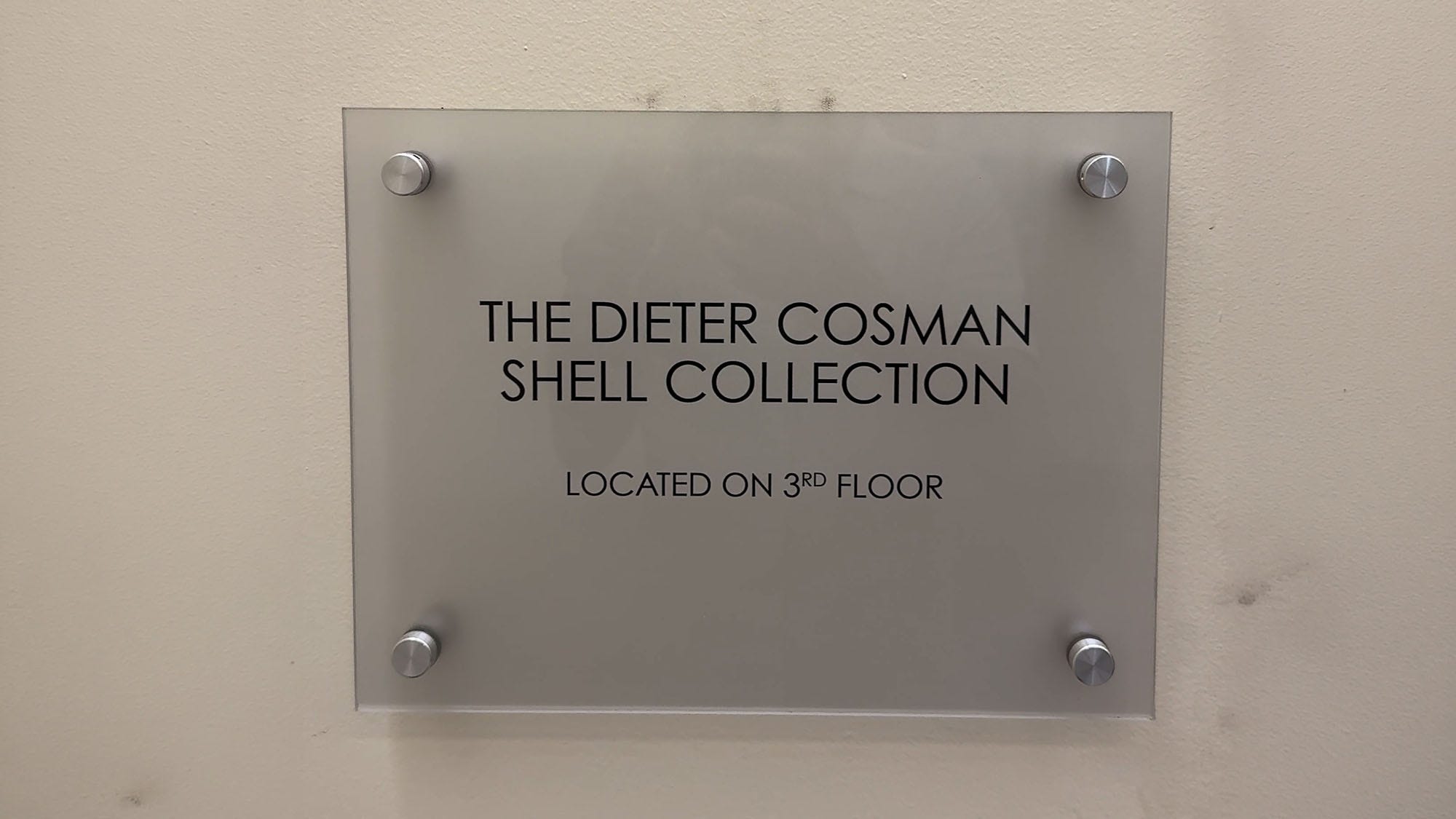 The Cosman Shell Collection is in the biosciences building of Occidental College. (Photo: Erik Olsen)
The collection was assembled by Dieter Cosman, a Swiss-born businessman who spent nearly 50 years diving, dredging and searching the seafloor, sometimes even in a submersible, looking for rare and unusual seashells. Cosman was not a professional scientist. He ran a Florida yacht business. But he approached shell collecting with unusual discipline and tenacity, recording where, when, and sometimes at what depth each specimen was found. That information can be of immense benefit to scientists trying to understand how the world is changing.
“Dieter Cosman had a love for malacology and for finding different types of snail and bivalve species from all over the world,” says Schultz.
When Cosman died in 2012 at the age of 95, his family wanted the collection to remain intact. His oldest son, Ed, had graduated from Occidental, and the family donated the shells to the college in 2014.
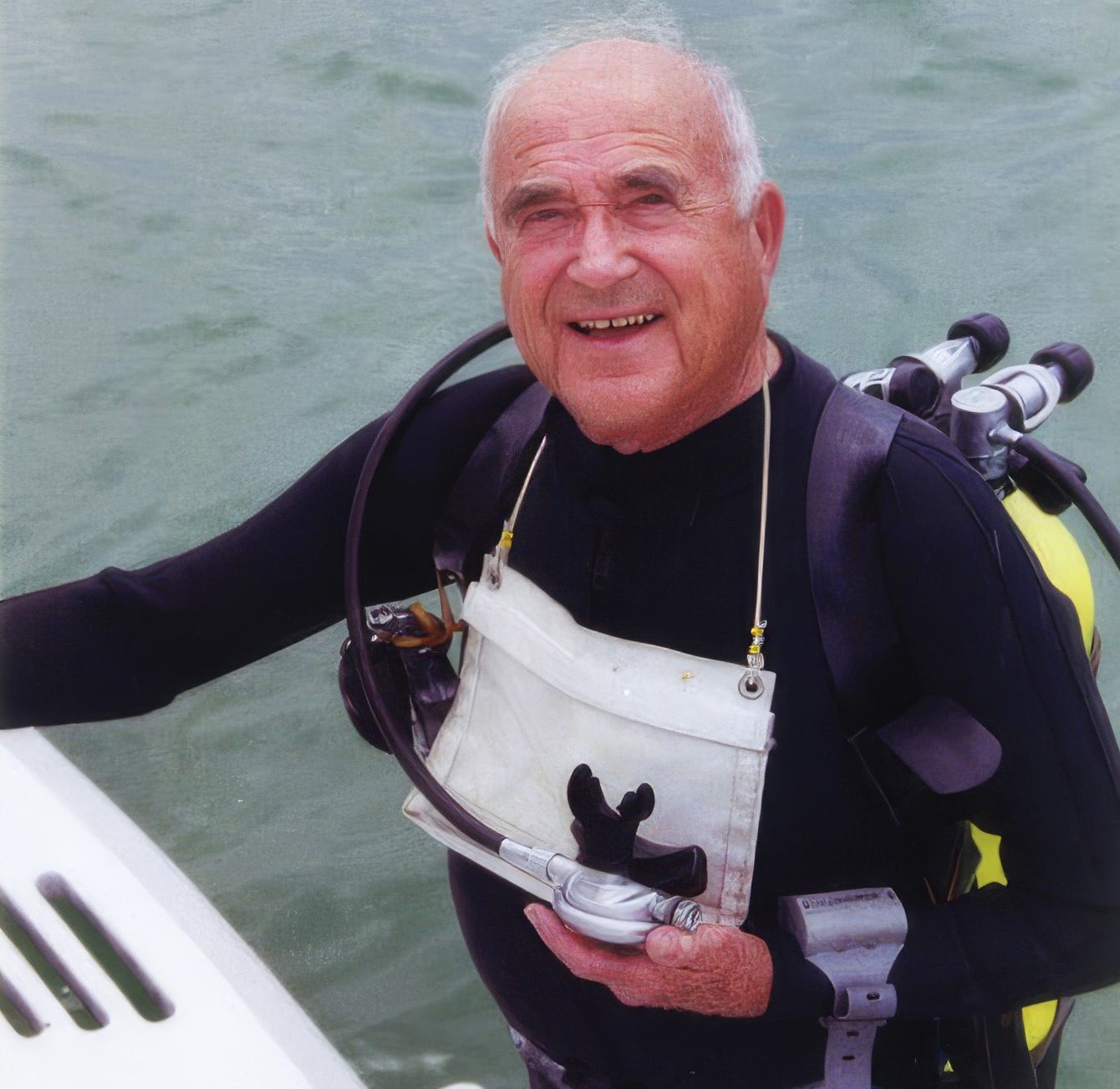 Dieter Cosman. (Photo courtesy of the Cosman family/Occidental College)
Occidental is a small liberal arts college set among the hills of Eagle Rock in northeast Los Angeles. It is not widely known outside California, although Barack Obama attended for two years, from 1979 to 1981, before transferring to Columbia University. The college also has some remarkable scientific departments, particularly in biology, marine science, and natural-history research.
The Cosman collection is not really presented like a museum exhibit (although there is also a small display of some extraordinary-looking shells in the lobby). You enter through the door, and there are tall shelves of shells of various shapes and sizes. This is a bit of an understatement. Some of the shells are really weird. And although it is an official scientific collection, the place is still kind of a working archive. Open one of the vintage slide-out scientific cabinets, and you find drawer after drawer of shells in plastic bags and small containers, many accompanied by Cosman’s original labels. Cosman was analogue.
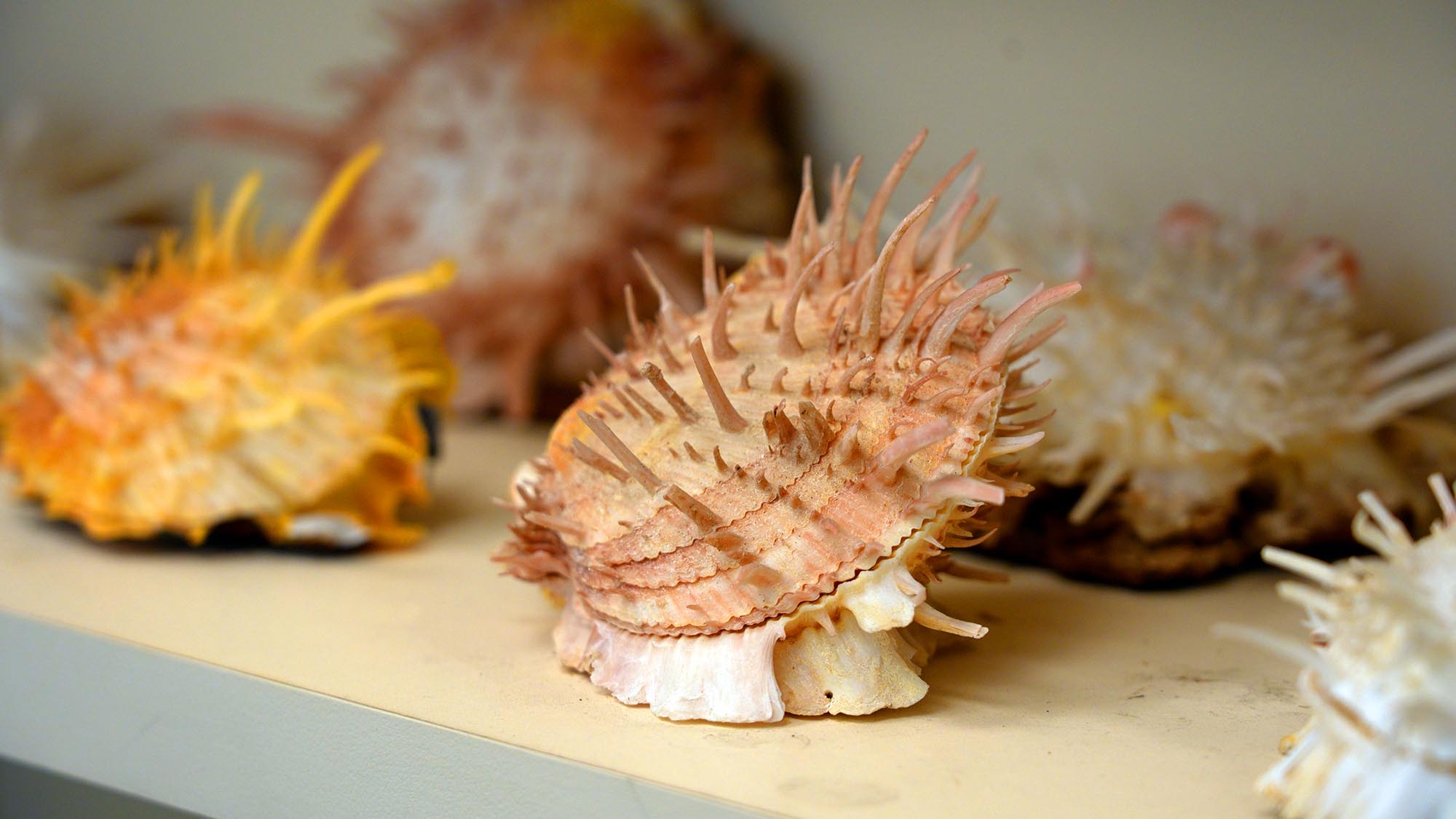
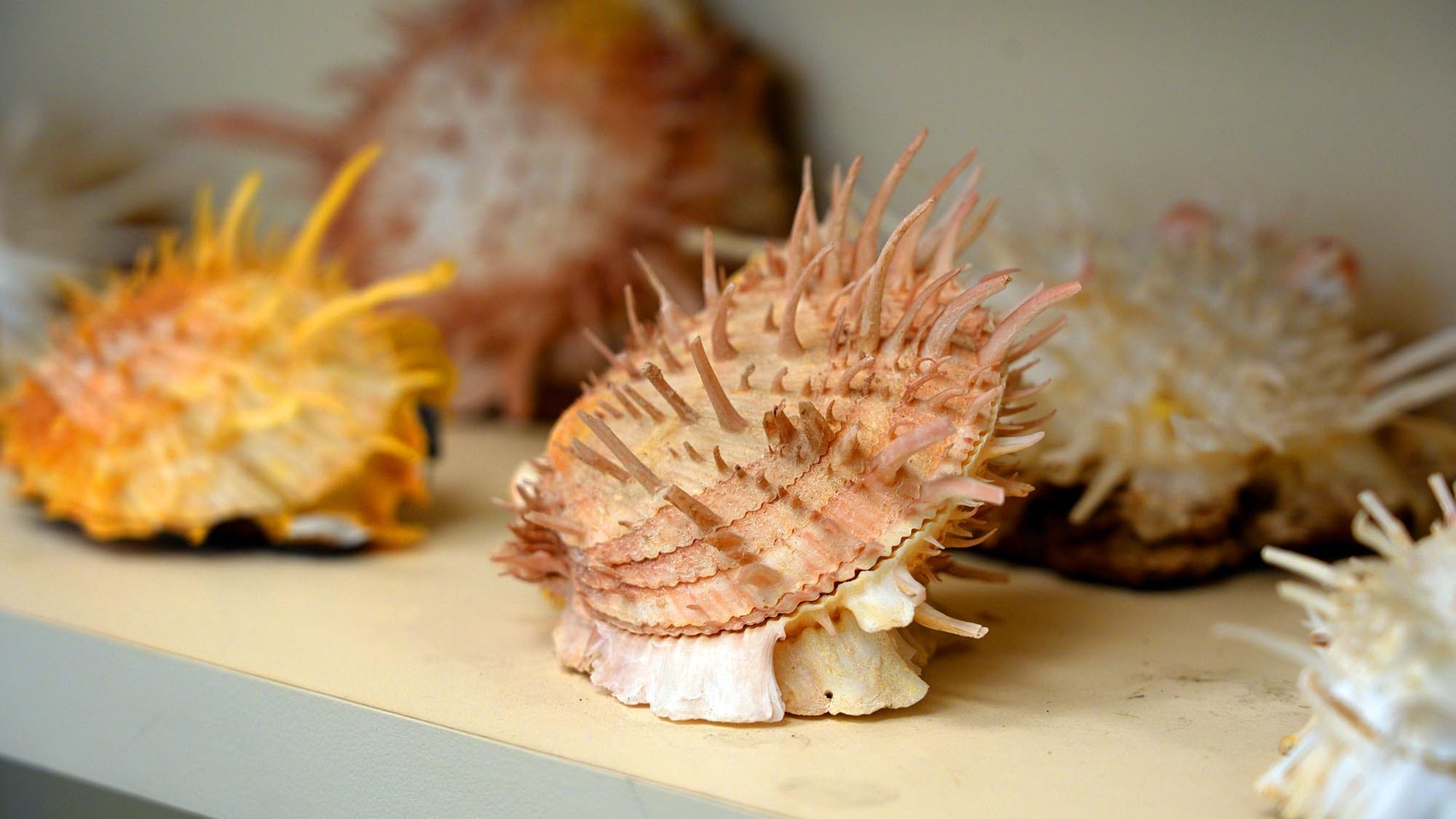
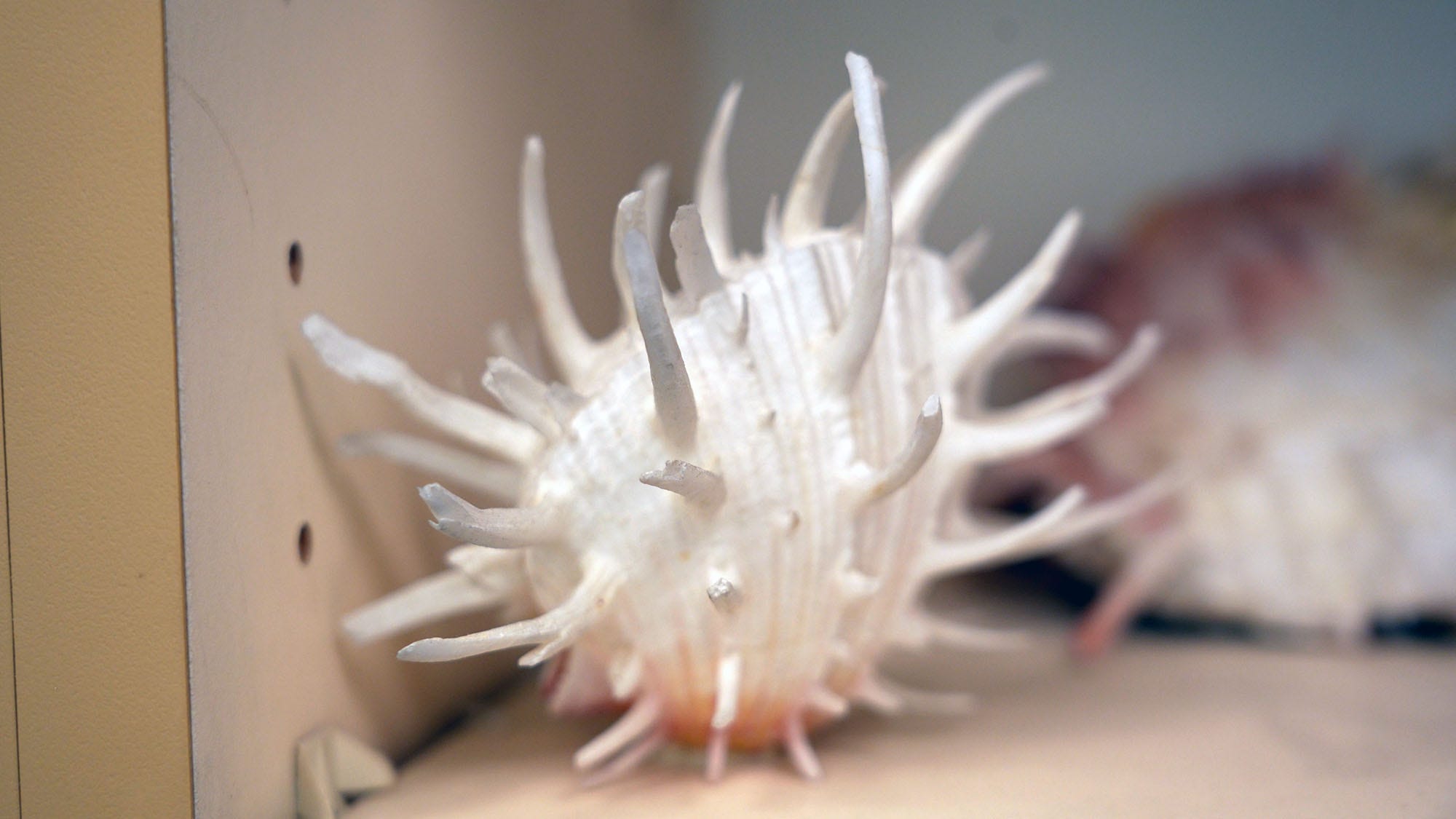 A spiny oyster shell from the genus Spondylus, one of nearly 117,000 specimens in Occidental College’s Cosman Shell Collection. (Photo: Erik Olsen)
“In fact, the entire catalog came on a series of very large Rolodexes,” Schultz told me.
Some shells are large and spectacular. Others are so small you can only see them under a dissecting microscope. Cosman became increasingly interested in these so-called micromollusks later in life, apparently fascinated by their diversity. He dredged sand from the seafloor and searched through it for shells no larger than a grain of sand.
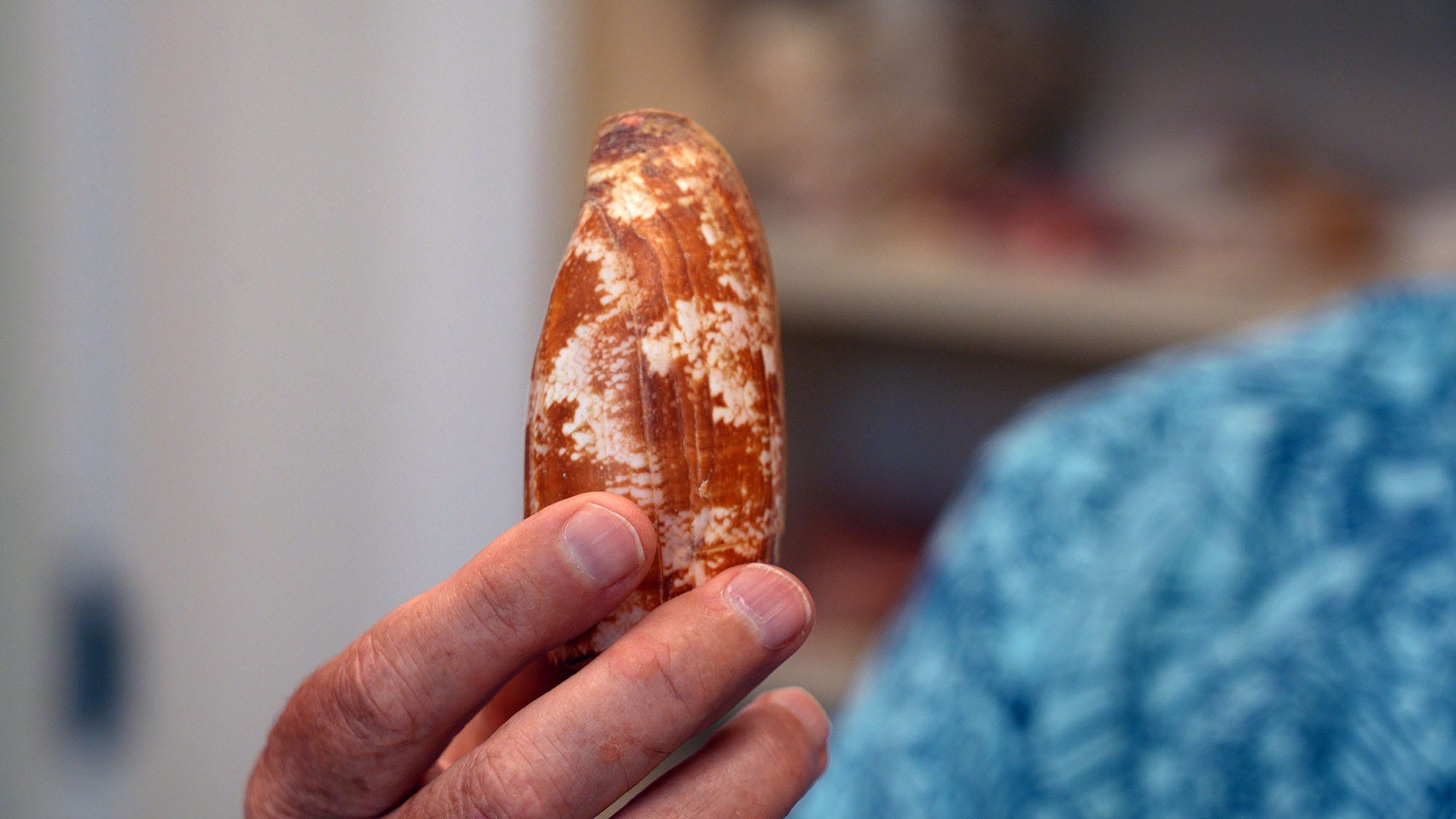 Joseph Schulz holds the shell of a geography cone, Conus geographus, considered the deadliest cone snail in the world. Its living animal can deliver a potentially fatal dose of venom through a tiny, barbed tooth. (Photo: Erik Olsen)
There are shells everywhere. Large, creamy-looking conches and spiny oysters sit on shelves. The latter resemble tiny explosions of calcium carbonate, the mineral from which shells are largely made. Other specimens are scattered around Schulz’s office, alongside books, scientific equipment, and sitting in tiny specimen bags.
The real value of the collection is not simply the shells. It is the information Cosman preserved with them.
“In addition to the specimens in the collection, we have a lot of detailed information about where and when the specimens were collected,” says Schulz. “That gives us a very detailed view of how these animals live and where they live on the planet.”
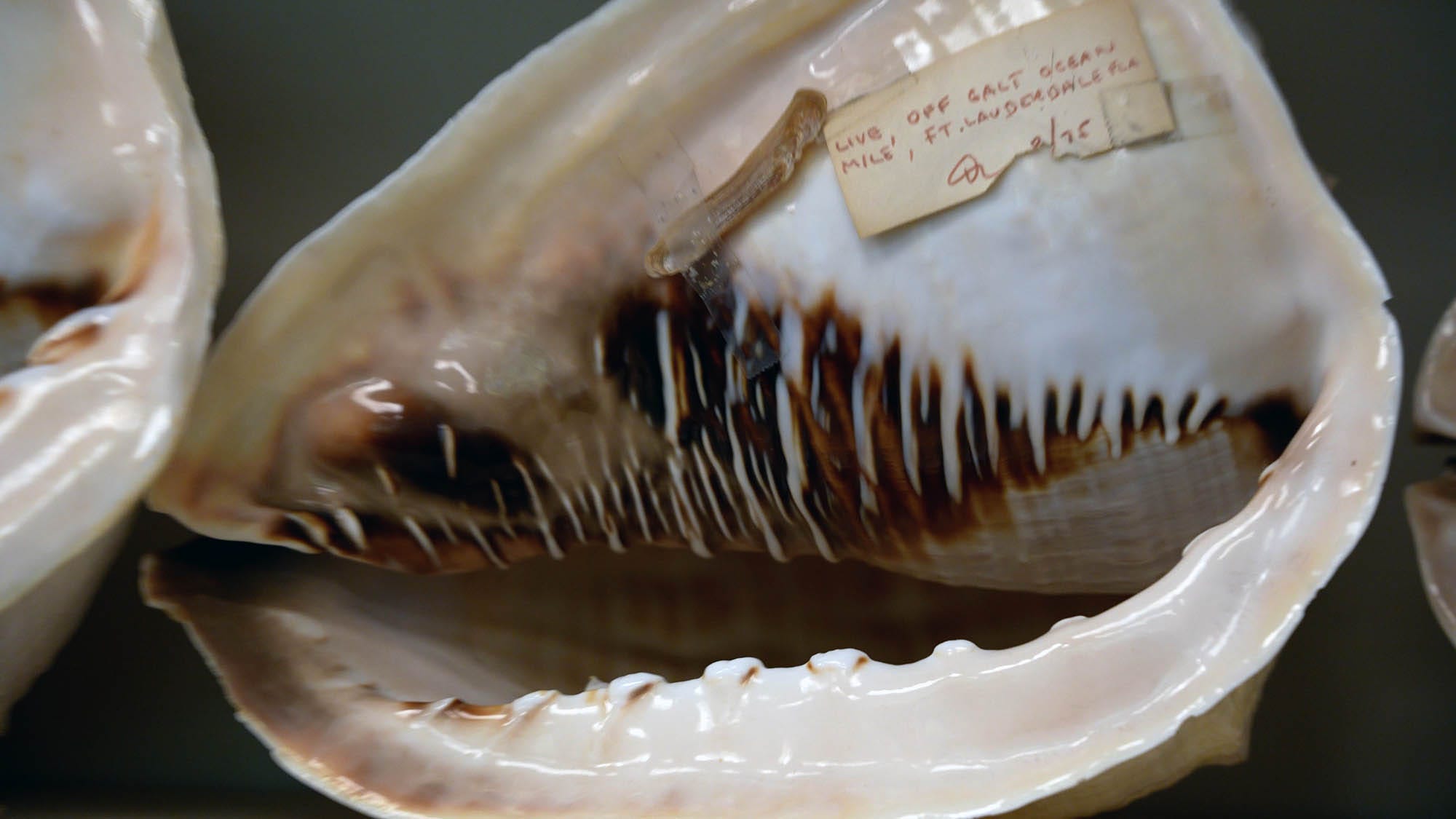 A large helmet shell in the Cosman Collection, still accompanied by Dieter Cosman’s handwritten collecting label. Such records preserve where and when specimens were found, turning individual shells into valuable scientific data. (Photo: Erik Olsen)
Because he returned to some locations repeatedly, the collection contains snapshots of marine communities taken years or even decades apart. Researchers can return to those places and ask whether the same species still live there, whether their shells have changed, or whether warming, pollution, fishing, and development have altered the ecosystem.
And sometimes the shells contain another kind of information.
Cosman generally cleaned them by hand instead of bleaching them. As a result, some still retain bits of dried tissue, including the periostracum, the thin organic coating on the outside of a shell. It’s like a skin, and I did not know it even existed. Schulz and his students have been able to extract DNA from that material and do some remarkable things with it.
“We’ve been able to isolate DNA from specimens in the Cosman Shell Collection, and obtain novel neurotoxin-encoding sequences, synthesize those novel neurotoxins and test them in the lab on neurons,” Schulz says.
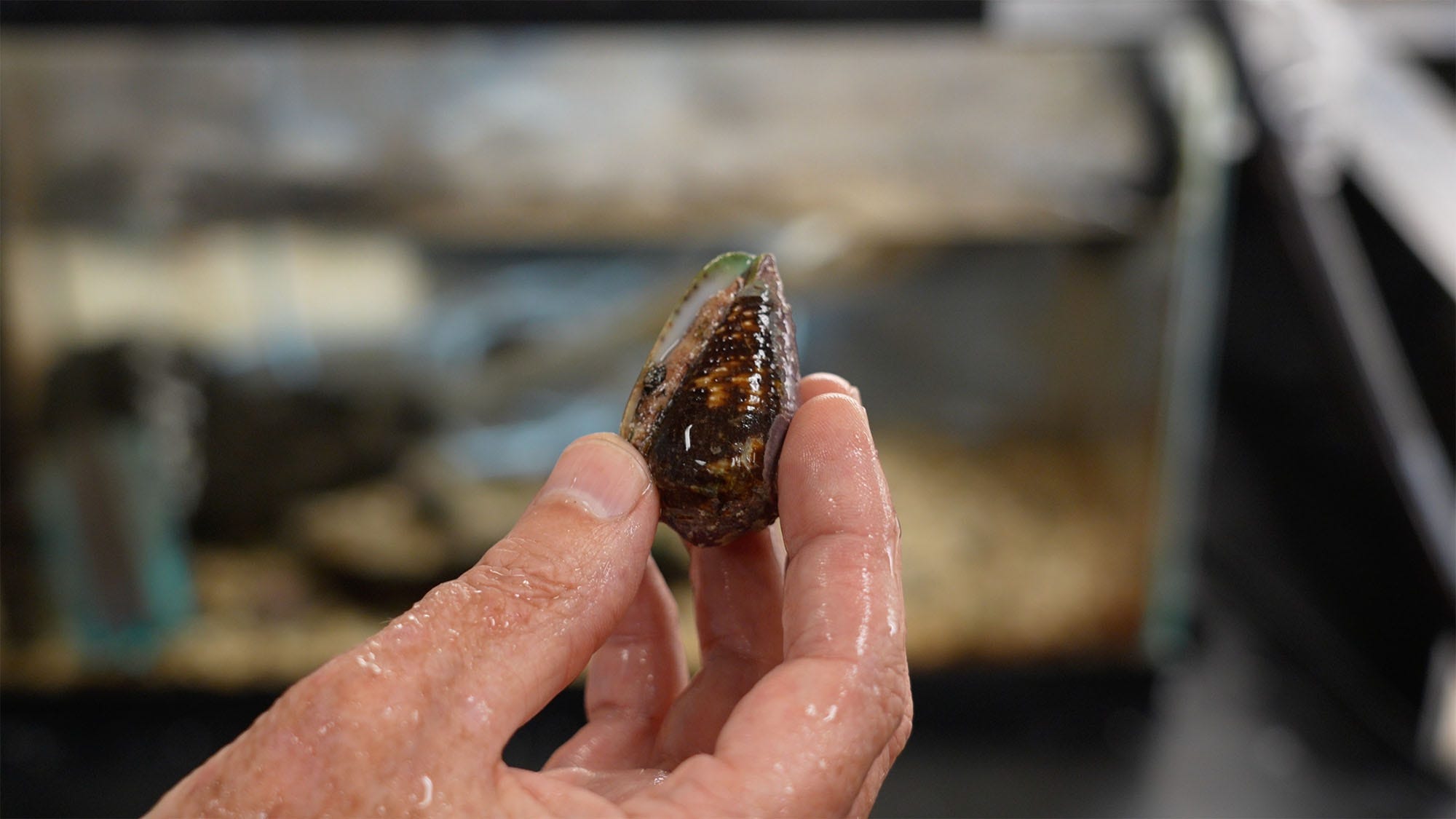 A living Conus catus, or cat cone, in Joseph Schulz’s laboratory at Occidental College. This fish-hunting cone snail strikes its prey with a hollow, venom-delivering tooth. (Photo: Erik Olsen)
That could help scientists understand how nervous systems work and potentially identify compounds with medical uses. Such compounds can become valuable tools for understanding the nervous system and, in rare cases, lead to new medicines.
The best-known example is ziconotide, sold as Prialt, a powerful non-opioid pain medication based on a toxin produced by the Magician’s cone snail (Conus magus). It remains the only cone-snail-derived peptide approved as a drug, but researchers continue to investigate others for possible applications involving pain, epilepsy, and neurological disease.
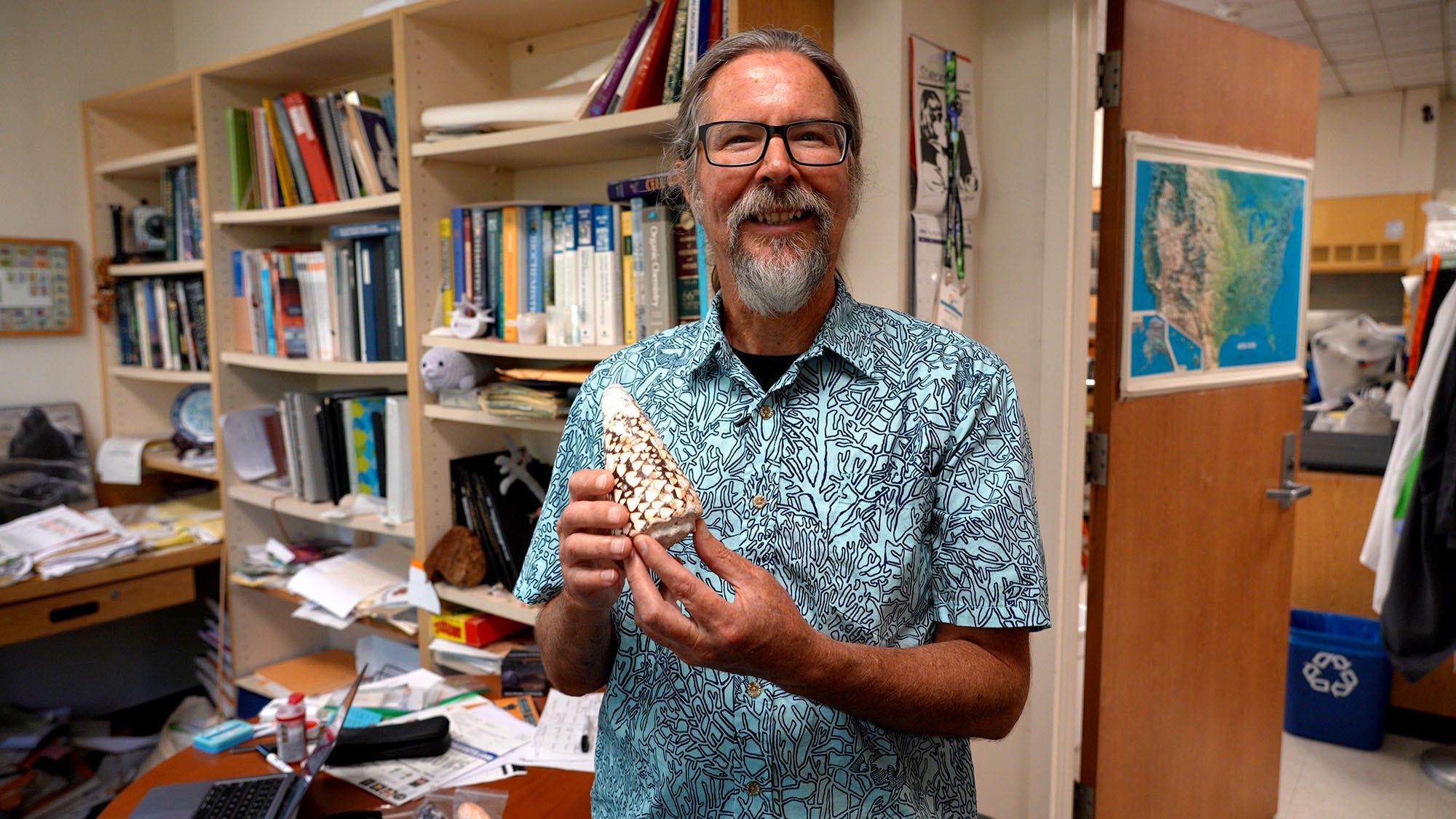 Occidental College biology professor Joseph R. Schulz displays one of the cone snail shells housed in the Cosman Shell Collection. Schulz studies how these venomous marine predators capture their prey and how their toxins act on the nervous system. (Photo: Erik Olsen)
This brings the collection directly into Schulz’s own research.
In his laboratory, an aquarium holds a living Conus catus, or cat cone, a fish-hunting cone snail that uses venom to subdue its prey, including fish. For the record, I had no idea that snails hunted fish. But they do. Even in his lab.
From a small table, Schulz picked up the shell of a geography cone, Conus geographus. It’s a genuine work of art, resembling an ancient map (hence, its name), or like mountains in a Chinese scroll, as Schulz himself describes it. It also happens to be the deadliest cone snail in the world. With a tiny barbed spear that it can fire at prey or unsuspecting humans, it delivers a potentially fatal dose of venom that will make you stop breathing within minutes. Kids: don’t mess around with cone snails.
Cone snails attack with a hollow, barbed tooth that functions like a microscopic hypodermic needle. Schulz helped discover exactly how the weapon works. Using high-speed video and microscopic examination, he and his collaborators found that the snail hydraulically propels the spear through the tip of its proboscis. Pressure builds behind it until it shoots forward at insane speed.
In the fish-hunting species Conus catus, the strike takes less than 100 microseconds. Its peak acceleration exceeds 280,000 meters per second squared, similar to a fired bullet, making it the fastest movement measured in a mollusk by roughly an order of magnitude.
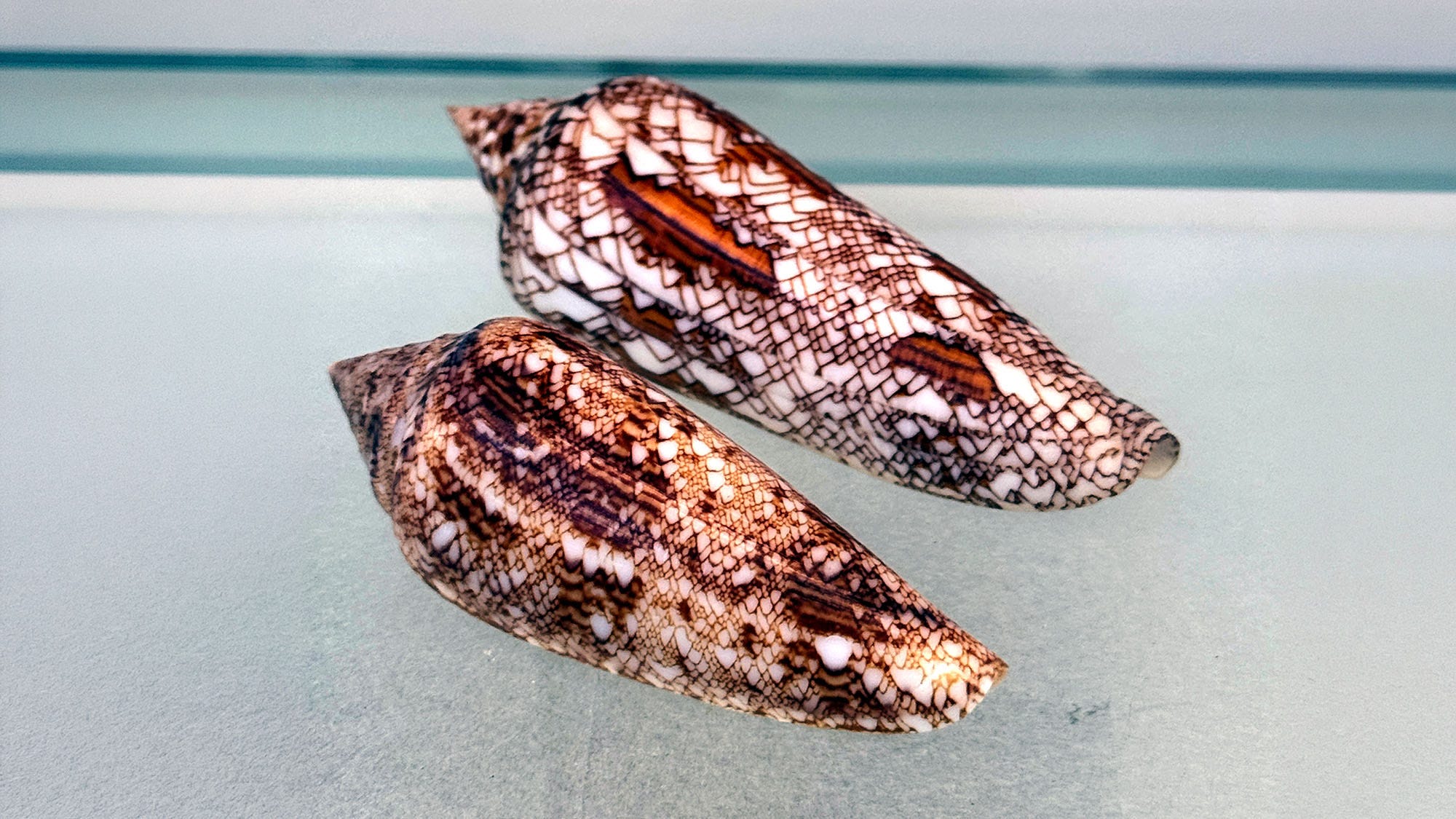 Textile cone shells, Conus textile, display the intricate geometric patterns that give the species its name. The living snails are venomous predators that hunt other mollusks. (Photo: Erik Olsen)
That speed solves an obvious evolutionary quandary: A snail is slow. A fish is fast. To catch one, the snail’s weapon must strike before the fish has time to escape. Evolution never ceases to amaze.
Cosman collected shells because he loved them. He apparently never imagined that his meticulous private collection would become a scientific archive. And today, the shells are helping researchers reconstruct past oceans, identify species, recover genetic information, and investigate toxins that act on the nervous system. Not bad for a yacht salesman.
The collections is digitized and all of the findings in the lab will eventually be made available to the broader scientific community. And so, what looks at first like a room filled with strangely beautiful shells is actually a small, but important library of marine life. And scientists are still learning how to read it.