
California’s Ocean Is Getting Weird
Sea turtles nesting in Orange County. Young garibaldi in Monterey. Warmer waters are bringing unusual encounters along the coast.
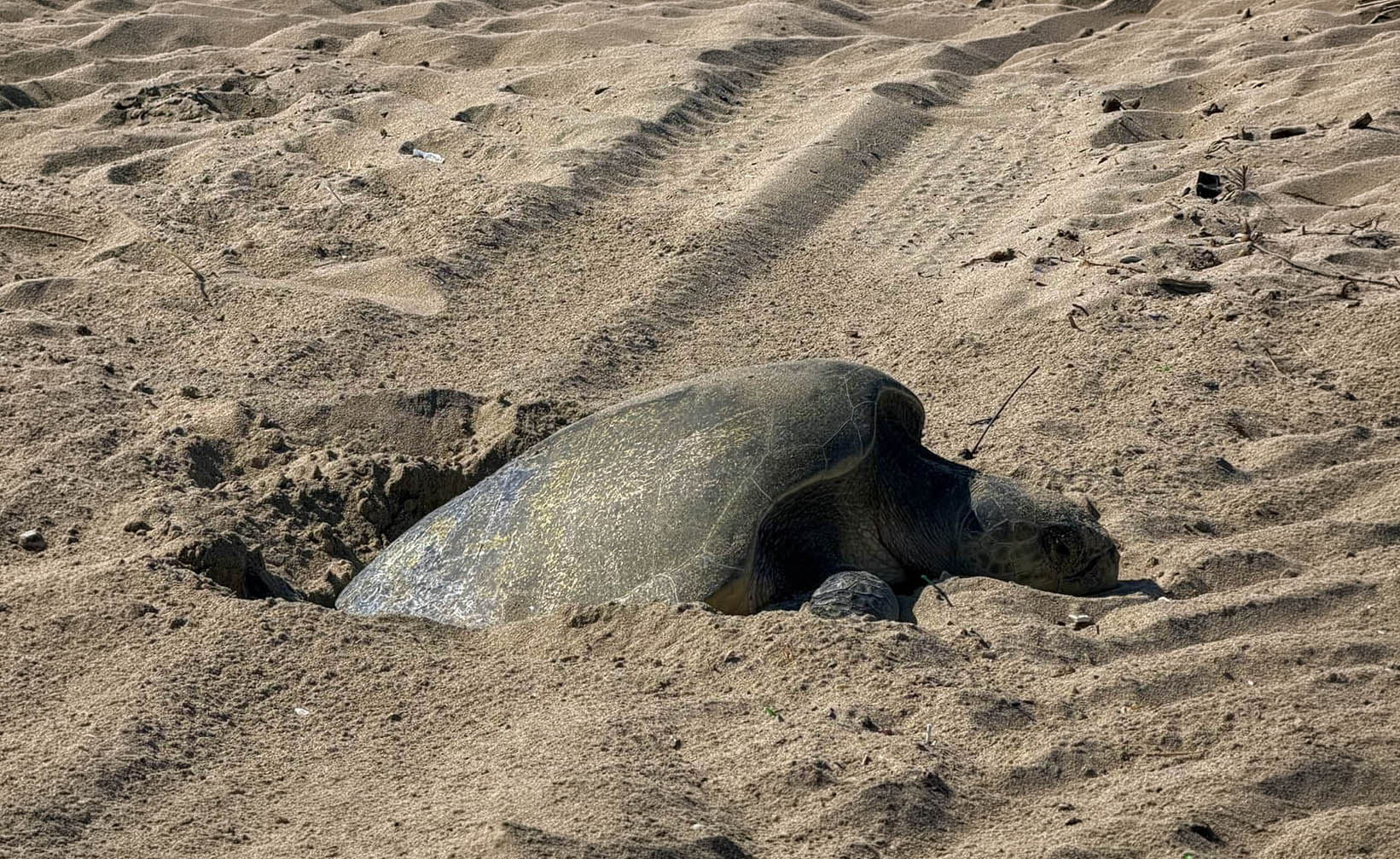
Hammerhead sharks have been spotted off Los Angeles and Ventura counties. A whale shark appeared off Malibu. Dorado (mahi-mahi) have been swimming near the Southern Channel Islands. On September 16, an olive ridley sea turtle crawled onto the sand near Seal Beach and laid its eggs. Three days later, another nested near the Huntington Beach Pier.
Orcas have been spotted off Newport Beach, too. And the crew of the fishing boat Rail Time landed a 650-pound bluefin tuna that was weighed at Catalina Island on October 17. It was reported as a record California catch on rod and reel (and a dream experience for many fisherfolk I know). That kind of fish could have been caught off California maybe 80 years ago, but today? Very rare.
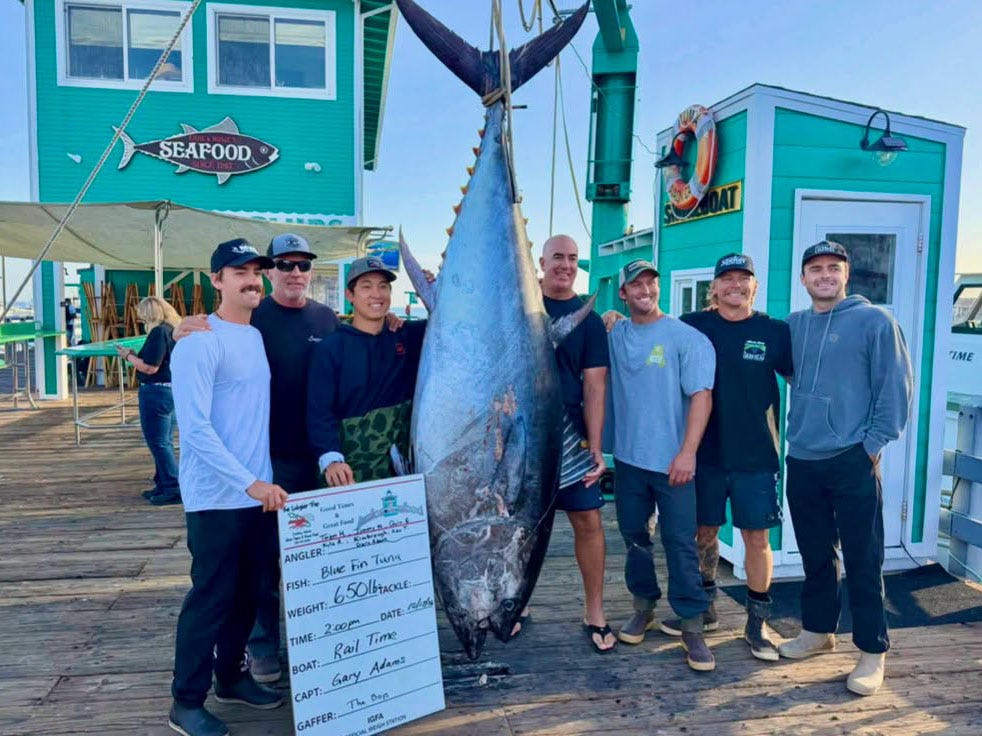 Captain Gary Adams and the crew of the Rail Time with a bluefin tuna weighed at 650 pounds at Catalina Island on October 17, 2026. (Photo: Bill Larkin / Western Outdoor News)
Then came the longfin bigeye fish, recently caught by an angler off Venice Pier. It was the first recorded sighting of that species in California history. The find was so unusual the fish is now part of the Ichthyology Collection at the Natural History Museum of Los Angeles County. Even a venomous yellow-bellied sea snake turned up on an Orange County beach in September. These tropical snakes rarely reach California.
What is going on?
Yeah, sea turtles sometimes visit Southern California waters; there’s a resident colony of them in the San Gabriel River near Seal Beach. I even did a story about them. They’ve been here for decades. But this is something new. The ridleys are the first confirmed natural sea turtle nests ever recorded on the U.S. West Coast. The turtles had decided to relocate from beaches far north of their normal nesting grounds in Mexico.
In Monterey Bay, diver and photographer Pat Webster recently filmed juvenile garibaldi in the normally frigid waters of Northern California. “This is the first time we have seen a pulse of recruits like this, at least in the shared dive community history,” he told me. A 2019 scientific checklist described garibaldi sightings in the sanctuary as extremely rare.
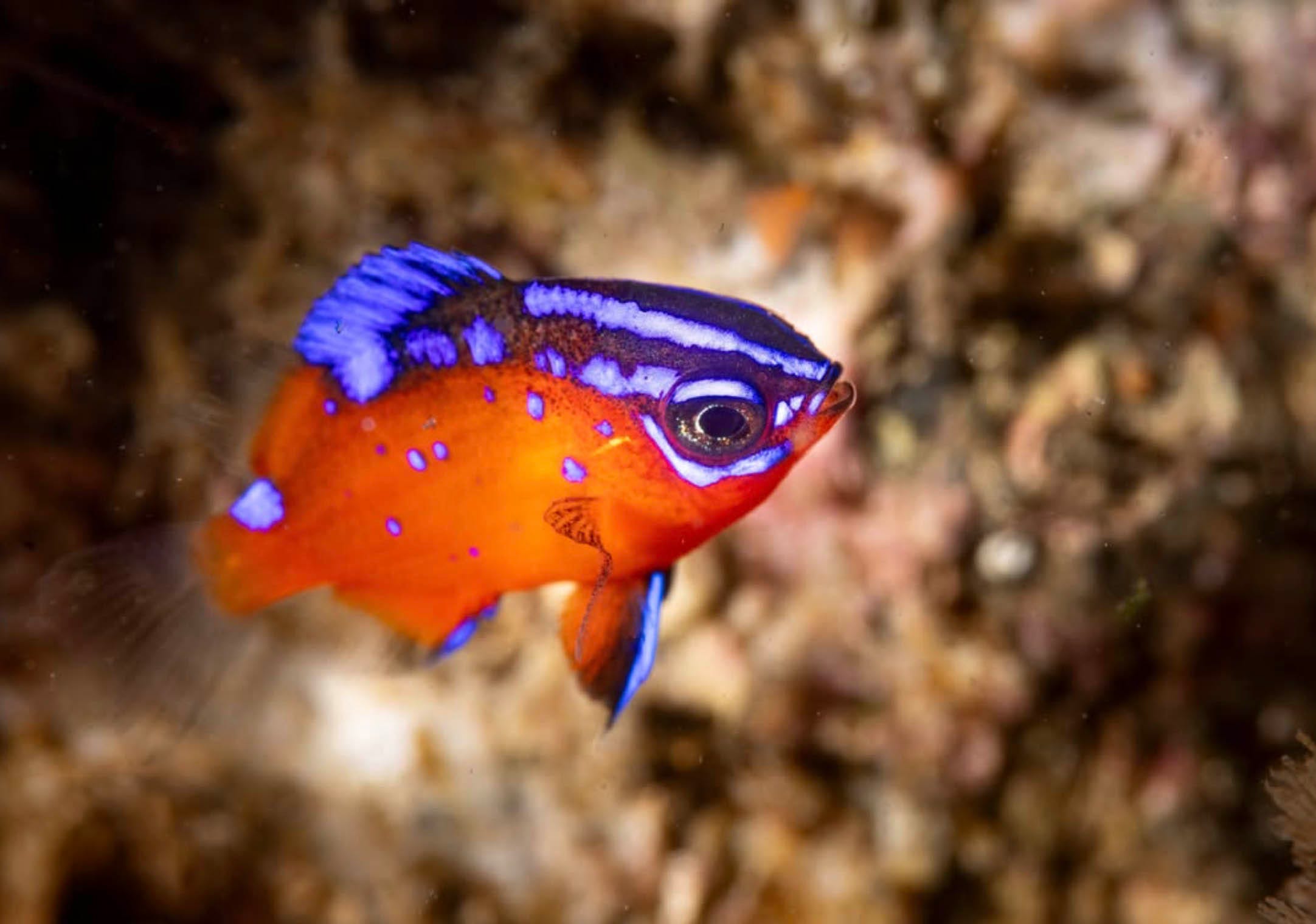 A juvenile garibaldi in Monterey Bay, where sightings of the species have historically been extremely rare. Diver and photographer Pat Webster recently documented an unusual arrival of these young fish. (Photo: Pat Webster.)
For anyone who follows California’s ocean life, this is crazy. I’ve spent much of my life in and around these waters, and while I do recall hearing about the occasional orca breaching off Newport, I’ve never seen or heard about this many animals coming this far north. Yes, I know we’ve had El Niños in the past. Yes, I know we’ve had strange animal sightings, but this is on another level.
As I wrote last week in my piece about the crumbling Southern California shoreline, these weather patterns, though not unusual as phenomena, can be unusually powerful. I don’t think they spell immediate disaster, per se. In fact, seeing all these new animals is kind of fabulous. But there may be dangers lurking.
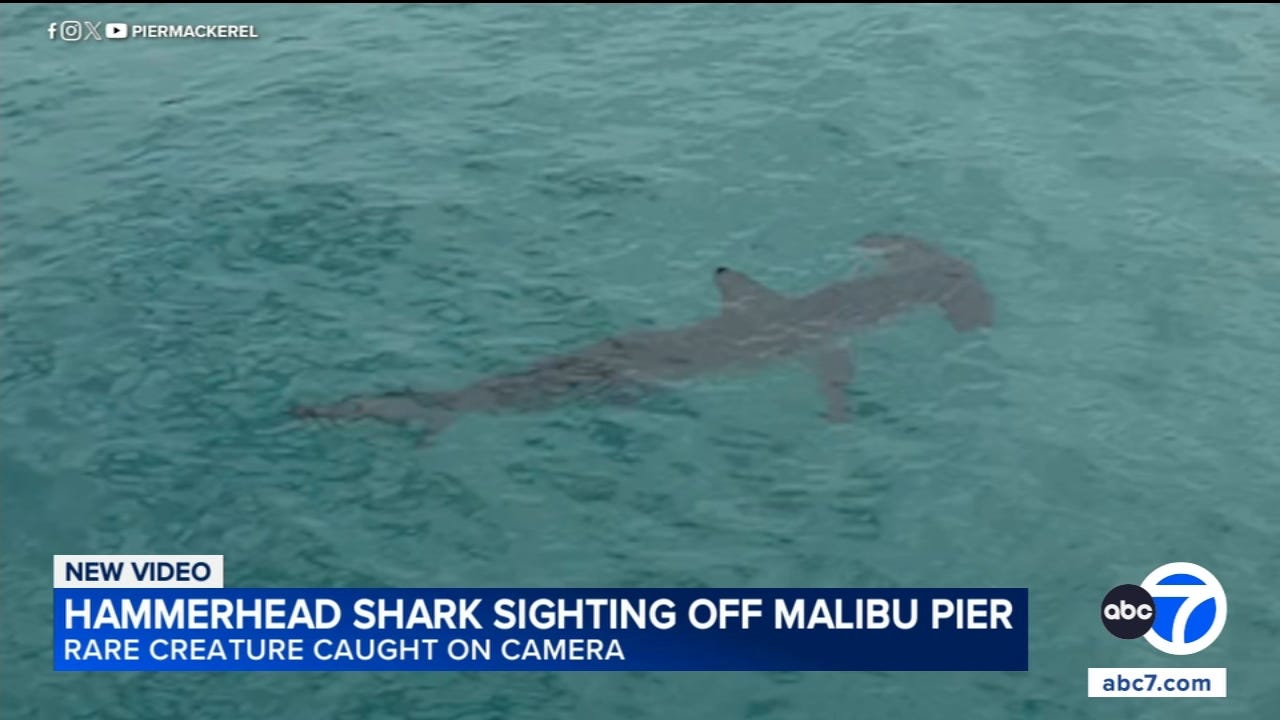 A hammerhead shark swims beside Malibu Pier on August 13, 2026. Fisherman Ari Kohanchi recorded the unusual visitor from the pier. (Credit: Video still: Ari Kohanchi / PierMackerel, via ABC7.)
For example, for the animals already living here, warmer water can mean trouble. California’s marine abundance depends heavily on cold water rising from below. It’s called upwelling. That water carries nutrients that support phytoplankton. Small fish and zooplankton eat the phytoplankton. Larger fish and larger marine mammals eat them. So an El Niño can weaken the nutrient supply and leave many different animals struggling to find enough food.
As NOAA puts it: “During El Niño, upwelling weakens or stops altogether. Without the nutrients from the deep, there are fewer phytoplankton off the coast.” For many animals, that’s bad news.
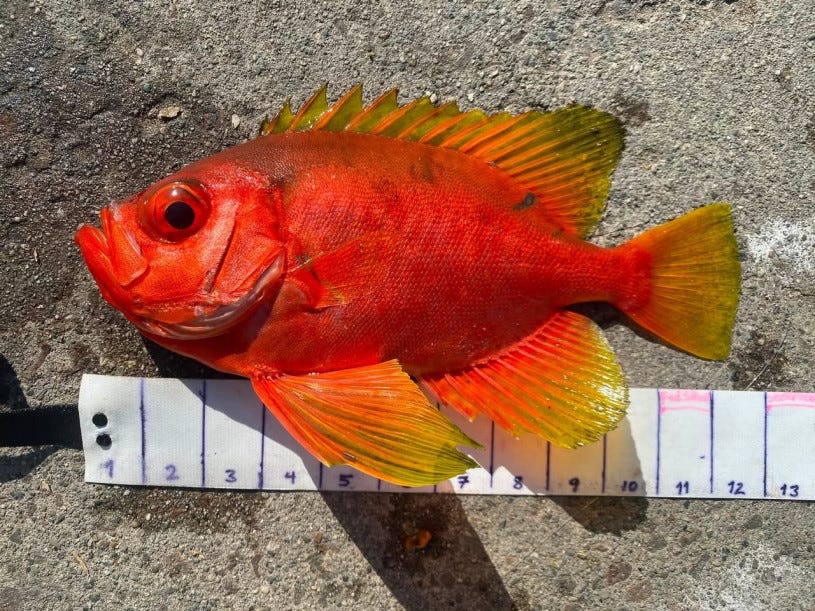 A longfinned bigeye caught by Julius Cardines at Venice Fishing Pier marks the species’ first recorded appearance in California. The specimen is now part of the Natural History Museum of Los Angeles County’s collection. (Photo: Julius Cardines.)
Along these lines, another guy I follow on Instagram in San Diego has posted about the stunning clarity of the water in La Jolla. That probably means fewer phytoplankton, which often contribute to murkiness. Despite the influx of rare creatures, I worry Southern California may soon see a very different story: significant marine die-offs.
(And if you want to keep an eye on the water clarity yourself, the good folks at Scripps sent me this cool live video feed of the waters beneath Scripps Pier in La Jolla.)
So, it’s all very complex and intertwined.
As you all likely know, much of this appears connected to the strong El Niño we’re experiencing, which is expected to strengthen significantly into winter. And that’s in addition to a marine heatwave we’ve been experiencing that has already led to a rise in sea bird fatalities.
I don’t know what’s coming, but this is certainly all very strange.