The Mighty Oaks of California Are a Keystone of the Golden State’s Ecosystem
California has about 20 kinds of oak, and they feed and shelter more wildlife than almost anything else that grows here. A look at the trees that hold the state's landscapes together.
Updated
Drive almost anywhere in California outside the big cities and you’re looking at oaks. They dot the golden hills of the Coast Ranges, crowd the Sierra foothills and shade half the parking lots in Los Angeles. There are about 20 species in the state, and they’re so common that it’s easy to stop noticing them. That’s a mistake, because few things that grow here do more work.
Four of them do most of the heavy lifting. The Coast Live Oak handles salt air and lives along the coast. The Valley Oak, the giant of the group, grows in the deep soils of the inland valleys. The Blue Oak, named for its blue-green leaves, takes the hot, dry foothills of the Sierra Nevada and Coast Ranges. And the California Black Oak lives up in the mountains, where it’s one of the few native oaks that puts on real fall color. Most California oaks either keep their leaves all year or just turn brown and drop them.
 Oak tree in Descanso Gardens in La Cañada Flintridge
Oaks have been in California a long time. Fossils put them here at least since the Miocene, more than 5 million years ago, and over that stretch different species sorted themselves into different niches, from the foggy coast to the mountains. What they share is toughness. Deep roots reach water long after the surface has dried out, and leathery leaves hold on to moisture, which is how an oak gets through a California summer with no rain at all, and most of them keep their leaves while doing it.
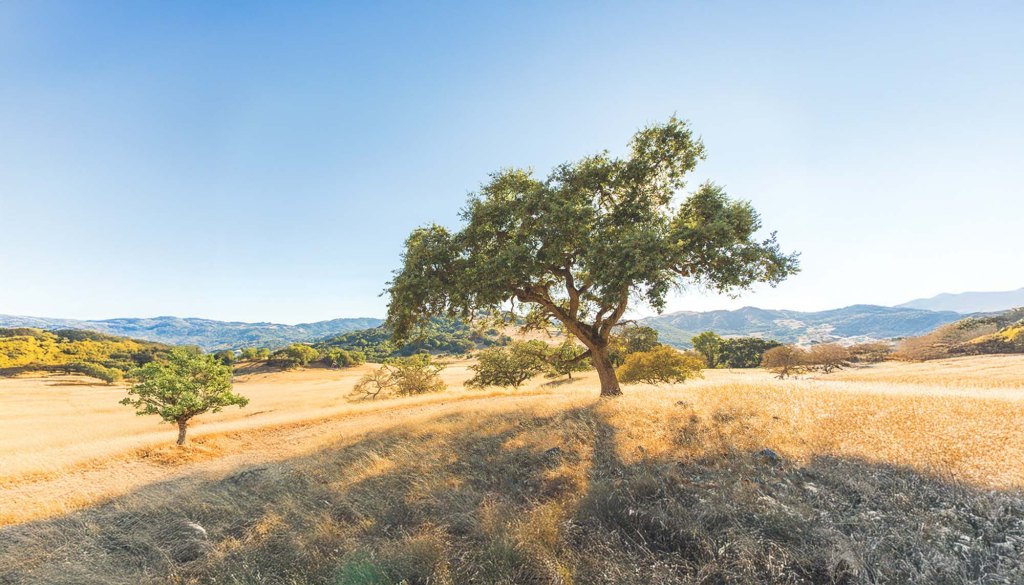 Oak Tree in California
Some of that toughness is written into their DNA. When scientists sequenced the genome of a European oak in 2018, they found an unusually large number of duplicated genes tied to disease resistance. Oaks essentially carry backup copies of their defenses. The researchers also found that somatic mutations, genetic changes that build up in a tree’s branches over its very long life, can be passed down to acorns. A single old oak keeps evolving while it stands there.

Oaks are also good at bending without breaking. Forest ecologists, in journals like Trees and Forest Ecosystems, have found that oaks can adjust how they use water and handle heat depending on conditions. That flexibility is a big part of why they can live for centuries.

The real reason oaks matter, though, is everything that lives on them. Oaks support more kinds of animals than almost any other tree. Hundreds of species depend on them in Britain, and California’s oak woodlands are just as crowded. Squirrels, deer and woodpeckers live on acorns. Birds nest in the branches. Insects lay their eggs in the bark and leaves. Take the oaks out of a California hillside and a lot of the life goes with them.
People have relied on them too. Acorns were a staple food for many of California’s Indigenous peoples, who leached out the bitter tannins and ground them into meal. Later, oak became the wood of choice for building and furniture, and it still makes the barrels that give a lot of California wine its flavor.
The Valley Oak is the biggest of the bunch. It can grow past 100 feet tall and live for several centuries. Big old oaks also store a lot of carbon. A mature oak can absorb up to 50 pounds of CO2 a year, and one study found that mature oak forests can hold up to 50 percent more carbon than other forests of the same size.
None of that makes them safe. Oak woodlands keep getting cleared for houses and farms. A changing climate is shifting where they can grow. And Sudden Oak Death, a disease caused by a water mold, has killed millions of oaks and tanoaks along the coast since the 1990s.
 Coast Live Oak (Erik Olsen)
There is pushback. California’s Oak Woodlands Conservation Act pays to buy and protect oak woodlands so they don’t get developed (details here), and local governments weigh oak loss in their environmental reviews. Groups like the California Oak Foundation run planting and restoration projects, often with local volunteers, to bring oaks back where they’ve been lost.
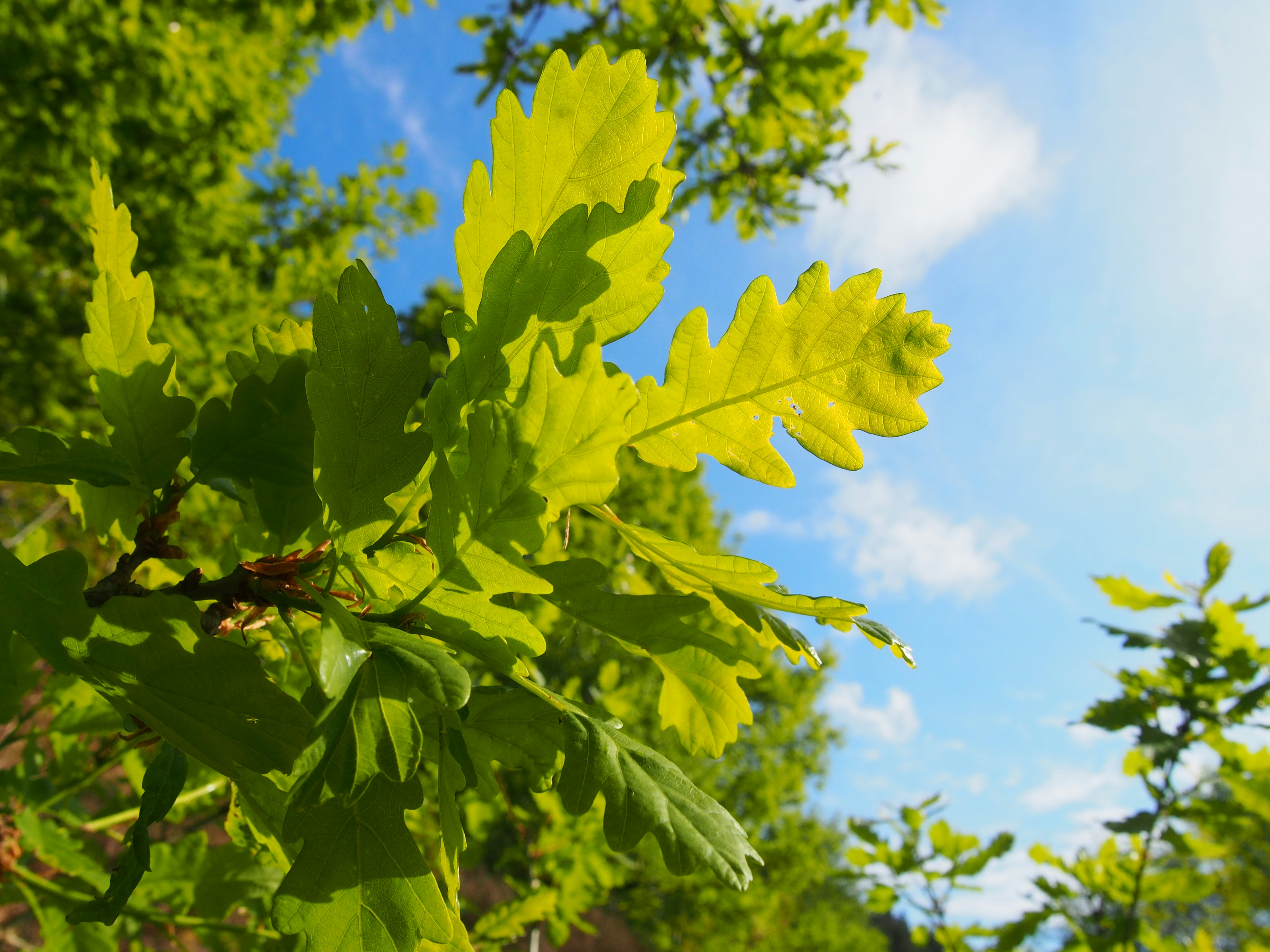
 Leaves of California Black Oak
Scientists are working the problem too, tracking Sudden Oak Death and trying to figure out which oaks will cope with hotter, drier decades and where they’ll need to grow. That research feeds directly into how land managers plant and protect them.
 Charlie Day, via Flickr
The good news is that oaks are patient. Plant one today and, with a little luck, it will still be feeding woodpeckers and shading hikers a few hundred years from now.
More California science, photography and wild places on Instagram @californiacuratedus