The Wetland Newport Beach Saved for the Birds
The Upper Newport Bay Ecological Reserve, better known as the Back Bay, remains one of Southern California’s most important refuges for birds traveling the Pacific Flyway.
For thousands of years, California’s wetlands have offered food and refuge to birds making their long journeys along the Pacific Flyway, one of the great bird-migration corridors of the world.
Every year, hundreds of millions of birds travel some portion of this route, which extends from Alaska and western Canada through California and into Mexico, Central America and beyond. Some fly thousands of miles in each direction, returning to the same breeding grounds, wintering areas and stopping places year after year.
It is a remarkable feat of stamina and navigation.
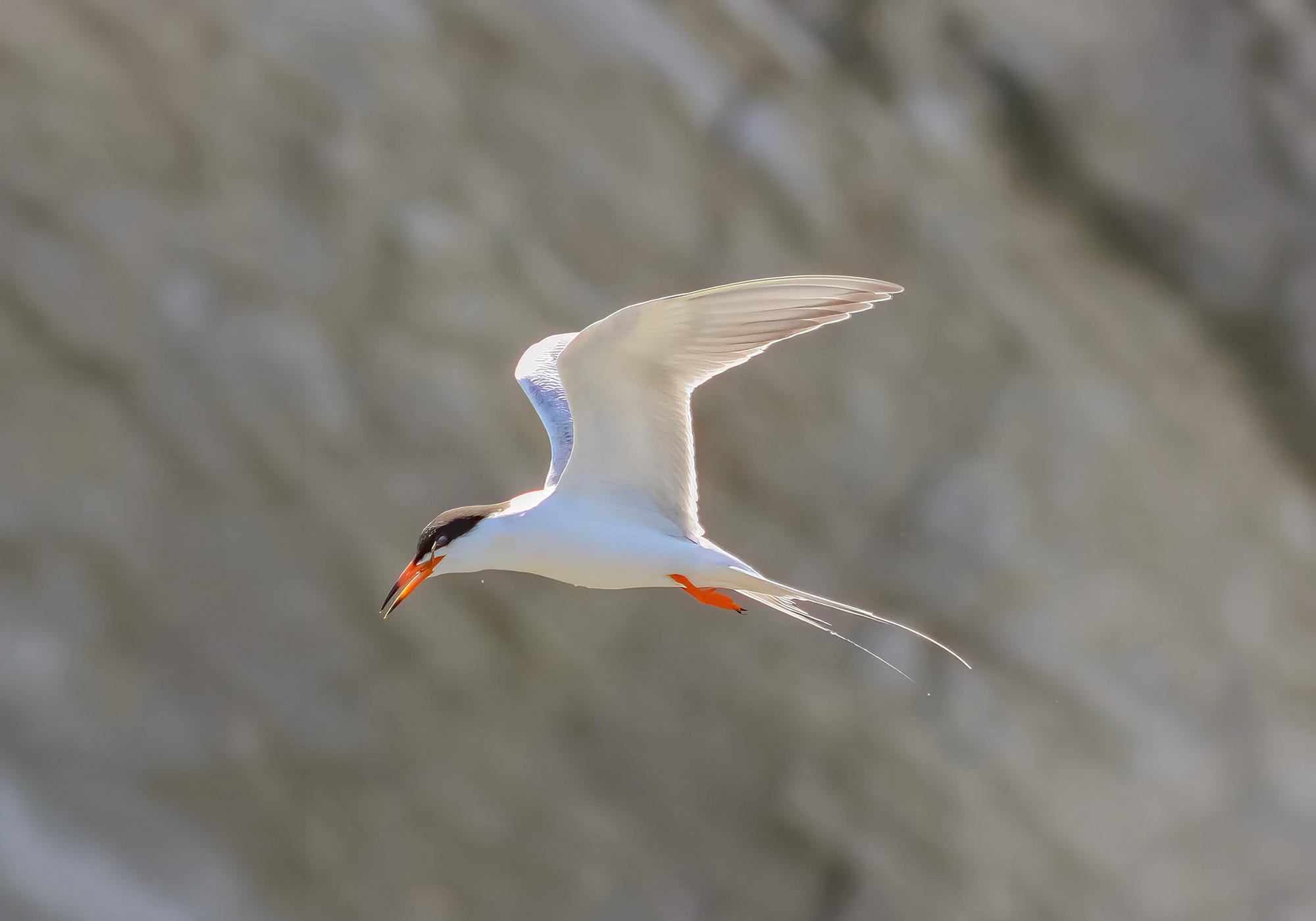 A Forster’s tern flies over Upper Newport Bay. (Photo courtesy of the Back Bay Science Center.)
It is also becoming increasingly problematic for birds. North America has lost nearly three billion birds since 1970, according to one landmark study. The decline is driven in large part by the destruction of the habitats birds depend upon. And cats, apparently.
(The issue is global, obviously, not to get too downer here. A new report suggests one in nine migratory birds are threatened with extinction and 45% of migratory species are in decline.)
Wetlands once covered much of the California coast. Over the past century and a half, however, the great majority (some estimates say as much as 90 percent) have been drained, dredged, diked, or filled in to make way for a rapidly growing society, i.e. farms, roads, businesses, homes, harbors…and now, uh, surf parks.
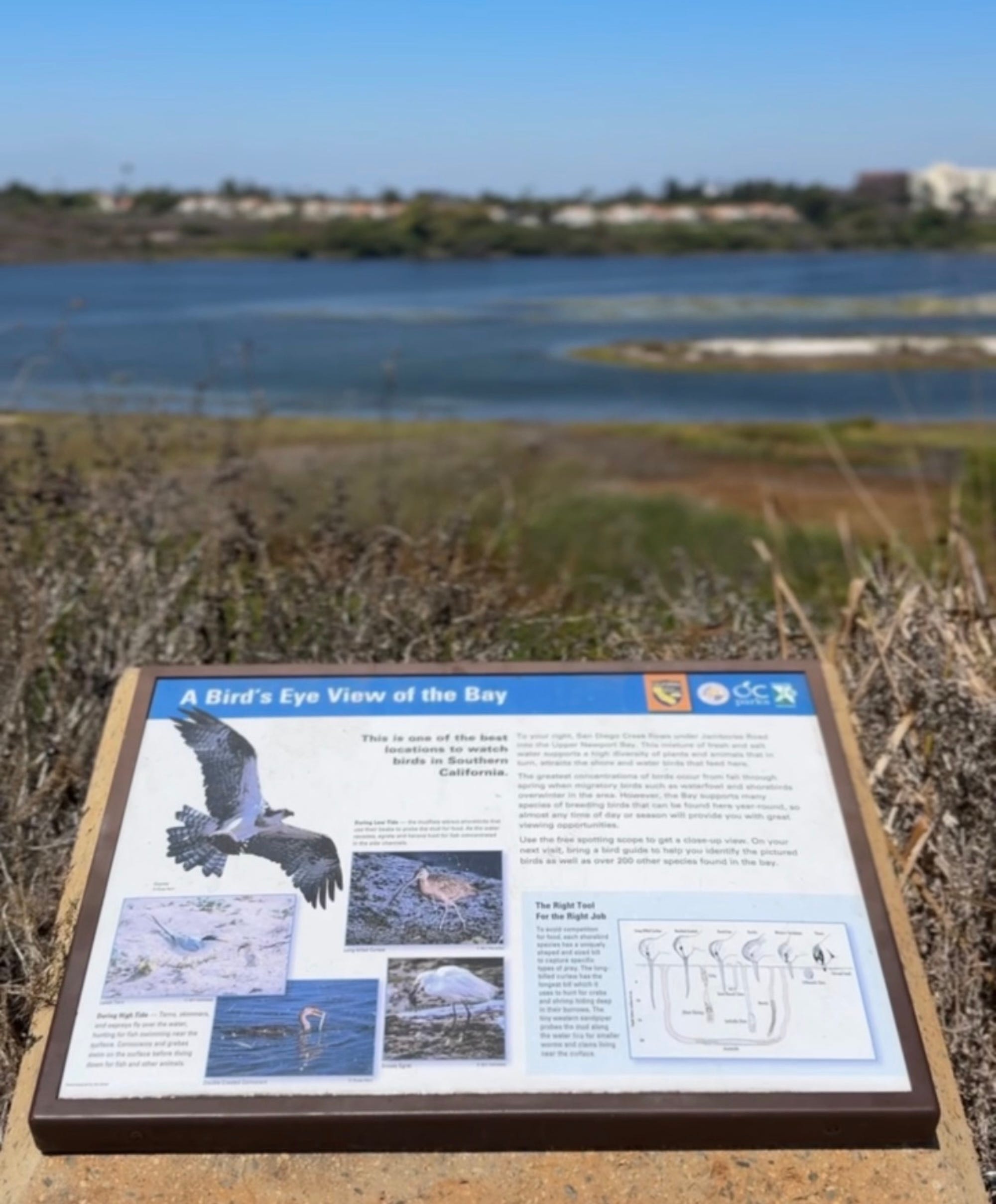 An interpretive sign overlooking Upper Newport Bay identifies some of the more than 200 bird species documented in the reserve and explains how differently shaped beaks allow them to find food throughout the wetland. (Photo: Erik Olsen)
And, hey, some of that was inevitable. We cannot expect every stretch of coast to remain pristine when people are so strongly pulled to live next to the ocean. Count me in. Development is not inherently bad. I love many of the towns and cities built along the California coast. I spent much of my childhood at the beach.
But we do not have to eliminate everything.
Some places are truly worth protecting. Others are worth saving, maybe rebuilding, not only for ourselves, but for the other creatures with which we share this remarkable state.
Among the wetlands that remain, one place in Orange County stands out. I kayak there every so often to experience a taste of the natural California coast that was once the rule, not the exception.
The place is officially called Upper Newport Bay, although I have always known it simply as the Back Bay.
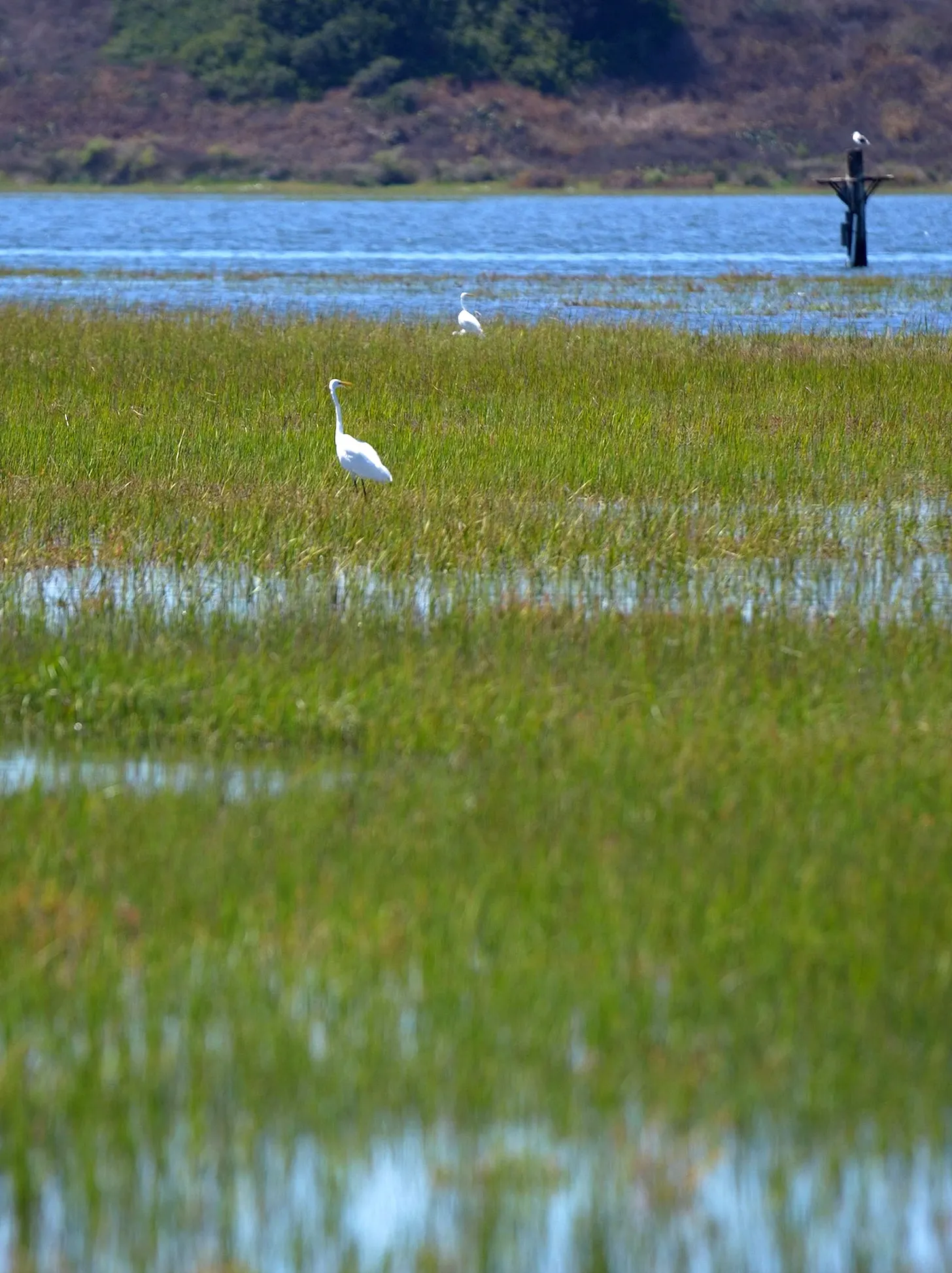
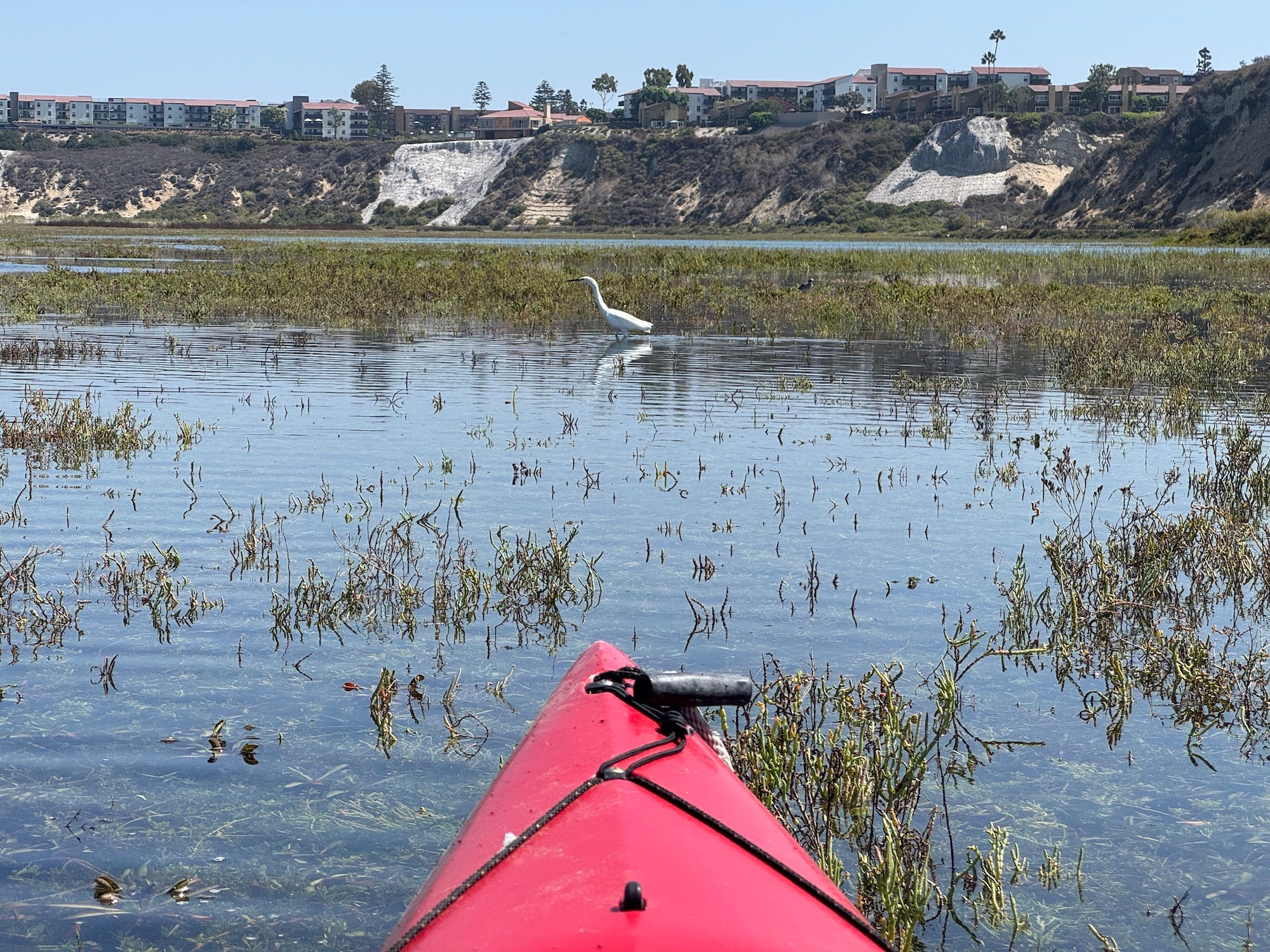 A great egret hunts in the shallow water of Upper Newport Bay. Kayaking through the Back Bay offers a close view of the birds and salt-marsh habitat preserved within the ecological reserve. (Photo: Erik Olsen)
I was out on the water again last week, paddling past the opulent waterfront homes and mammoth yachts of the supremely wealthy, but also, once passing into the Back Bay itself, paddling around brown pelicans and great egrets and flocks of shorebirds feeding along the exposed mudflats. Beyond the marsh, houses stoop over the surrounding hills and cars zoom down Jamboree Blvd. At water level, though, the place still feels surprisingly wild. It’s kind of a magical place in the middle of a very urban environment.
This almost didn’t happen.
During the 1960s, developers proposed transforming much of Upper Newport Bay into a large marina circumferenced by waterfront homes and private docks. Local residents fought the plans through several years of protests and legal battles.
In 1975, the State of California acquired much of the bay and designated it as the Upper Newport Bay Ecological Reserve. The reserve is managed by the California Department of Fish and Wildlife, while the Newport Bay Conservancy plays an important role in habitat restoration, environmental education, scientific monitoring, with a small cohort of volunteers.
The protests had an impact, but, according to the conservancy’s Website, the real fight began, in part, with one Orange County family.
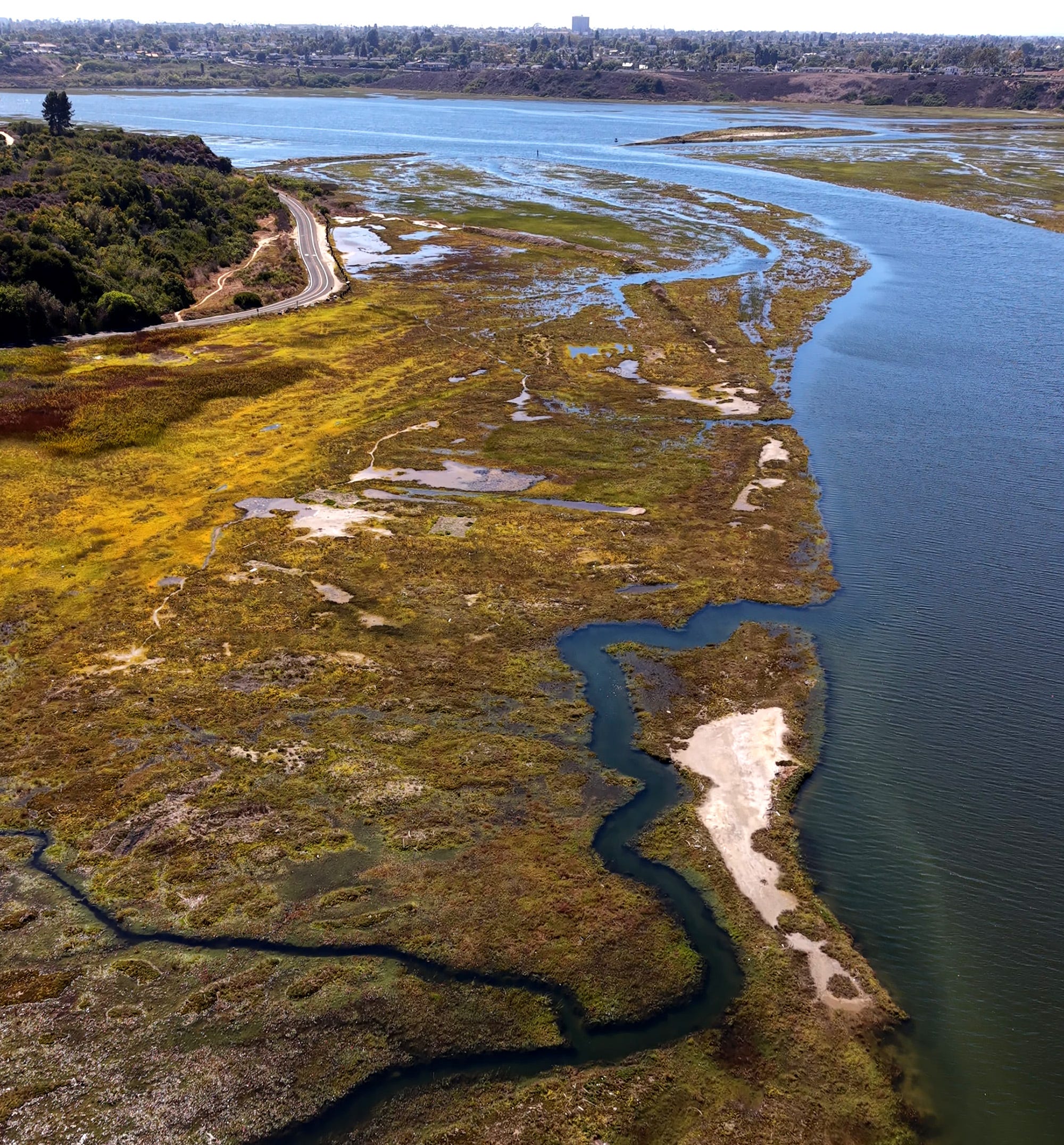
An aerial view of Upper Newport Bay reveals the tidal channels, mudflats and salt marsh that make the Back Bay one of Southern California’s most important remaining coastal wetlands. Development surrounds the reserve, but the estuary remains a critical refuge for birds traveling the Pacific Flyway.
Frank and Frances Robinson moved to Newport Beach with their children during the region’s population boom in the early 1960s. Upper Newport Bay was a quick trek from their place. The family swam, water-skied and dug for clams in the shallow mudflats and the warmer-than-the ocean water.
The Robinsons joined neighbors and other residents in the fight to save the Back Bay, a fight which some call one of the most consequential conservation battles in Southern California history. The couple was particularly instrumental in making the bay an ecological reserve. “If not for the efforts of these two ‘local heroes,’” the Newport Bay Conservancy writes, “the Back Bay most likely would have become just another marina surrounded by houses.”
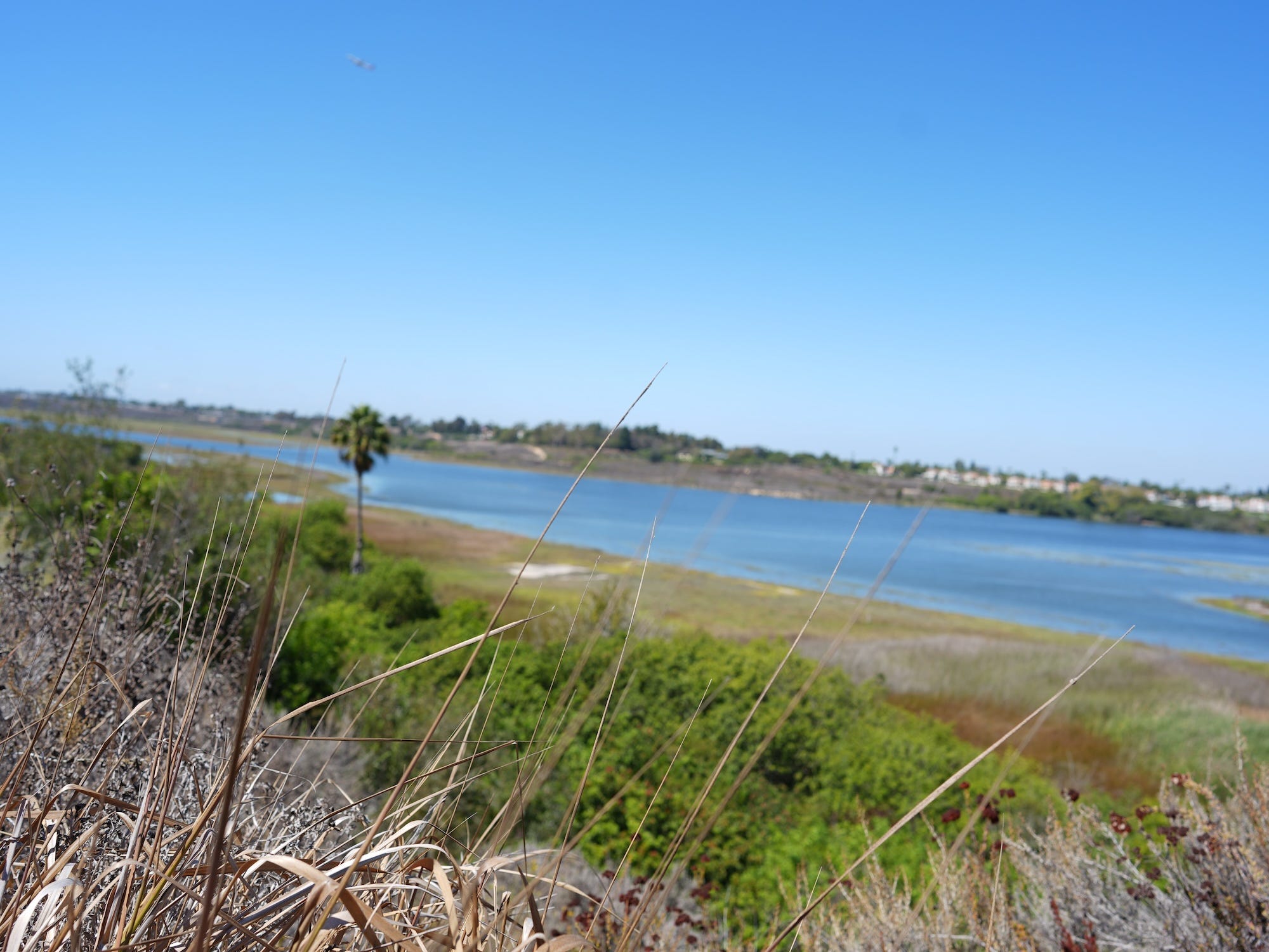 Upper Newport Bay stretches through the center of densely developed Newport Beach. The protected estuary preserves a rare expanse of tidal water, salt marsh and coastal habitat in a region where most natural wetlands have disappeared. (Photo: Erik Olsen)
What they helped preserve is now the largest remaining natural estuary in Southern California. Fresh water flowing from the surrounding watershed, primarily through San Diego Creek, churns and mixes here with salt water carried in by the tides. Where there might have been condos, piers and pleasure boats, there are now tidal channels, mudflats and salt marsh.
Nearly 200 species of birds, including terns, egrets, willets, pelicans and ospreys, have been documented at Upper Newport Bay. During the winter migration season, as many as 30,000 birds may gather here on a single day.
For nature lovers, the Back Bay is a bounty. For cyclists, there is a lovely path along the water’s edge. For kayakers, there are miles of quiet tidal channels to explore. And, of course, for birds traveling the Pacific Flyway, there is a protected place to rest, feed and recover, just as there has been for thousands of years.