Creosote Bushes Are the Mojave Desert’s Time Travelers
In the Mojave Desert, one creosote plant known as “King Clone” is estimated to be over 12,000 years old, making it one of the oldest living clonal organisms on Earth.
Updated
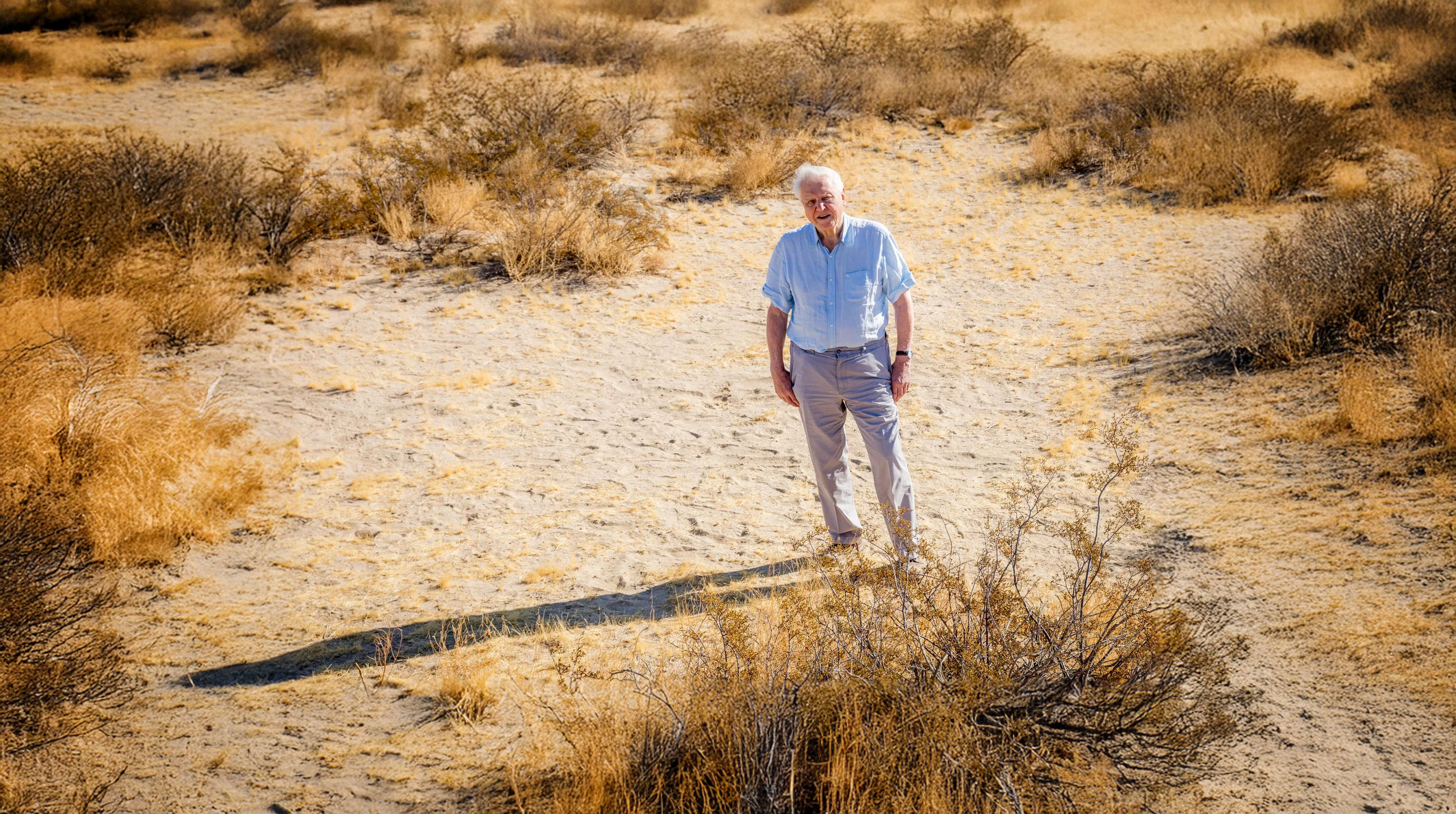
The creosote bush doesn’t look like much, a scraggly shrub dotting the deserts of North America, but it knows a few things about aging that would make Silicon Valley longevity bros green with envy. In the Mojave, one creosote known as “King Clone” is estimated to be about 11,700 years old, which makes it one of the oldest living things on Earth. I learned about it watching the BBC series The Green Planet, narrated by Sir David Attenborough. The whole series is excellent, but the desert episode, Desert Worlds, was a standout, especially for a dedicated succulent fan like me. It’s why I wrote this.
Most of the episode was filmed in far-off places like South Africa’s Succulent Karoo, but one scene takes place in California’s Mojave Desert. Attenborough goes back to King Clone, which he first filmed decades earlier for The Living Planet, and finds that in roughly 40 years it has grown less than an inch.
 King Clone, the 11,700-year-old creosote bush ring in the Mojave Desert (Wikipedia)
Creosote bush, Larrea tridentata, grows across the deserts of the American Southwest and northern Mexico, and in much of the Mojave, Sonoran and Chihuahuan deserts, it’s the most common plant you’ll see. Botanists even name a whole plant community after it: creosote bush scrub.
It handles some of the harshest conditions anywhere: brutal heat, nonstop sun and droughts that last for years. Few plants are tougher.

But even creosote has limits. Hotter heat waves pull more water out of plants and soil, and longer droughts make it hard for seedlings to get started. A 2021 University of California, Irvine study found that plant cover in a Southern California desert, creosote included, dropped 35 percent between 1984 and 2017, mostly because of rising heat and drier conditions.
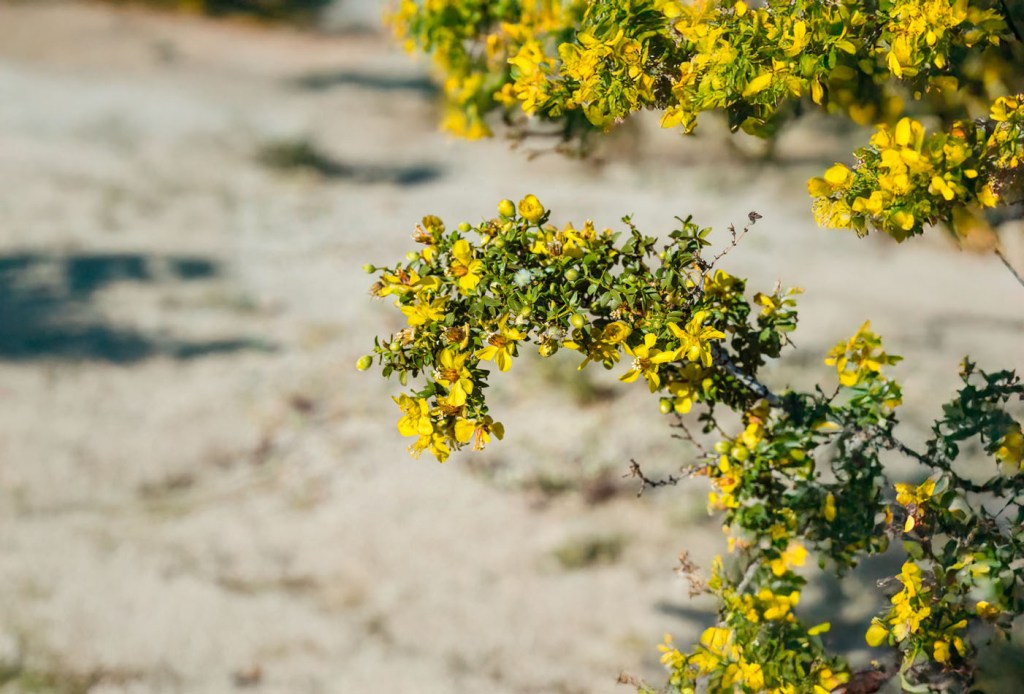 Creosote in bloom. (Erik Olsen)
Most of the time creosote looks dry and drab, but after a good rain it’s covered in small, bright yellow flowers. And it doesn’t stick to a calendar. It can bloom several times a year, whenever there’s enough water.
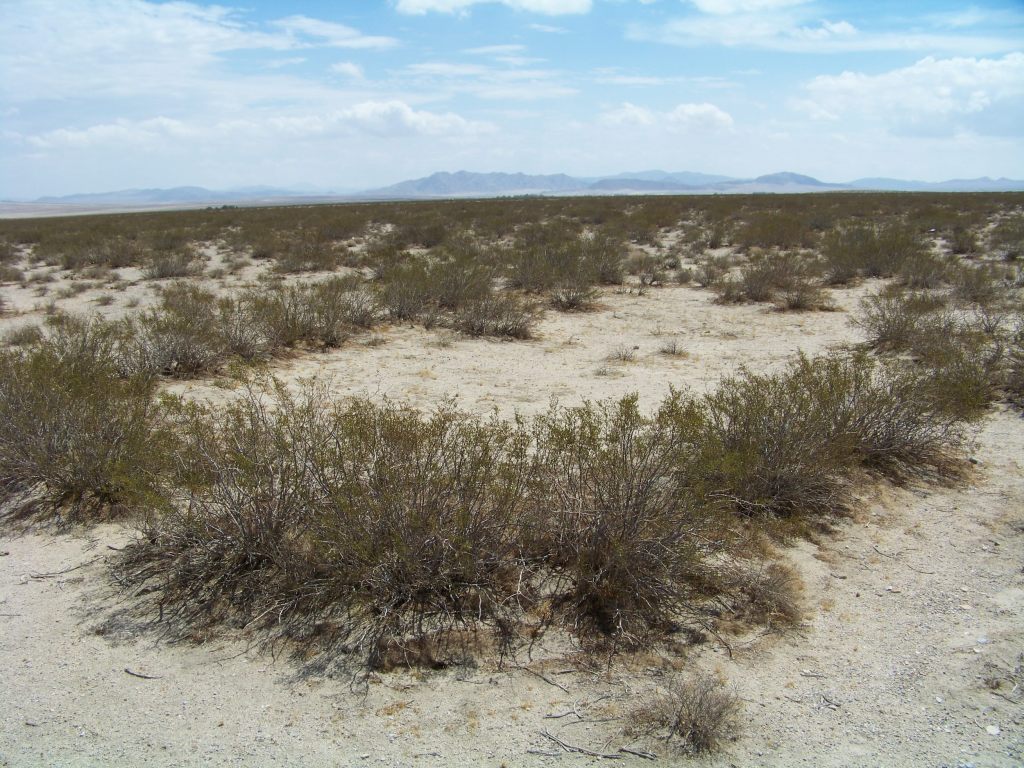
Its real trick is growing slowly. That’s not weakness, it’s strategy: by growing slowly, creosote uses very little water and very few nutrients, which gets it through even the driest years. Its roots spread deep and wide to find water, and its leaves are coated in a waxy resin that cuts down on evaporation. That slow-and-steady approach is why creosote rules so much of the desert. If you’ve ever driven along Highway 395 through the desert, you’ve seen creosote stretching to the horizon.
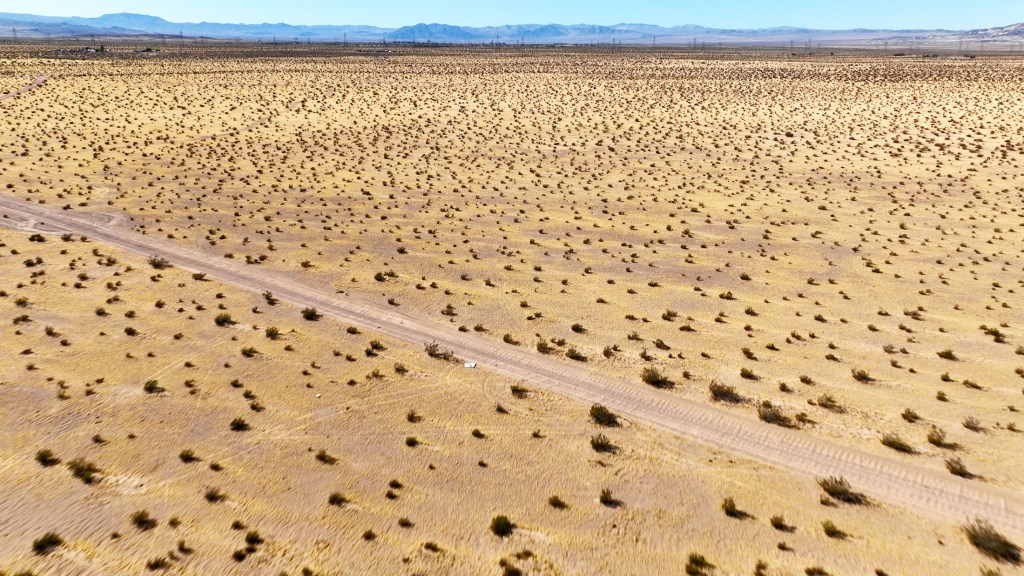 Creosote in the Mojave desert (Photo: Erik Olsen)
The other secret is cloning. King Clone isn’t one bush, exactly. It’s a ring of genetically identical stems more than 11 meters (36 feet) across, all growing from the same original plant. Individual stems live a few decades and die, but new ones keep sprouting from the root crown, and the ring slowly spreads outward, like ripples in a pond, for thousands of years. That’s different from the bristlecone pine (see our story), the oldest single living organism. A bristlecone like the famous “Methuselah” is one individual tree that has been alive for nearly 5,000 years. (Ponder that for a moment.)
Creosote also feeds and shelters a lot of desert life, from insects to rodents to birds. And then there’s the smell. After a rain, the resin in its leaves gives off that sharp, earthy scent that, for a lot of people, is the smell of the desert. Indigenous peoples used it as medicine for a long time, making teas and poultices for colds, wounds and infections.
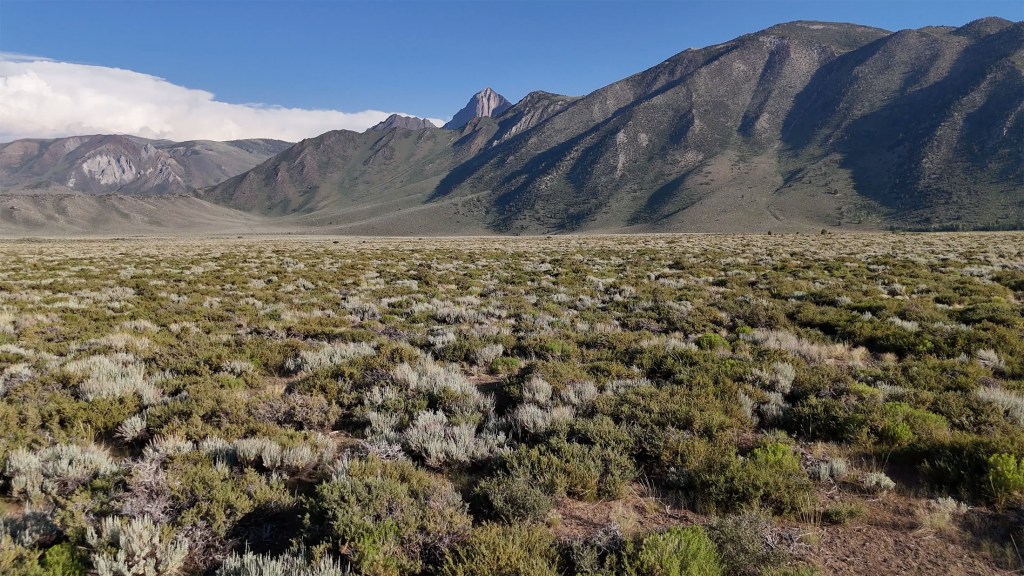 Desert scrub stretching across the Eastern Sierra. (Erik Olsen)
That medicine might be real. Creosote makes a whole arsenal of chemicals to fend off animals and disease, and scientists are interested in several of them. Researchers at the Skaggs School of Pharmacy and Pharmaceutical Sciences at the University of California San Diego and the University of Colorado Anschutz Medical Campus have discovered that compounds from creosote kill the parasite that causes giardia and an amoeba that causes a deadly brain infection. Creosote also contains an antioxidant called nordihydroguaiaretic acid (NDGA), which has been studied a lot for possible anti-cancer, antibacterial and preservative uses.
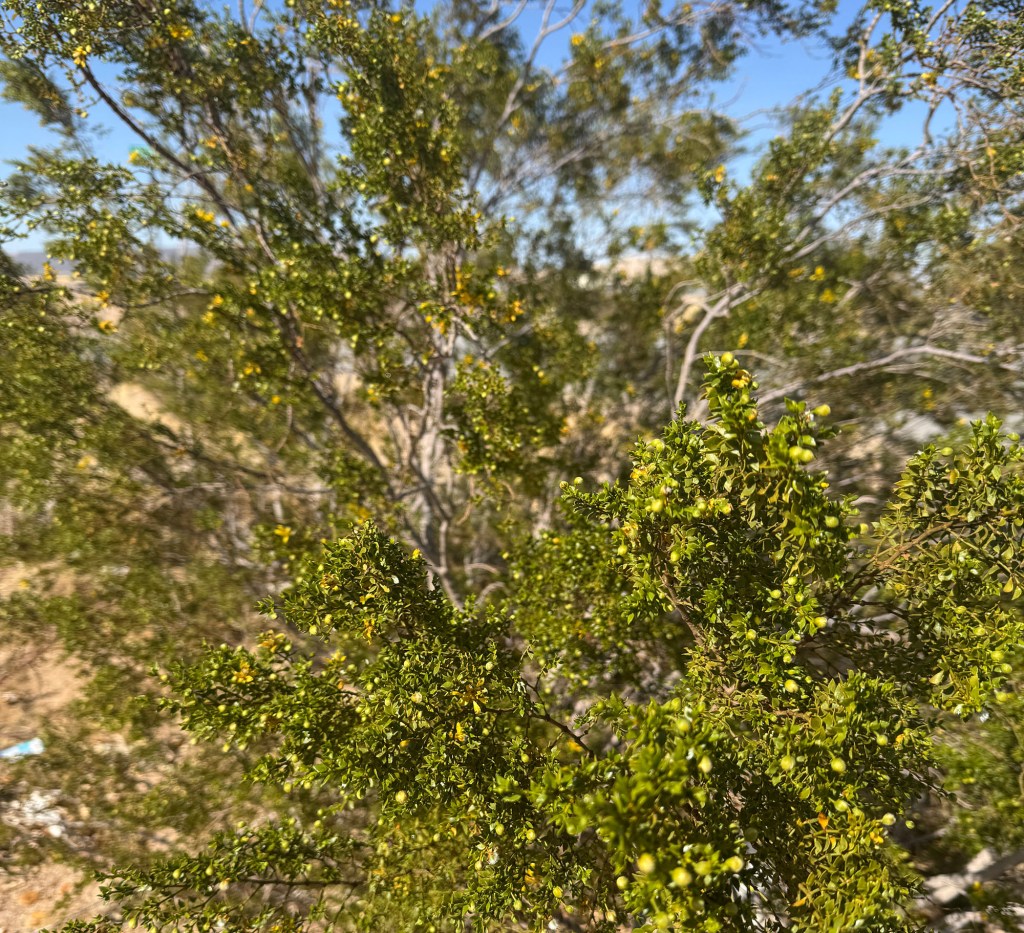 Creosote in the Mojave Desert (Photo: Erik Olsen)
Creosote is all over the literature of the Southwest. It’s part of the hard country in Edward Abbey’s Desert Solitaire, and Cormac McCarthy’s Blood Meridian is practically carpeted with it:
By the time the animals were secured and they had thrown themselves on the ground under the creosote bushes with their weapons readied the riders were beginning to appear far out on the lake bed, a thin frieze of mounted archers that trembled and veered in the rising heat.
Blood Meridian by Cormac McCarthy
A big part of why I do California Curated is to point out the amazing stuff hiding in plain sight. I was born here and have lived here most of my life, and I’m still finding it. Even a plant as ordinary-looking as creosote turns out to be one of the oldest living things on the planet. So next time you’re driving through the desert, take a second look at those scruffy bushes. Some of them were here before the pyramids. Roll down the window after a rain, too.
More California science, photography and wild places on Instagram @californiacuratedus