Bear Divide, Near Los Angeles, Is One of the Best Bird-Watching Spots in America
Every spring, tens of thousands of migrating birds funnel through Bear Divide, a low pass in the San Gabriel Mountains 45 minutes from downtown LA. Occidental’s Moore Lab is counting them.
Updated
“Personally, I really think it’s one of the best birding spots in the world,” Ryan Terrill, science director at the Klamath Bird Observatory.
About 45 minutes from downtown Los Angeles, at a quiet pass in the San Gabriels, there’s a birding spot so good that experts compare it to the best in the world. It’s called Bear Divide. Every year — roughly between March 15 and June 15, with peak migration between April 10 and May 20 — thousands of birds funnel through the narrow pass. The divide is a small dip in the otherwise impregnable San Gabriel mountains, allowing birds in the midst of their migration to pass through safely at relatively low altitudes. It’s also a research site for the Moore Lab of Zoology at Occidental College, which has been counting and tracking the birds for years.
The Moore Lab is best known for its bird collection, one of the largest collections of Mexican birds anywhere.
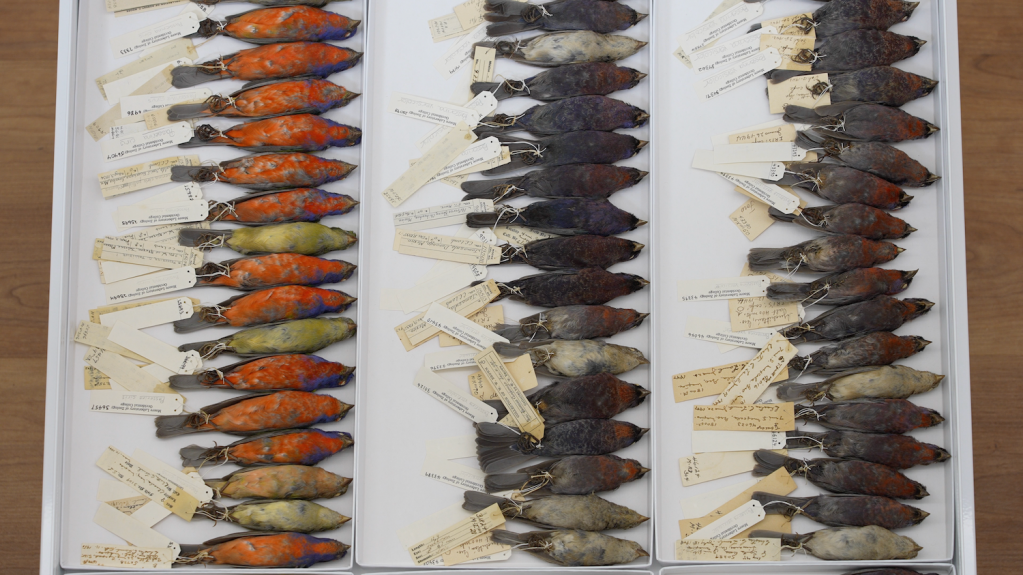 Part of the large bird collection at the Moore Lab at Occidental College in Los Angeles (Erik Olsen)
Bear Divide sits on the Pacific Flyway, the great north-south migration route that birds follow between Alaska and Patagonia. Birds heading north in spring run into the wall of the San Gabriels, and Bear Divide is one of the low spots where they can get through. So they pour through the gap, often low and fast, right past anyone standing there.
 U.S. Fish and Wildlife Service
Nobody knew about it until recently. A bird researcher was conducting overnight monitoring in the spring of 2016, and when morning came, he noticed legions of small songbirds whizzing past his monitoring spot. His report caught the attention of Ryan Terrill, then a postdoctoral researcher at the Moore Lab, who started monitoring the birds. Terrill and his team would ultimately record as many as 20,000 birds in a single morning.
“It really is overwhelming to stand on the road and have 5,000 birds of 80 species fly by your knees in a morning,” Terrill said. The effort has continued to this day with startling results. Terrill has since left and is now the science director at the Klamath Bird Observatory.
Purchase stunning coffee mugs and art prints of iconic California species.
**Check out our Etsy store. **
“Last year 2023 we counted 53,511 birds of 140 species from February to May,” said John McCormack, a professor of biology and the Director and Curator of the Moore Laboratory of Zoology. “And of course, we missed many thousands more because most travel at night. It’s easy to say that there are hundreds of thousands of birds passing through Bear Divide.”
 Swainson’s Hawk (Marky Mutchler)
On a big day, as many as 13,000 western tanagers, lazuli buntings, chipping sparrows, hermit warblers, orioles, grosbeaks and other birds pass through. Why so many use this particular gap isn’t entirely understood, but the shape of the land funnels them, and many shoot through just a meter or two off the ground.
“Personally, I really think it’s one of the best birding spots in the world,” Terrill told the LA Times.
McCormack says that the “ultimate goal is to better understand the Pacific Flyway and how it’s used, especially by small terrestrial birds. Little is known about their movements because they are hard to see and usually travel at night.”
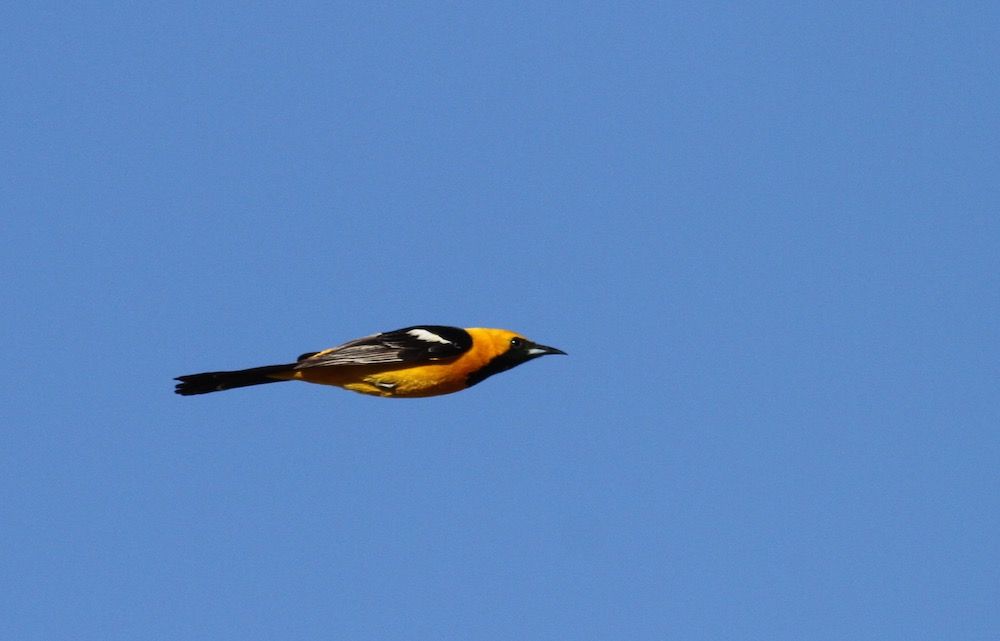 Hooded Oriole (Ryan Terrill)
Many of the species seen at Bear Divide are in steep decline, and the lab says year-to-year counts will set a baseline for tracking how weather, climate and urban growth affect them. “Tracking individual birds will give granular knowledge on how migratory birds use the landscape, which helps individuals and homeowners create corridors for them to travel,” says McCormack.
The best time to go is spring. McCormack says Cliff Swallows and Lawrence’s Goldfinch are some of the early movers in March, and that by May, streaking by are Yellow Warblers, sunset-faced Western Tanagers, and bright blue Lazuli Buntings.
“There is so much we still don’t know about these birds and their world,” Lauren Hill, the site’s lead bird bander, told the Los Angeles Times. “For example, no one knows where they were before showing up here after sunrise.”
 Lazuli Bunting zips past the camera at Bear Divide (Ryan Terrill)
Beyond the counts, the team studies how climate change and urban sprawl affect migration, and it has started putting tiny trackers on individual birds to see where they go and where they stop to rest.

The variety is part of the fun, from tiny hummingbirds to hawks.
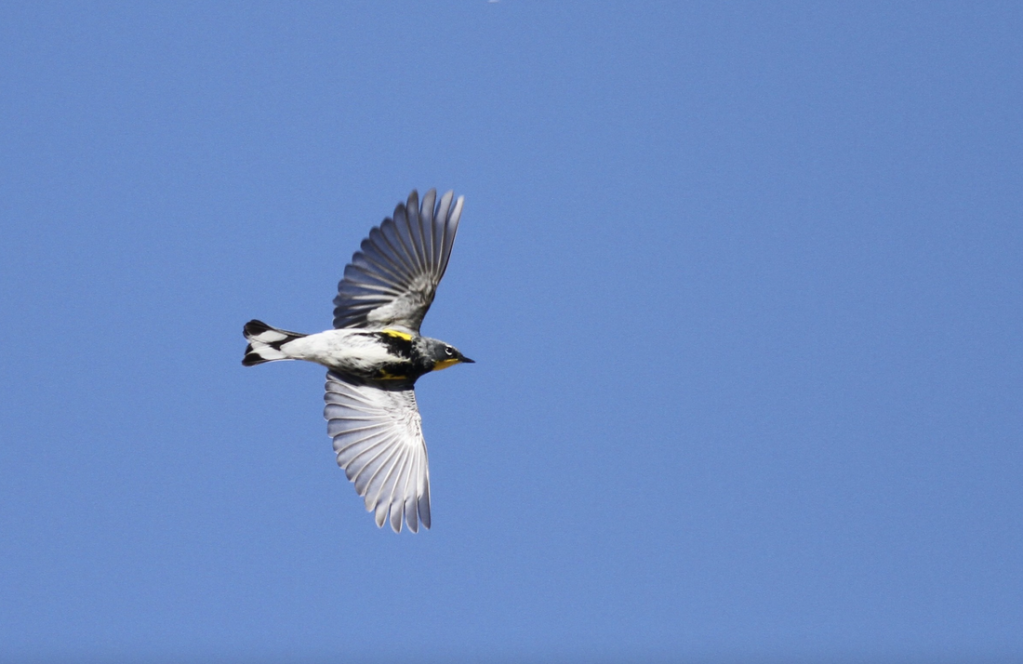 Yellow-rumped Warbler (Ryan Terrill)
One finding: the farther north a species breeds, the later it tends to pass through Bear Divide. And it’s unusual to see this many small birds migrating in daylight at all. Most songbirds on the Pacific Flyway travel at night.
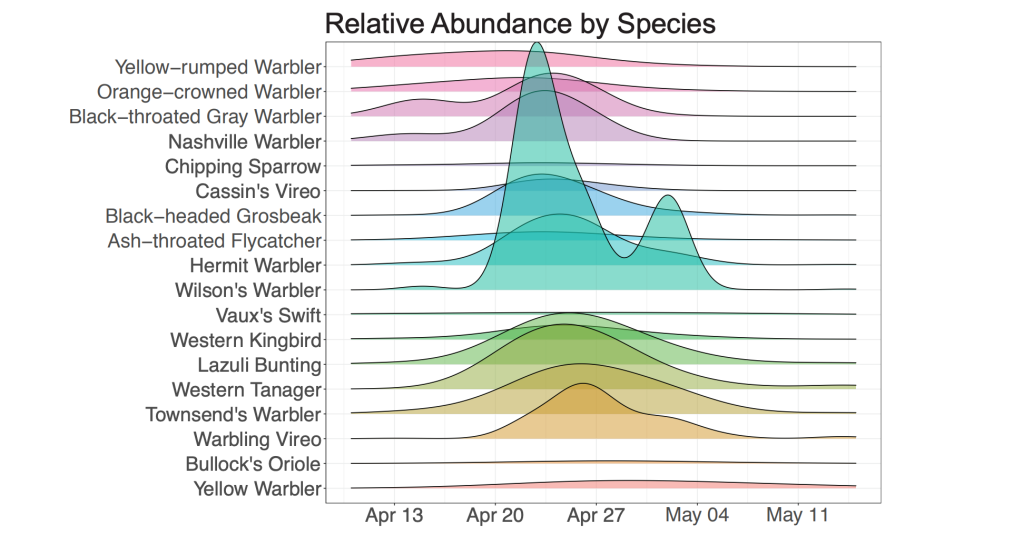 The Moore Lab of Zoology
Volunteers are a big part of it. The project works with local birders, who help with the counts and get hooked on the place.
Bear Divide is on public land, so anyone with a legitimate research project can get permission to work there. UCLA graduate student Kelsey Reckling, who has worked as a counter at Bear Divide since the beginning, is leading the counting efforts this Spring to understand changes in numbers of birds and species across years. Cal State L.A. graduate student Lauren Hill leads the group of bird banders, who catch some of the birds and record data, attaching a lightweight metal band around one leg and releasing them. Her lab mate Tania Romero is putting small, lightweight tracking devices on Yellow Warblers, which send signals to a network of tracking (MOTUS) towers across the continent.
All of this matters because birds are in trouble, from climate change, pesticides and habitat loss. And birds matter to us: they eat insects, pollinate plants and spread seeds.
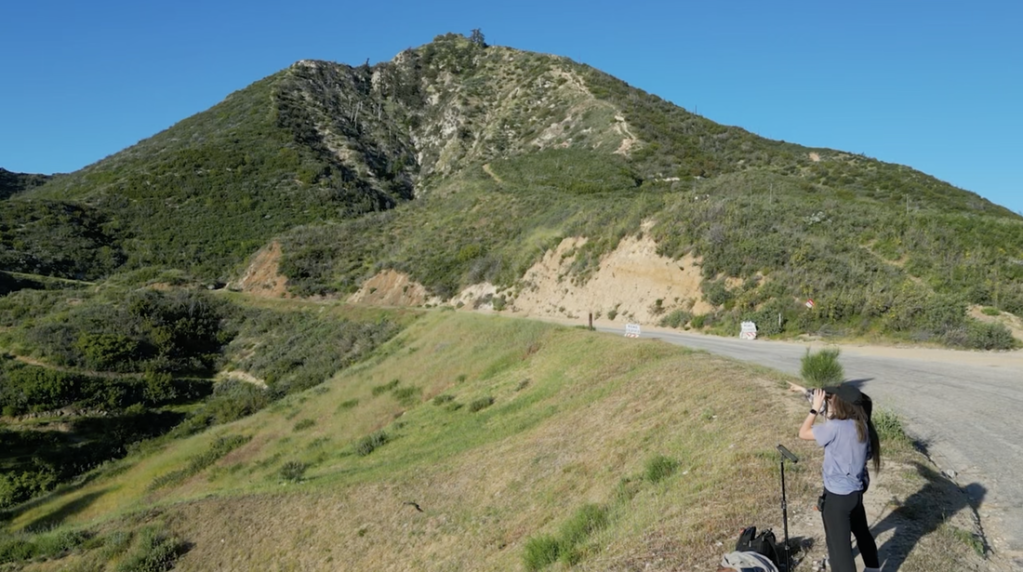 Bear Divide (Ian Davies)
According to a 2019 study, the U.S. and Canada have lost nearly 3 billion breeding birds since 1970, about 30 percent of the total. The 2022 State of the Birds Report for the United States found declines continuing in almost every habitat except wetlands.
That’s why places like Bear Divide matter. As Los Angeles keeps spreading, the gaps birds use to get through are worth protecting.
 Band-tailed Pigeon (Ryan Terrill)
“What’s magical about Bear Divide is that it’s the first real place to see small, migrating birds at eye level in daylight hours,” says McCormack. “I don’t want to oversell it: it’s still a lot of small birds zinging by in a wide open place and it takes a while to get good at identifying them. But by seeing them out there, struggling against the wind and the cold, but still making progress, it gives you a real sense of how amazing their journeys are—and how we shouldn’t make them harder if there’s anything we can do about it.”
More California science, photography and wild places on Instagram @californiacuratedus