How a Tiny Beetle Helped Save California
In the 1880s, an Australian insect was killing California’s orange groves. A USDA entomologist smuggled in a tiny ladybug that wiped it out, the world’s first great success in biological pest control.
Updated
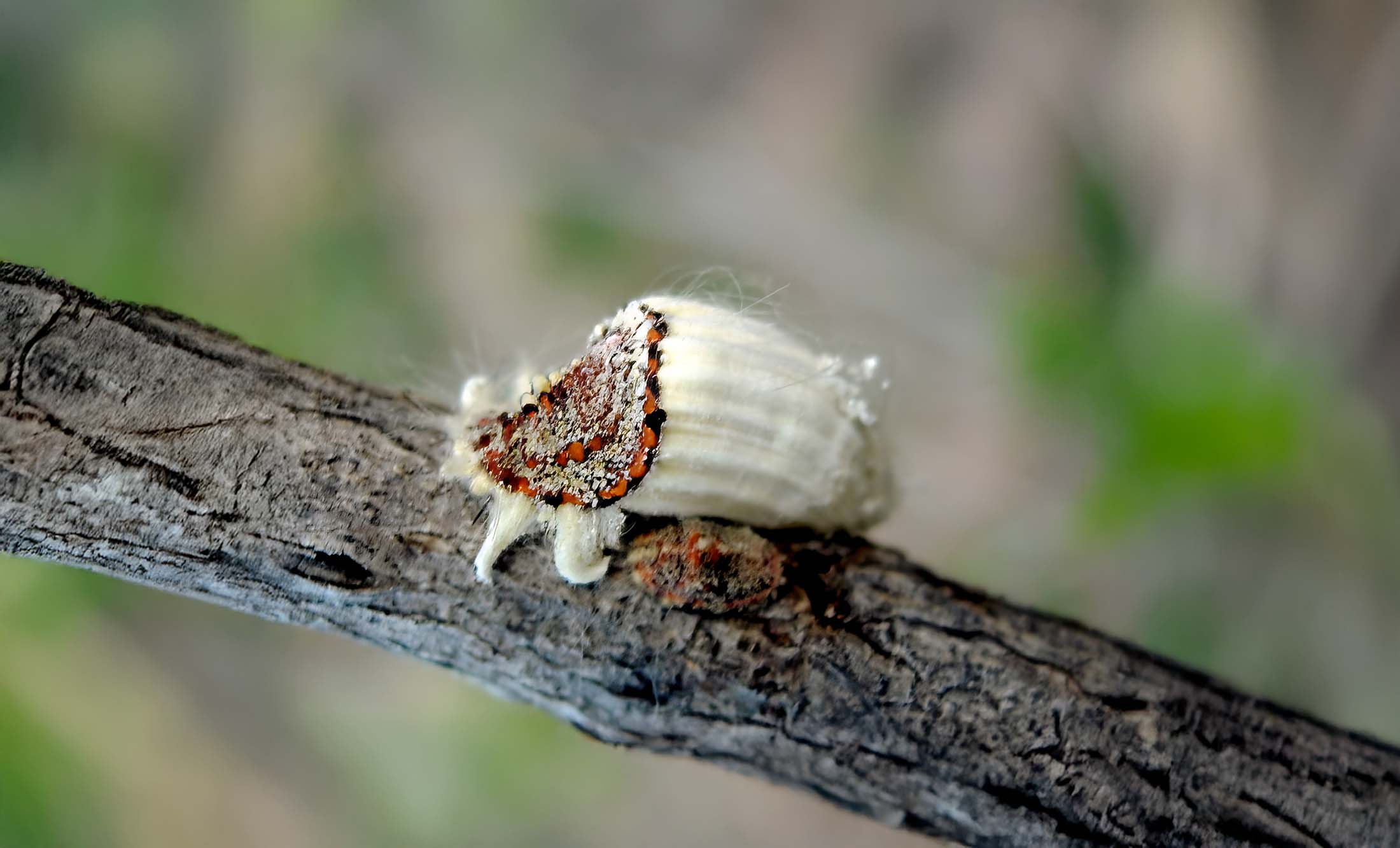
In the 1880s, California’s orange groves were dying, and nothing seemed to stop it. The killer was a tiny sap-sucking insect from Australia called the cottony cushion scale (Icerya purchasi). It had hitched a ride on imported plants, probably acacias, and turned up near Menlo Park around 1868, back when plants moved around the world with no quarantine rules at all. In California’s mild climate, it took off.

Infested trees were covered in white, cottony fluff. The insects sucked out the sap, and the sticky honeydew they excreted grew black sooty mold that blocked sunlight from the leaves. Growers tried everything: washing trees with whale oil, blasting them with steam, even setting off gunpowder in the orchards. Nothing worked. Citrus shipments crashed from 2,000 boxcars in 1887 to just 400 the next year, a disaster for an industry worth more than $10 million a year, roughly $627 million today.
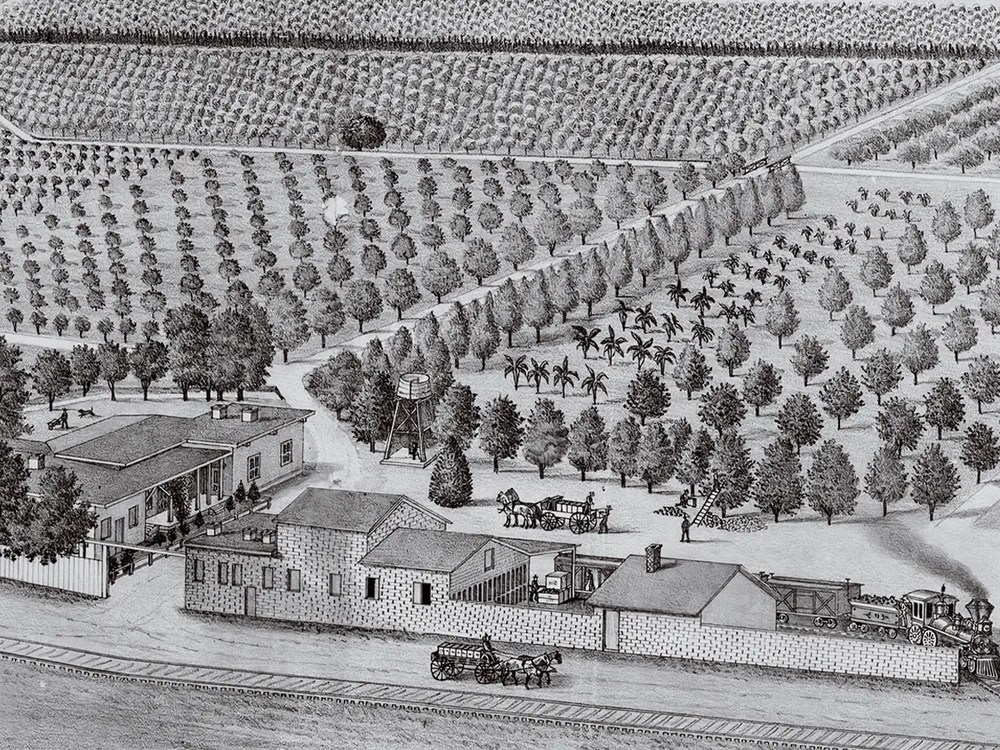 Orange and lemon groves, along with the home of citrus pioneer William Wolfskill, circa 1882. (California Historical Society)
Homemade sprays of kerosene, acid and other chemicals failed too. New laws forced growers to dig up and burn infested trees. By 1888, land values in citrus country, which had soared 600 percent in a decade, were collapsing. (The crisis also pushed growers to start organizing, which eventually led to the cooperative that became Sunkist.)
Enter Charles Valentine Riley, the chief entomologist of the U.S. Department of Agriculture. Riley had a radical idea: instead of poisoning the pest, find whatever eats it back home and bring that here. He’d tried something similar in France, sending mites to fight a grapevine pest, without much luck. In 1888, he sent his colleague Albert Koebele to Australia to look for the scale’s natural enemies.
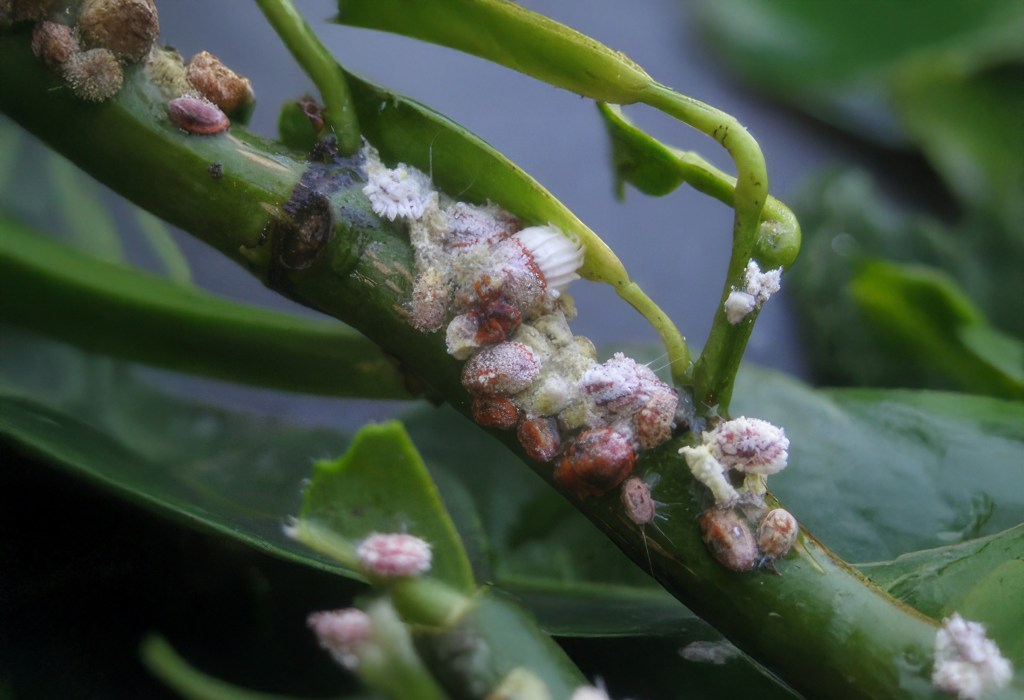 The cottony cushion scale infestations were so severe that citrus trees appeared as though they had been coated with artificial snow, resembling Christmas flocking. Fruit production sharply declined, and many trees succumbed to the damage. (UC Riverside)
Getting him there took some sneakiness. Congress had banned foreign travel by the Agriculture Department, mostly to stop Riley’s frequent trips to Europe. So Riley cleverly arranged for Koebele to tag along with a State Department delegation heading to an international exposition in Melbourne.
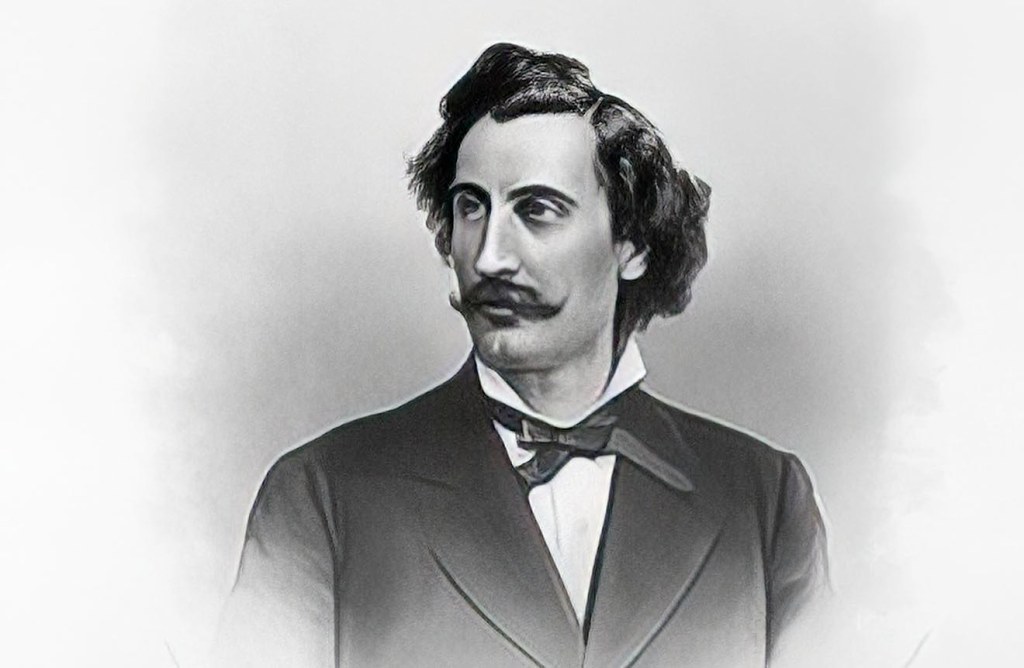 Charles Valentine Riley (Wikipedia)
It worked. With help from Australian experts, Koebele tracked down the scale in its native range, along with two of its enemies: a parasitic fly and a small red-and-black ladybug called the vedalia beetle (Novius cardinalis, formerly Rodolia cardinalis). He shipped a few hundred beetles to California. Released into infested groves, they gorged on the scale and multiplied like crazy. Within months, the scale was disappearing, and by 1890 it was largely under control statewide. It was the birth of biological control in the United States: fighting a pest by importing its natural predator.
In her 1962 classic Silent Spring, Rachel Carson called the vedalia beetle’s work in California “the world’s most famous and successful experiment in biological control.”
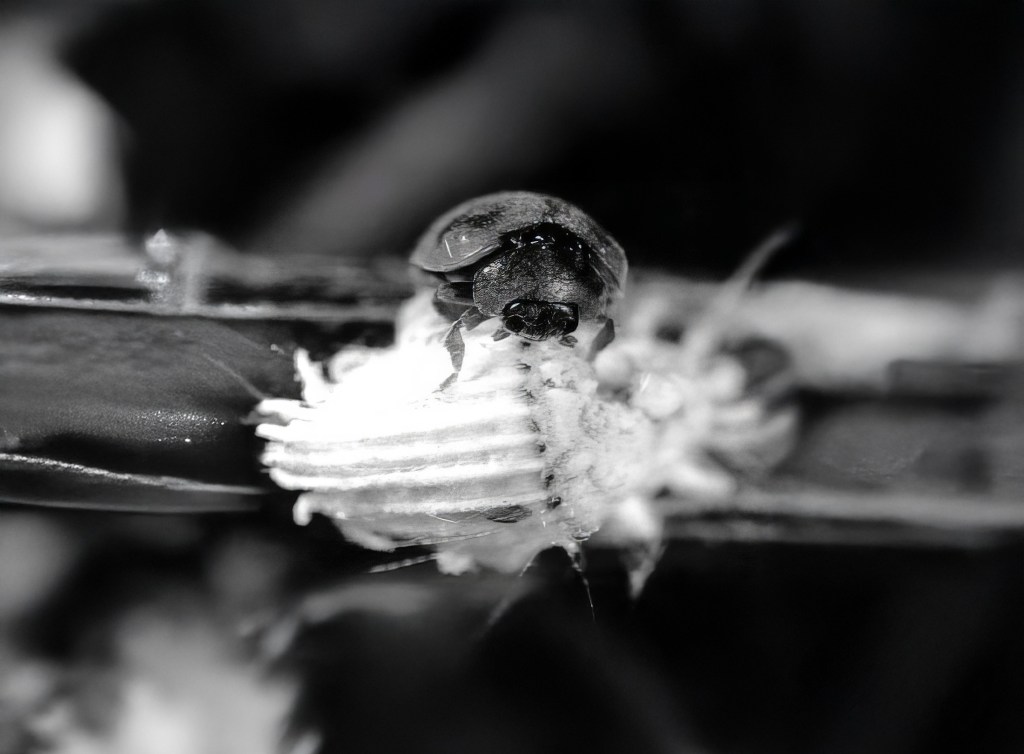 A vedalia beetle eats a cottony cushion scale. (UC Riverside)
California went on to try the trick many more times, with mixed results.
In 1959 and again in 1968, California brought in a tiny parasitic wasp, Trioxys pallidus, to fight the walnut aphid. The wasps lay their eggs inside the aphids, killing them, and saved walnut growers millions. In the 1990s, the state was invaded by the glassy-winged sharpshooter, a pest that spread Pierce’s disease in grapevines. (Fun fact: the sharpshooter drinks so much plant sap that it pees up to 300 times its body weight a day, flinging the droplets off with a little catapult on its rear end.) To fight it, scientists released Gonatocerus ashmeadi , a parasitic wasp that attacks its eggs, which helped protect California’s vineyards.
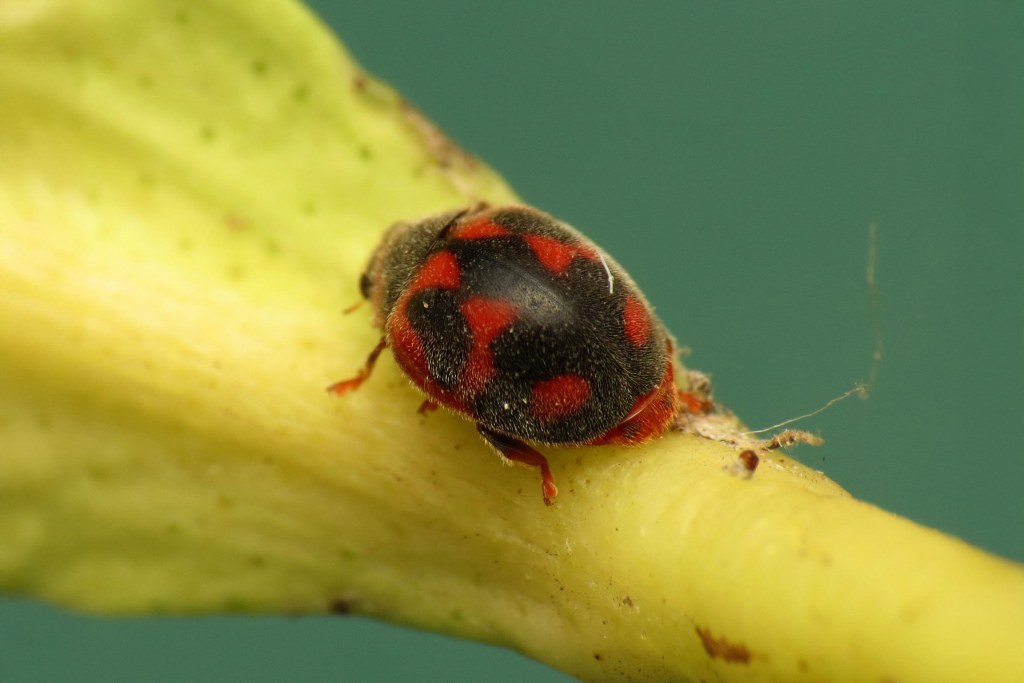 The vedalia beetle (Novius cardinalis), also known as the cardinal ladybird (Katja Schulz Wikipedia)
Importing predators can go badly wrong, though. The vedalia beetle only eats cottony cushion scale, so it didn’t cause trouble. Other introductions did. The cane toad in Australia, brought in to eat sugarcane beetles, became an ecological disaster, and the mongoose introduced to control rats in Hawaii’s cane fields went after native birds instead. That’s why biological control today requires years of testing before anything gets released.
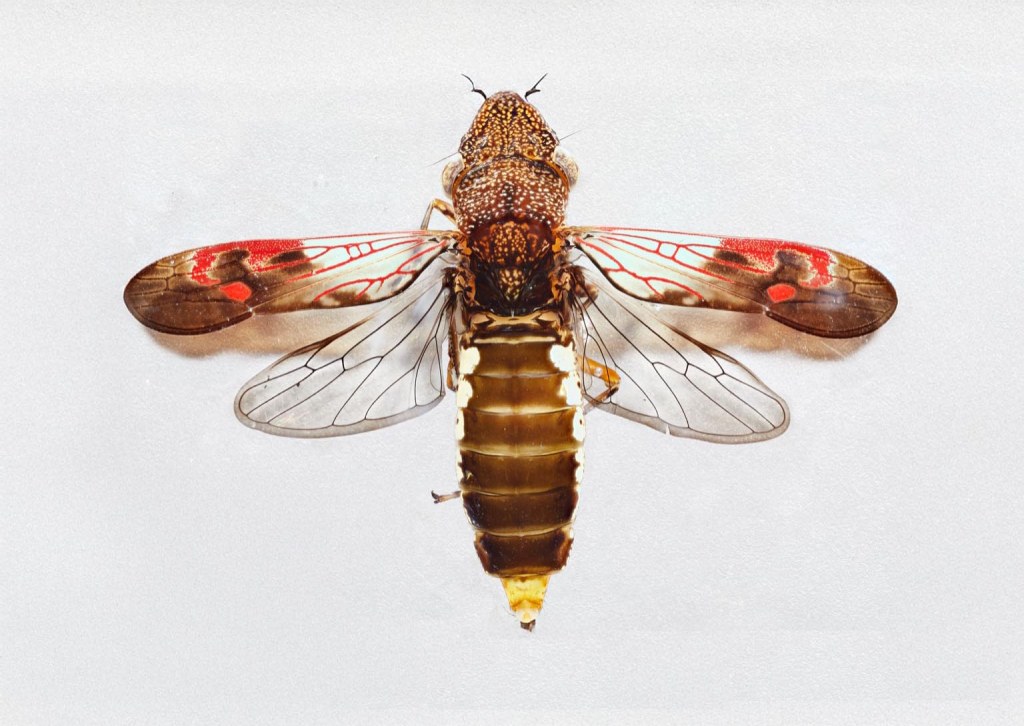 The glassy-winged sharpshooter (Georgia Tech)
With the scale beaten, citrus took off and became one of California’s most valuable crops.
The vedalia beetle didn’t just save an industry. It showed the world there was another way to fight pests besides spraying poison, and farmers everywhere have used the idea since.

Visit the California Curated store on Etsy for original prints showing the beauty and natural wonder of California.
And the beetle is still out there, more than 130 years later, quietly eating cottony cushion scale in California gardens. Next time you see a little red-and-black ladybug on a citrus tree, it might be one of its descendants.
More California science, photography and wild places on Instagram @californiacuratedus