The California Supervolcano You Can Visit...and Other Amazing Geologic Attractions
Supervolcanoes, Hot Springs, Fumaroles, Yellow Lakes, and Other Geologic Wonders of Mammoth Lakes
I’ve been up in the Eastern Sierra for the last few days driving around and filming a couple of cool stories I’ve got cooking. I spent a day exploring the Long Valley Caldera, one of the most interesting geologic sites in California, if not the United States. Then I went to Mono Lake and drove to the top of Lookout Mountain, which is covered in obsidian used by the indigenous tribes who once lived and thrived here.
It’s not an exaggeration to call the whole region a mini Yellowstone. There are hot springs, fumaroles, earthquakes, strange yellow lakes, volcanic domes: all signs of geologic forces still at work beneath the surface. It’s also breathtakingly beautiful. I wrote about the caldera a while back, but decided to flesh it out with more detail should people want to visit and see some of the fascinating sites for themselves. The caldera and the surrounding landscape remain one of my favorite places to explore in California. Every visit reveals something new.
Driving up Highway 395 toward Mammoth Lakes is one of the most breathtaking road trips in California. The highway winds through the jagged Eastern Sierra, offering mind-blowing views of snow-caked peaks, alpine meadows that are especially green right now, and vast chaparral plains. But beneath the landscape lies a hidden danger: heat and magma that power an ancient volcano that once shook the earth. Evidence of that past is everywhere and much of it can be easily experienced in a day’s drive around the region.
The Long Valley Caldera in eastern California is an extraordinary geological feature, spanning about 20 miles in length and 11 miles in width. It owes its existence to one of the most dramatic volcanic events in Earth’s history, a super-eruption that occurred approximately 760,000 years ago. This event, known as the Bishop Tuff eruption, ejected an estimated 150 cubic miles of molten rock and ash into the atmosphere, far surpassing the 1980 eruption of Mount St. Helens, which released just 0.3 cubic miles of material. The magnitude of the Bishop Tuff eruption resulted in the collapse of the ground above the magma chamber, creating a massive depression known as a caldera (Yellowstone has one, too, that’s larger.). The eruption was the largest volcanic event in the last million years of North American history.
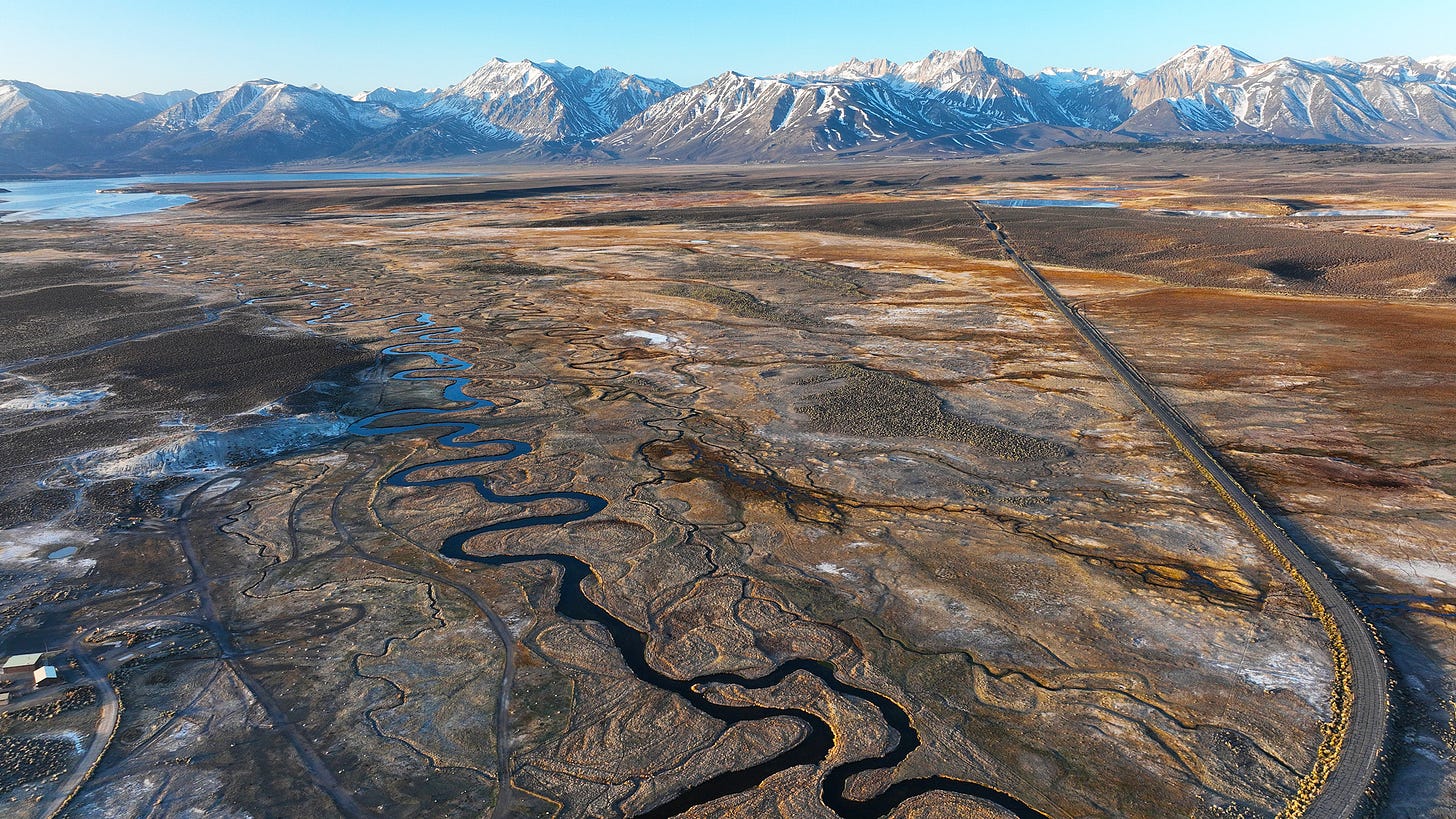 Drone’s eye view of the Long Valley Caldera in the Eastern Sierra. The Owens River flows through the region. (Photo: Erik Olsen)
The caldera sits just a few miles from one of the nation’s most popular ski towns, Mammoth Lakes. Geothermal activity is visible everywhere. Just driving up 395 from LA, you can spy huge piles of basalt from eruptions over the millennia. Just before Mammoth, steam rises from various hot spots where water has been superheated by magma beneath the surface. This activity has made the caldera a hub for geothermal energy production. The Casa Diablo thermal power plant utilizes the subterranean heat to generate electricity, producing enough energy to power about 36,000 homes.
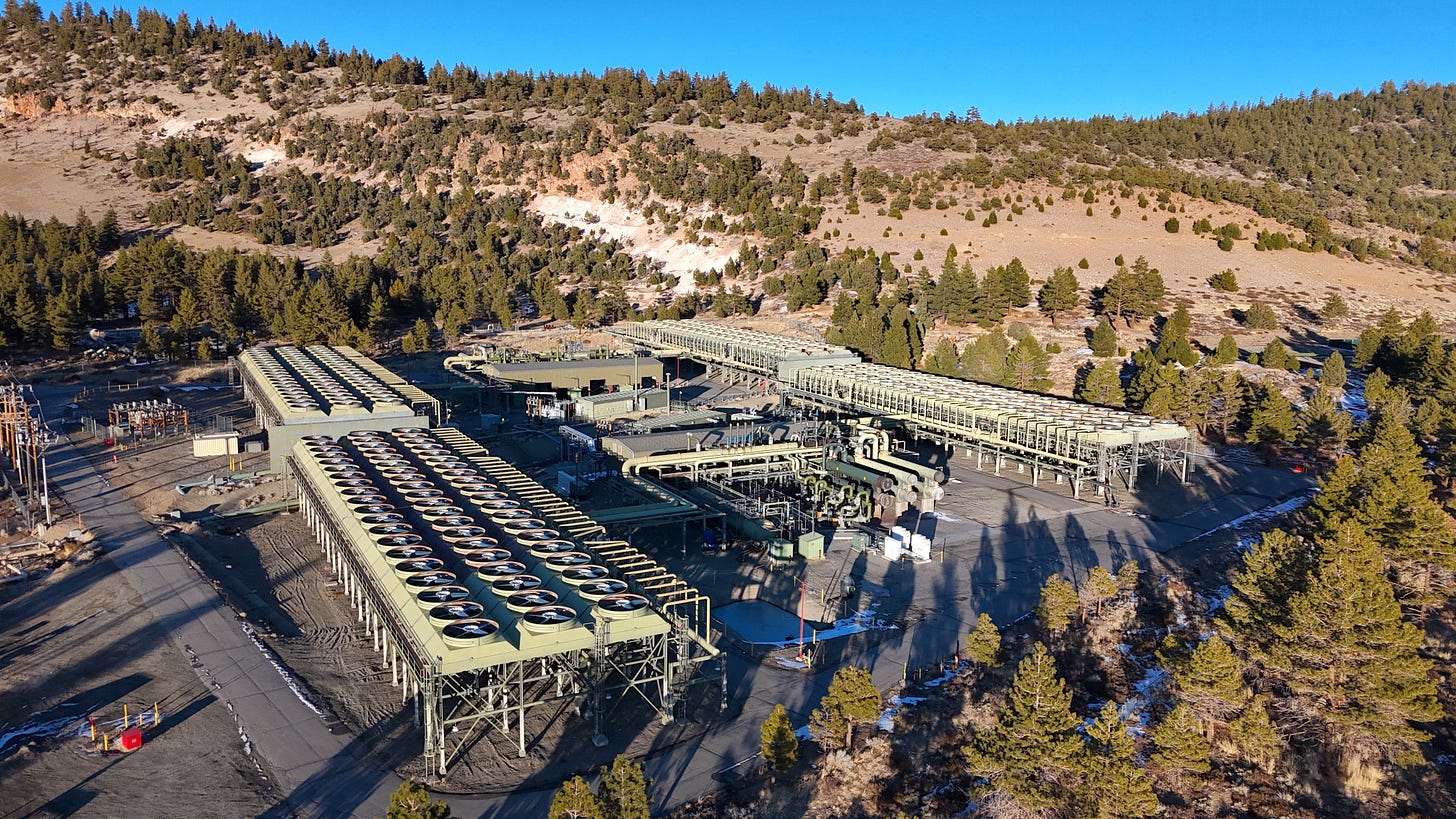 Casa Diablo Geothermal Facility, Long Valley Caldera, California (Photo: Erik Olsen)
The surface of the caldera, indeed much of the region, is defined by the Bishop Tuff, a layer of welded volcanic ash that speaks to the eruption’s intensity and the pyroclastic flows that reshaped the landscape. Pyroclastic flows are fast-moving, hot clouds of gas and volcanic material that can destroy everything in their path. Often, they are considered more dangerous than the lava that pours out of an erupting volcano. For example, pyroclastic flows killed far more people at Pompeii than lava, as the 79 AD eruption of Mount Vesuvius unleashed fast-moving clouds of superheated gas, ash, and volcanic debris that raced down the slopes at over 100 mph. Those waves of burning material reached temperatures above 1,000°F, instantly asphyxiating and incinerating thousands.
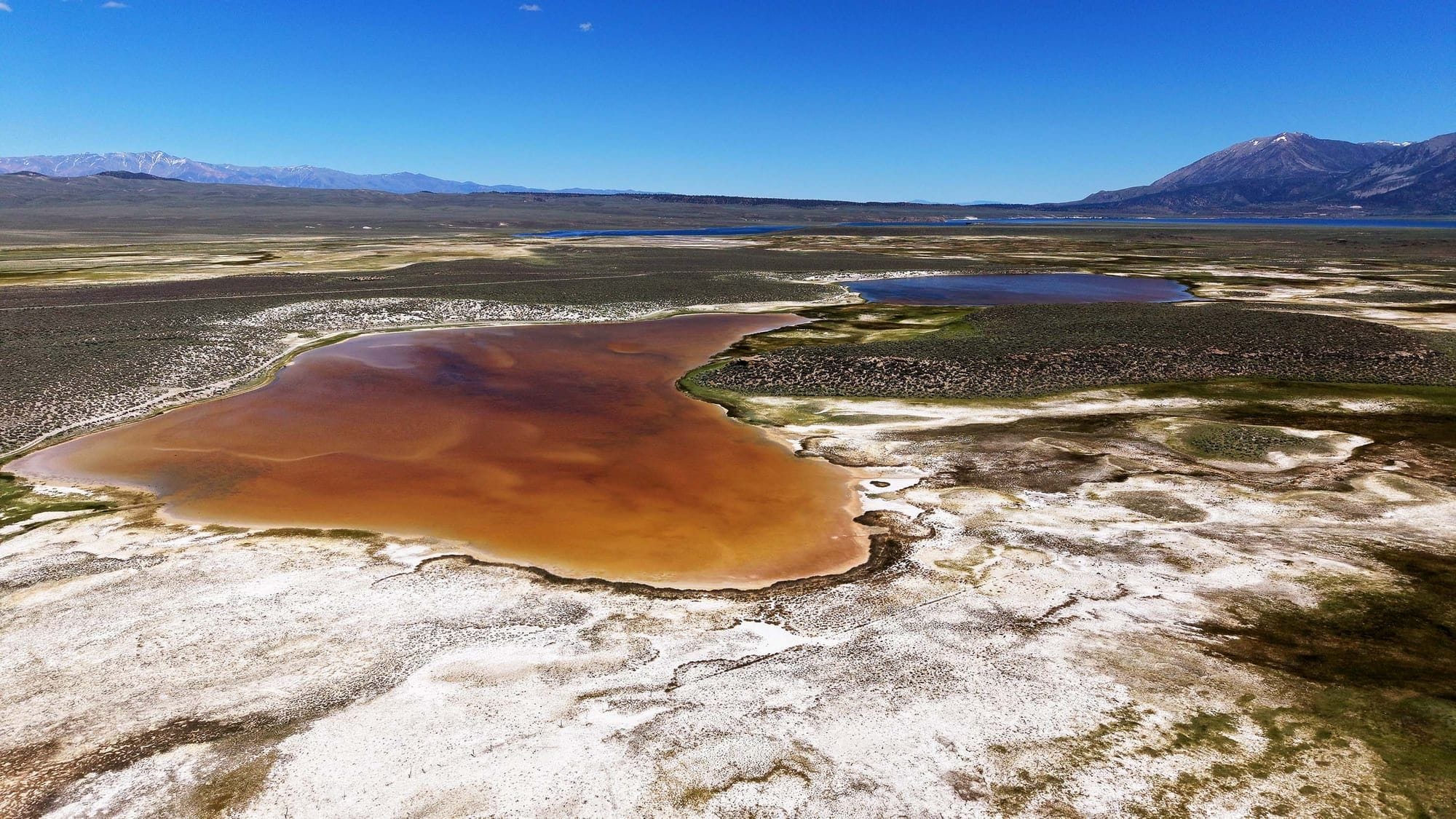
But where there is heat, there is often life. Geothermal features at the Long Valley Caldera commonly support microbial communities of thermophilic bacteria and algae, which thrive in the caldera’s hot springs and fumaroles. Walking around the caldera, your feet often crunch over dense dry mats of bacteria, giving the place a moonscape feeling. Scientists are just beginning to understand how similar bacteria live and thrive in deep ocean vent systems.
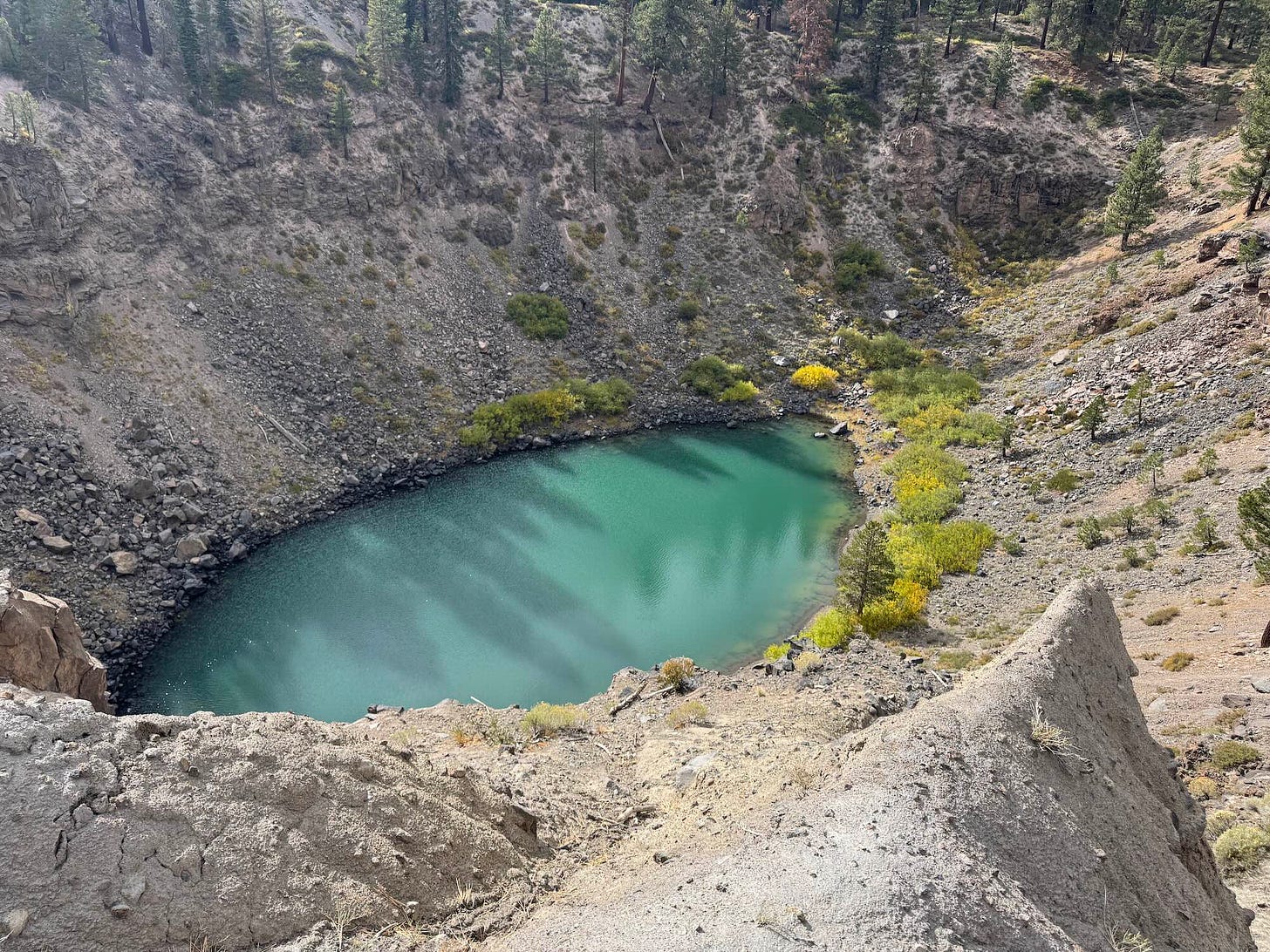 The Inyo Craters are among the youngest volcanic features in California, formed by eruptions just a few hundred years ago. (Photo: Erik Olsen)
Around the caldera are many different features that also tell the story of the region’s continuing volcanic activity. Just to the north, the Mono-Inyo Craters can be visited after a short hike. This small volcanic chain was created by eruptions as recently as about 600 years ago.
Then, there is Horseshoe Lake, reached by car, town trolley, or a wonderful, if strenuous, bike ride. Here, clouds of carbon dioxide continuously seep from the ground, suffocating tree roots and causing a vast die-off of trees. The gas is invisible and odorless, and in high concentrations can displace oxygen, leading to unconsciousness or even death. Many people still swim in the lake during the summer, often just steps from signs describing the hazard. A few people have died or gotten sick up there, but really the key is to stay away from the deeper depressions in the area.
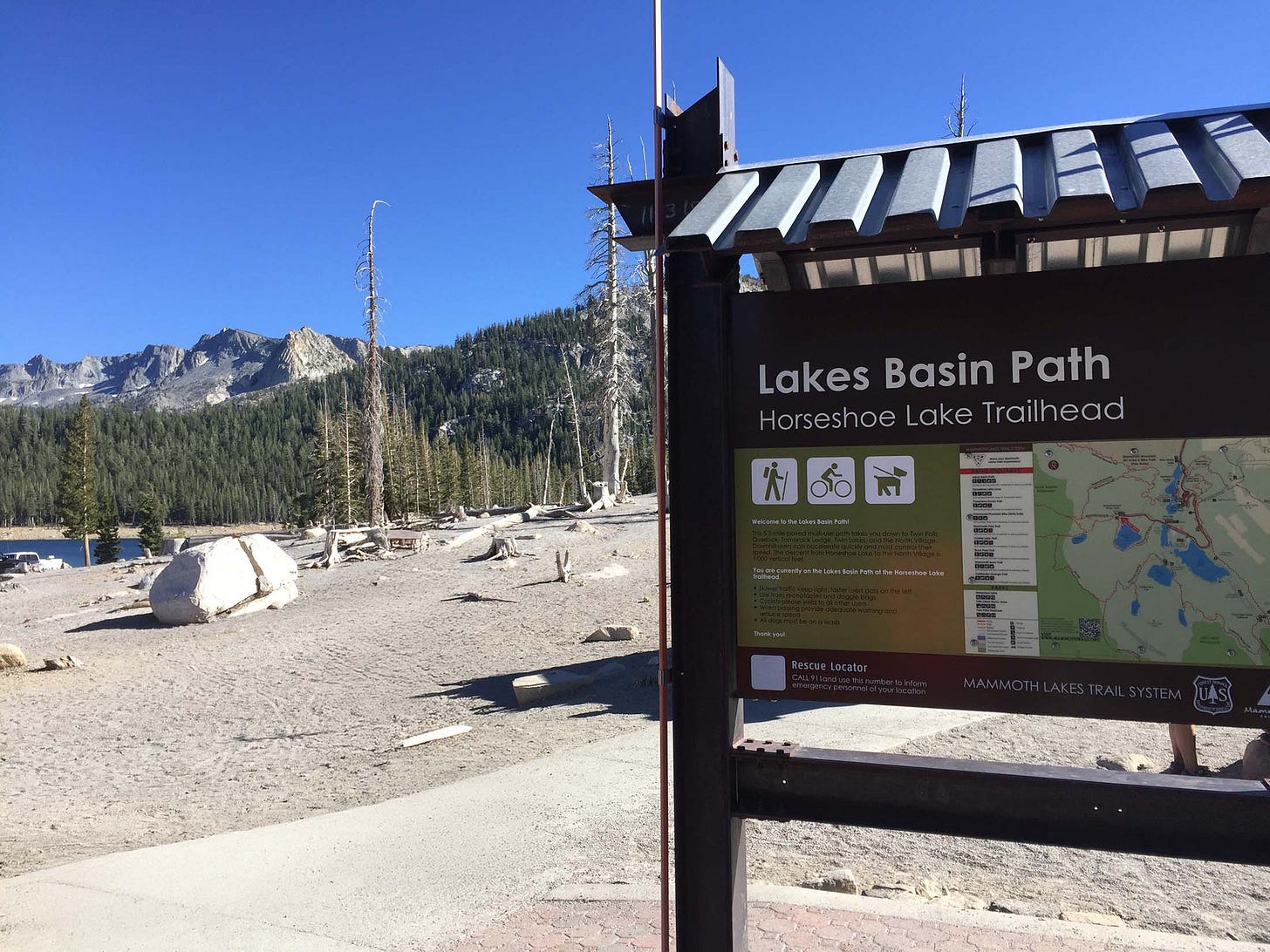 Horseshoe Lake in the Mammoth Lakes area, where underground carbon dioxide emissions have caused widespread tree die-off (Photo: Erik Olsen)
In 1980, a series of magnitude 6 earthquakes occurred along the caldera’s southern margin, drawing the attention of volcanologists from USGS. The earthquakes were accompanied by noticeable uplift in the caldera’s floor, a sign of magma movement beneath the surface. Since the 1980 unrest, parts of the dome have risen by more than 30 inches (about 80 centimeters), making Long Valley one of the most closely watched volcanic systems in the United States. The uplift can still be seen while driving into Mammoth Lakes, where a broad so-called resurgent dome rises from the caldera floor on the right-hand side of the valley.
The seismic unrest was significant enough that local officials and emergency planners began developed evacuation plans and routes for Mammoth Lakes in the event that volcanic activity intensified. In an interesting bit of local rebranding, the road was originally known as the Mammoth Escape Route, but after Mammoth-area businesses and landowners called out the alarming name, it was renamed the Mammoth Scenic Loop, which is what can be seen on signs today.
While there is currently no indication of an imminent eruption, the area is closely monitored by the United States Geological Survey (USGS).
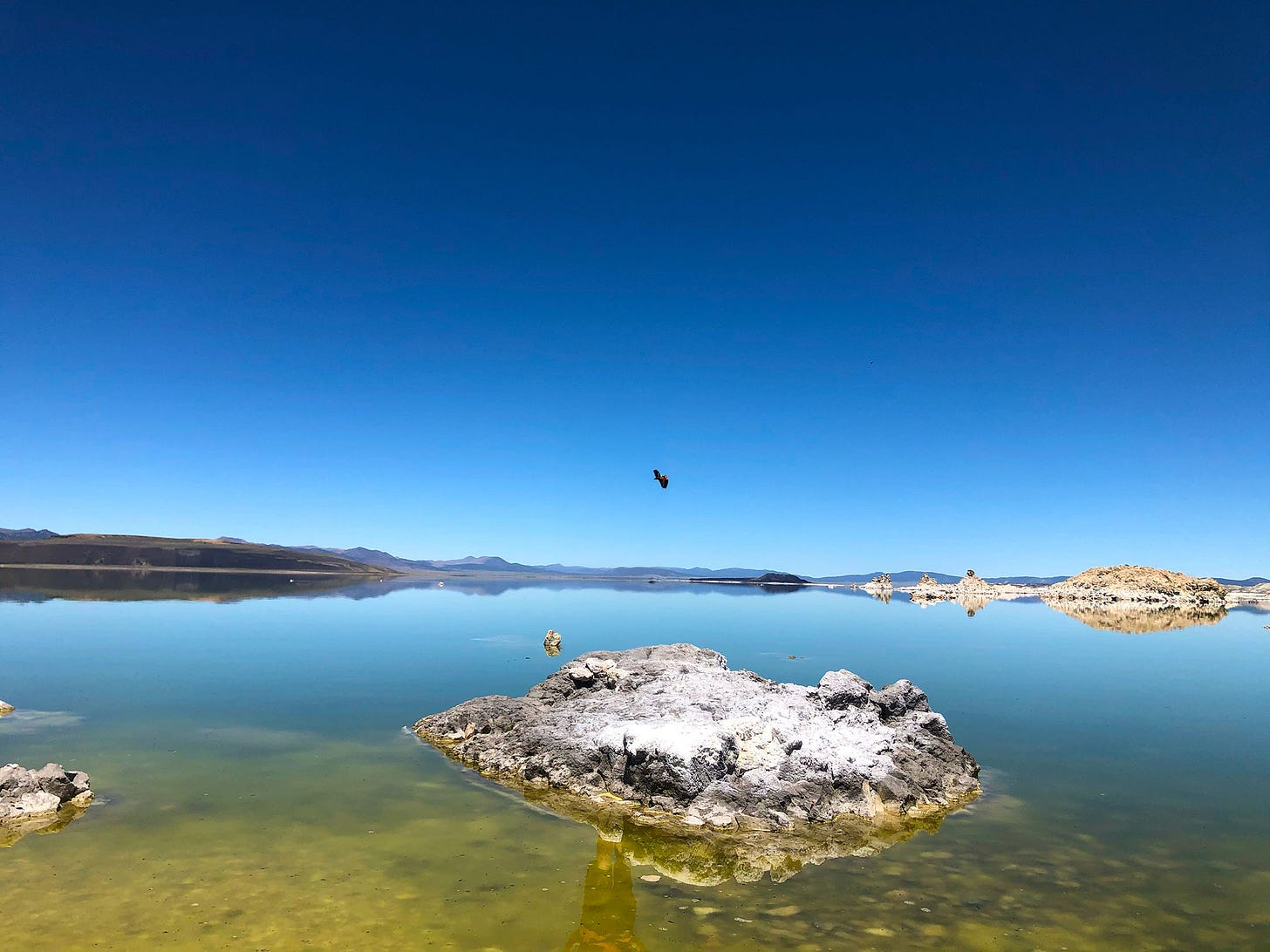 Mono Lake is home to thermophilic (heat-loving) and extremophilic (extreme-condition-loving) bacteria. These microorganisms thrive in the lake’s unusual environment, characterized by high alkalinity, high salinity, and elevated levels of carbonate. (Erik Olsen)
A bit further out, but part of the same geologic phenomena, you can find Mono Lake, an easy drive from Mammoth. This place is also other-worldly, with its famous tufa tours rising from the still, greenish waters of the lake. They formed when calcium-rich springs, fed by groundwater moving through the area’s volcanic rocks, mixed with the lake’s alkaline water. The towers made their way into popular culture when Pink Floyd used a photograph of a guy diving into Mono Lake—the water completely still around him—for their Wish You Were Here album.
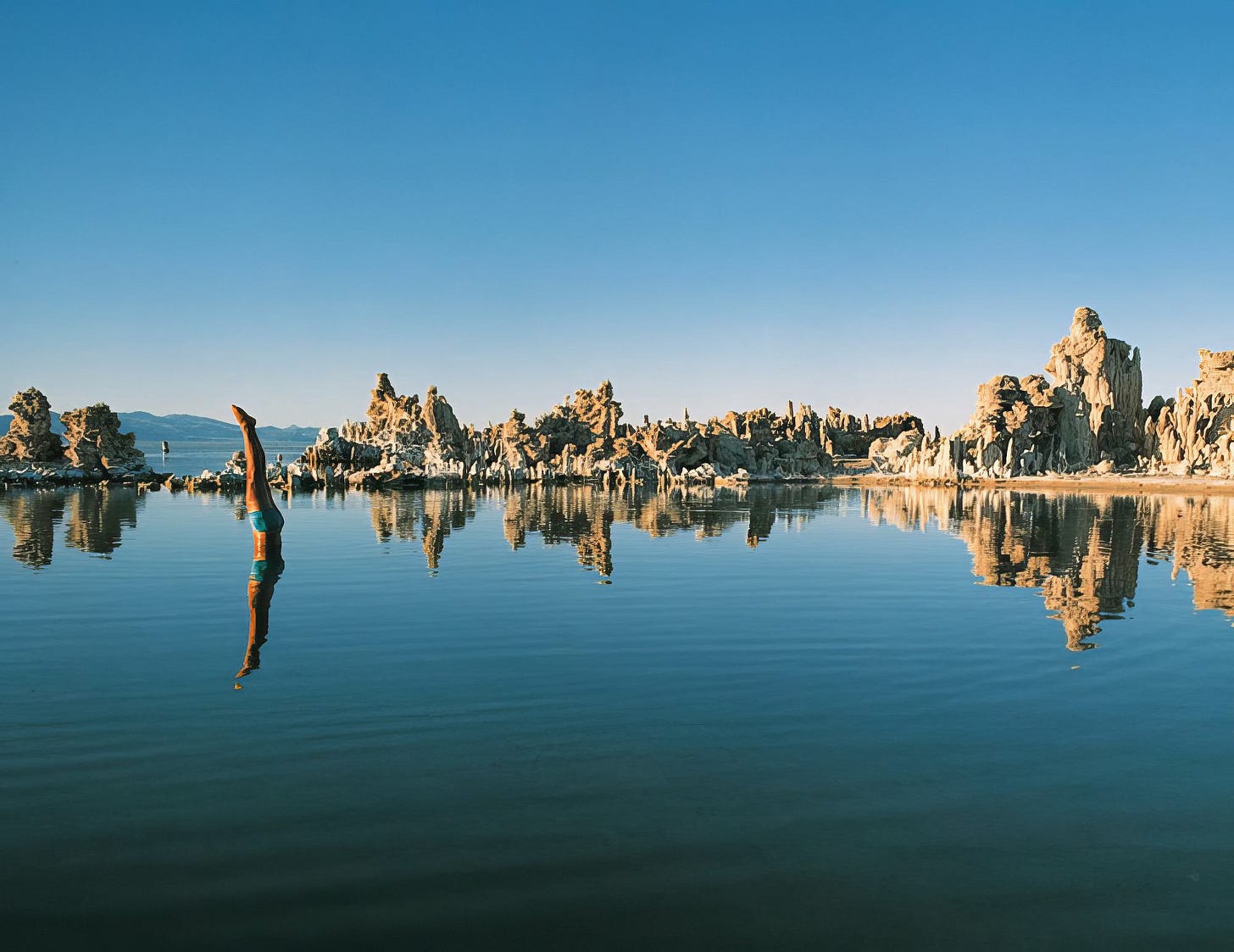
The towers made their way into popular culture when Pink Floyd used a photograph of a guy diving into Mono Lake—the water completely still around him—for their Wish You Were Here album.
Of course, there are still other dangers to all this volcanic activity, right at Mammoth Mountain itself, which technically is a volcano. On April 6, 2006, three members of the Mammoth Mountain ski patrol tragically lost their lives after falling into a volcanic fumarole near the summit. They were conducting safety operations to secure a snow-covered geothermal vent after a major snowfall. If you’ve ever skied Mammoth before, there is a distinct sulphurous smell around the Christmas Bowl ski run at Chair 3 near McCoy Station.
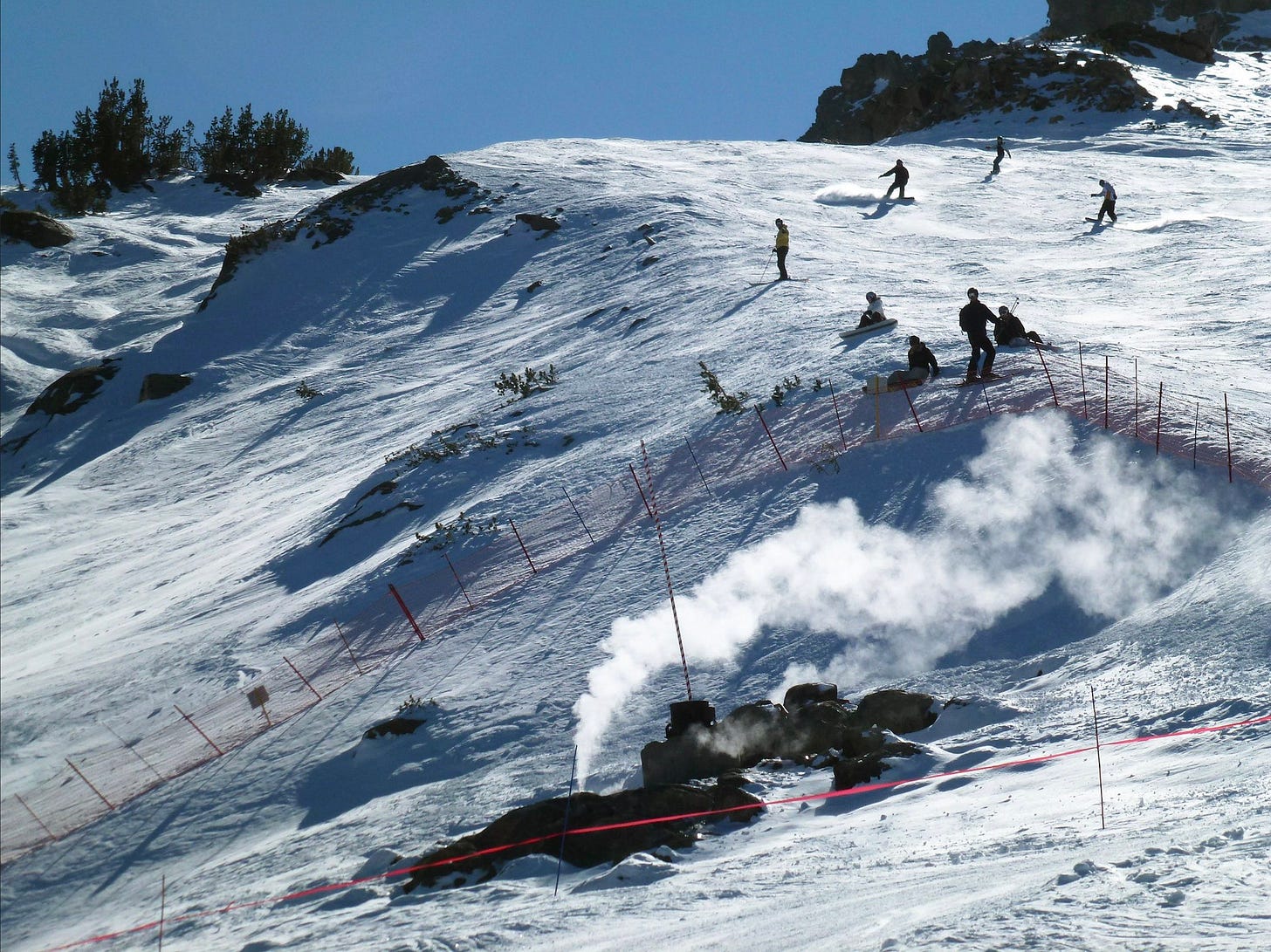 Steam from an active fumarole near McCoy Station on Mammoth Mountain in 2012. (Flickr)
I love exploring this region in California because it’s not only unparalleled in beauty but also a geological mystery. There is no place in California quite like the Eastern Sierra, and you can get to most places from paved roads, although some of the more interesting spots do require a four-wheel-drive vehicle. You see lots of Subarus up there.
What makes the region so special is that world-class science and tourism coexist side by side. You can spend the morning hiking through spectacular landscapes, then discover that the mountains, lakes, hot springs, and strange rock formations around you are all a part of California’s fascinating geology.