
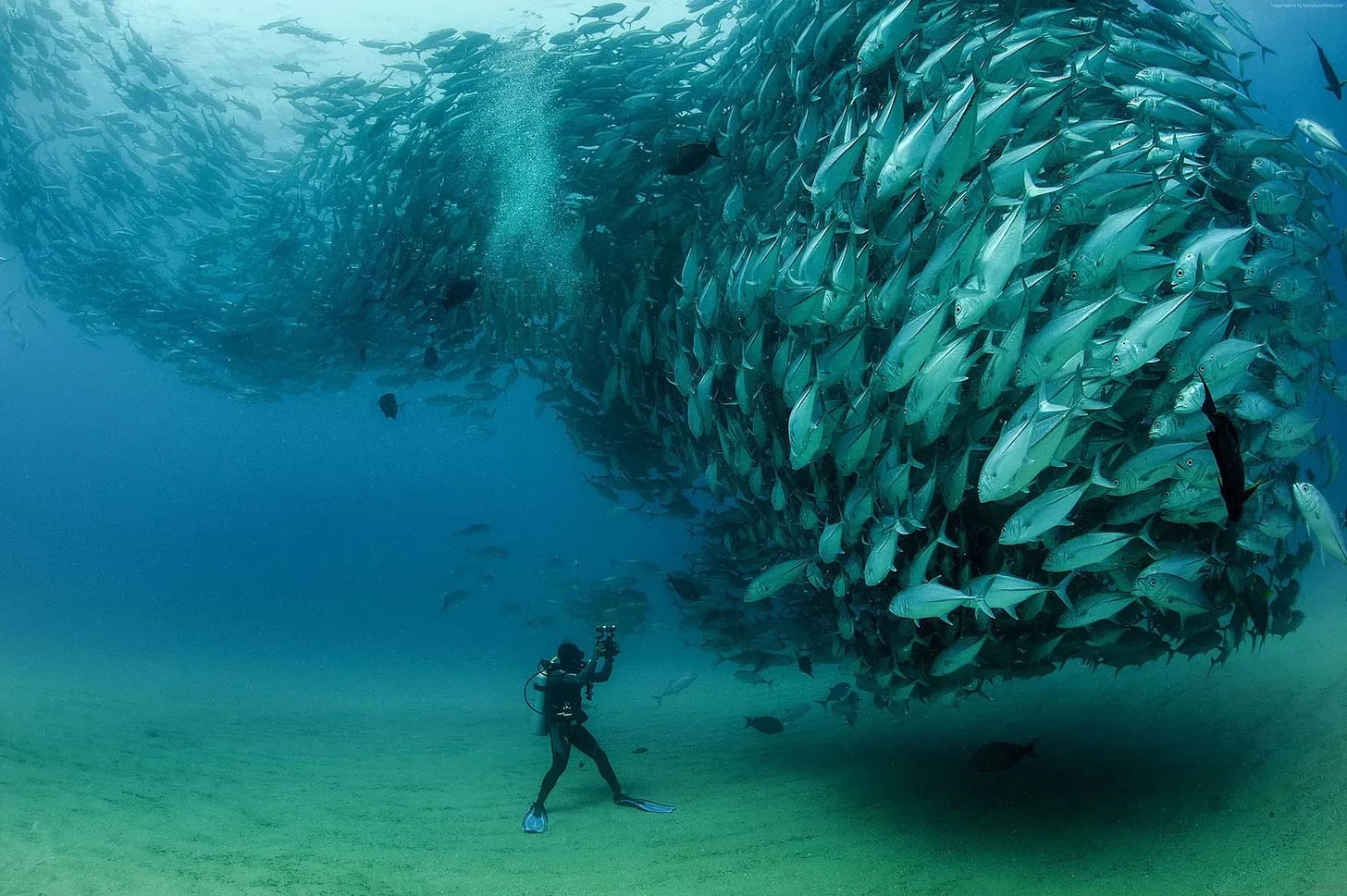
The Miracle of Cabo Pulmo in Baja California
How local fishermen transformed Cabo Pulmo into one of the world's greatest marine conservation success stories.
“A vision for ocean prosperity.” - Octavio Aburto
Cabo Pulmo, at the tip of the Baja Peninsula, is one of the world’s great marine conservation success stories. Just 100 kilometers (62 miles) northeast of Cabo San Lucas, this quiet fishing village lies next to the oldest coral reef on the west coast of North America. The reef itself is the northernmost coral reef of its kind and is estimated to be about 20,000 years old. Yet only a few decades ago, many feared it was going to be lost.
Last week, I dove the reef and surrounding waters of Cabo Pulmo with my two PADI-certified kids. Reaching Cabo Pulmo is not easy. The hot, lonely highway stretches for miles through an arid landscape of towering cardón cacti and endless desert scrub. The final 15 miles are along a rutted, washboard dirt road. I was relieved that my rental car made it without incident. The village itself is tiny, little more than a single unpaved road lined with dilapidated buildings, most of them local dive outfitters. One small restaurant served what were probably the freshest and best fish tacos I’ve ever had. And I’ve had a lot of fish tacos
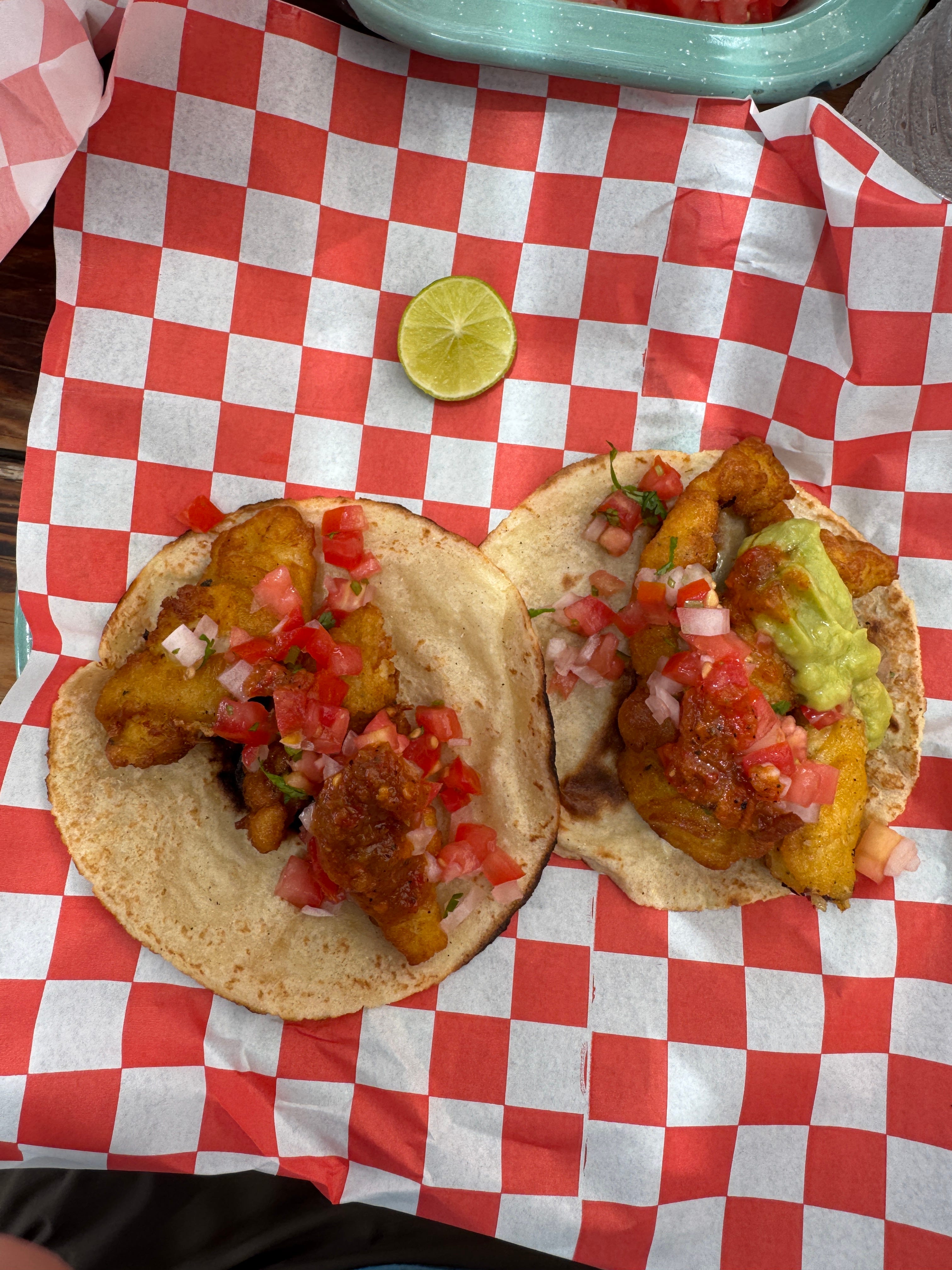 Honestly, some of the best — and freshest — fish tacos I’ve ever had. (Photo: Erik Olsen)
For generations, the families of Cabo Pulmo depended almost entirely on fishing. The reef supported abundant populations of grouper, snapper, jacks, sharks, and countless colorful reef fish. But by the 1980s and early 1990s, decades of commercial and artisanal fishing had severely depleted marine life there. Local fishermen watched catches shrink year after year. Rather than continuing to exploit a collapsing ecosystem, many reached an astonishing conclusion: perhaps the best way to save their future was to stop fishing. Altogether.
Led by local families including the Castro family, the community worked with Mexican scientists and conservationists to persuade the government to protect the reef. Their efforts paid off in 1995 when Mexico established Cabo Pulmo National Park, protecting roughly 71 square kilometers (27 square miles) of reef and surrounding waters. Although the initial plan allowed some fishing in portions of the park, local residents effectively treated the entire protected area as a no-take reserve, enforcing the rules themselves long before government enforcement came to be.
The recovery that followed has astonished marine scientists.
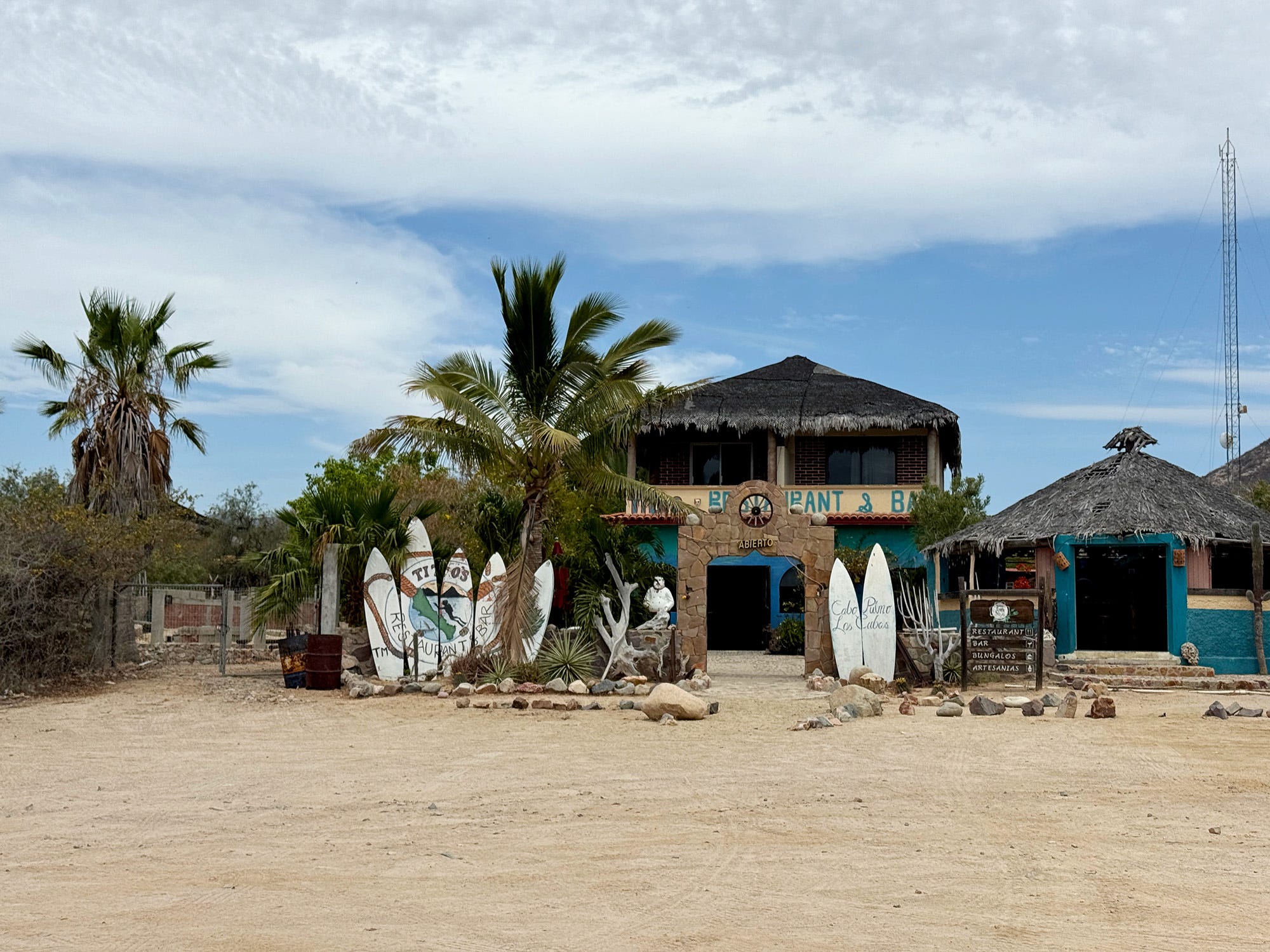 Cabo Pulmo remains remarkably undeveloped, with just a handful of buildings, most of them family-run dive outfitters, lining the village’s rutted dirt road. (Photo: Erik Olsen)
A landmark study led by marine ecologist Octavio Aburto, now an Associate Professor of Marine Biology at the Scripps Institution of Oceanography, compared underwater surveys conducted between 1999 and 2009. The researchers found that total reef fish biomass increased by a remarkable 463 percent, one of the largest recoveries ever documented inside a marine reserve. Top predators increased tenfold, while species diversity climbed dramatically as large schools of fish returned to the reef.
I talked to Aburto about Cabo Pulmo’s extraordinary recovery, and he believes the reef offers a blueprint for what is possible elsewhere if ecosystems are given the chance to recover. “When I first arrived in the 1990s, we didn’t see big animals,” he said. “Since 2010, every year my team and I have gone back to Cabo Pulmo to monitor the marine life, and it has completely changed what we understand about reefs in the Gulf of California.”
National Geographic Explorer Enric Sala, a co-author of the study, summarized the findings simply: “I could never have dreamt of such an extraordinary recovery of marine life at Cabo Pulmo.” Octavio Aburto wrote that “no other marine reserve in the world has shown such a fish recovery.”
Today, diving Cabo Pulmo is like entering an ocean that has largely disappeared elsewhere in the Gulf of California. The region is still known as the “The World’s Aquarium”, a term coined by the late Jacques Cousteau, but fish numbers in the Sea of Cortez have been in dramatic decline for a long time. But now, massive schools of bigeye jacks swirl into dense silver tornadoes. Green sea turtles glide calmly across the reef. Bull sharks patrol a cleaning station, while California sea lions, eagle rays, mobula rays, and occasionally mantas flap their underwater wings through the shallows. During the winter months, there are humpbacks and whale sharks. On our dive, even though it was murkier than I would have liked, we encountered giant groupers, snappers, porkfish, surgeonfish, angelfish, trumpetfish, moray eels, and dozens of species of tiny, colorful reef fish among the hard coral colonies. One school of yellow snapper we passed, or that passed us, consisted of several hundred fish, tightly aligned in formation. I’ve dived a lot of places in the world, and while Indonesia is still my favorite, Cabo Pulmo now ranks among one of my favorite places.
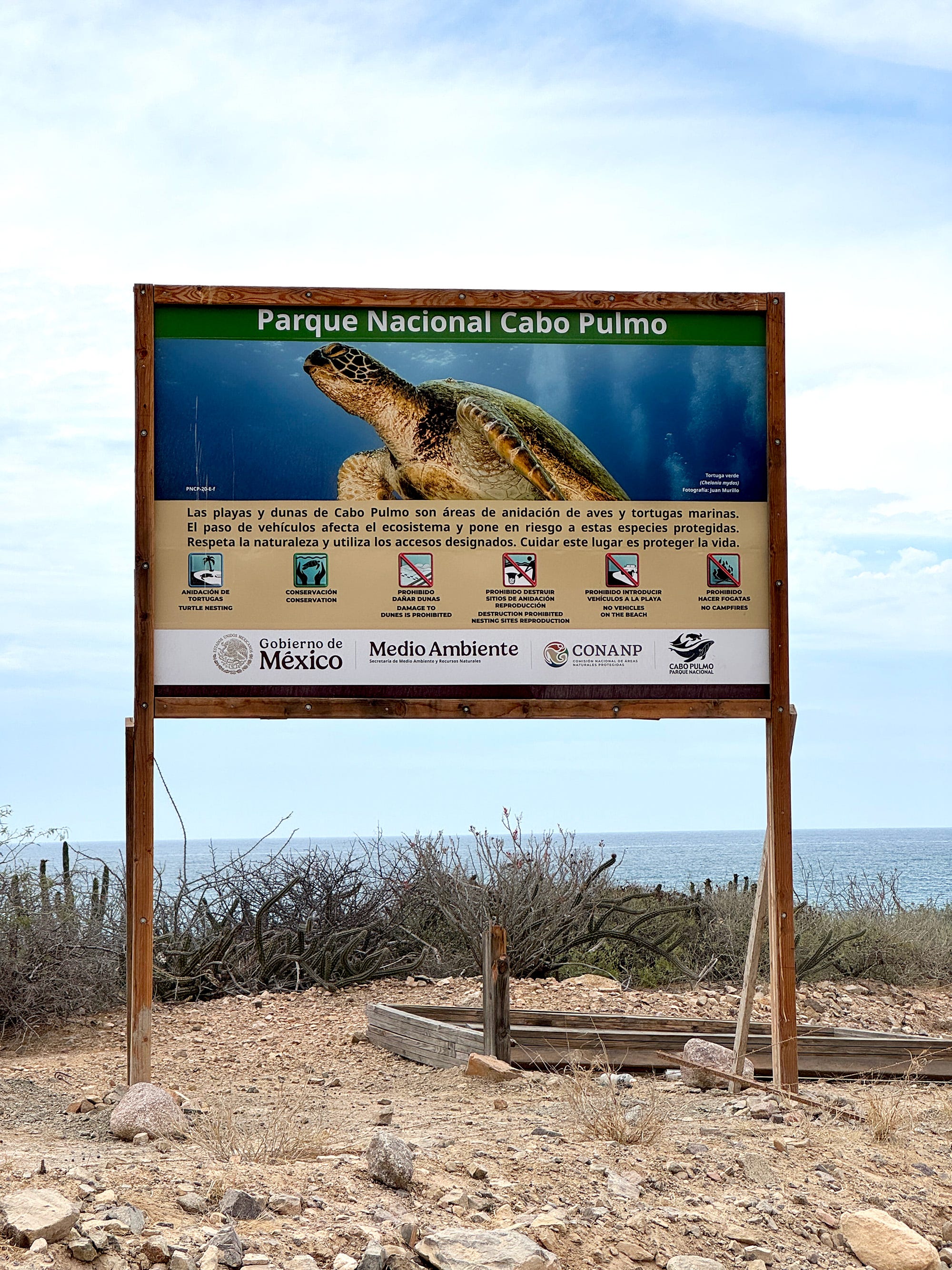 Cabo Pulmo was declared a protected marine area in 1995 after years of advocacy by local residents who recognized that overfishing was destroying the reef. (Photo: Erik Olsen)
Scientists continue to study how this unusually resilient ecosystem has survived environmental changes that have devastated many coral reefs elsewhere in the Pacific. Cabo Pulmo has become an important natural laboratory for understanding reef resilience, fish biomass, predator recovery, and how healthy ecosystems respond when fishing pressure is removed. In California, we have established an impressive network of marine protected areas (MPAs), many of them less than two decades old. The oldest, around the Channel Islands, has become one of the clearest demonstrations of what can happen when fishing and other extractive activities are curtailed and marine ecosystems are given the opportunity to recover.
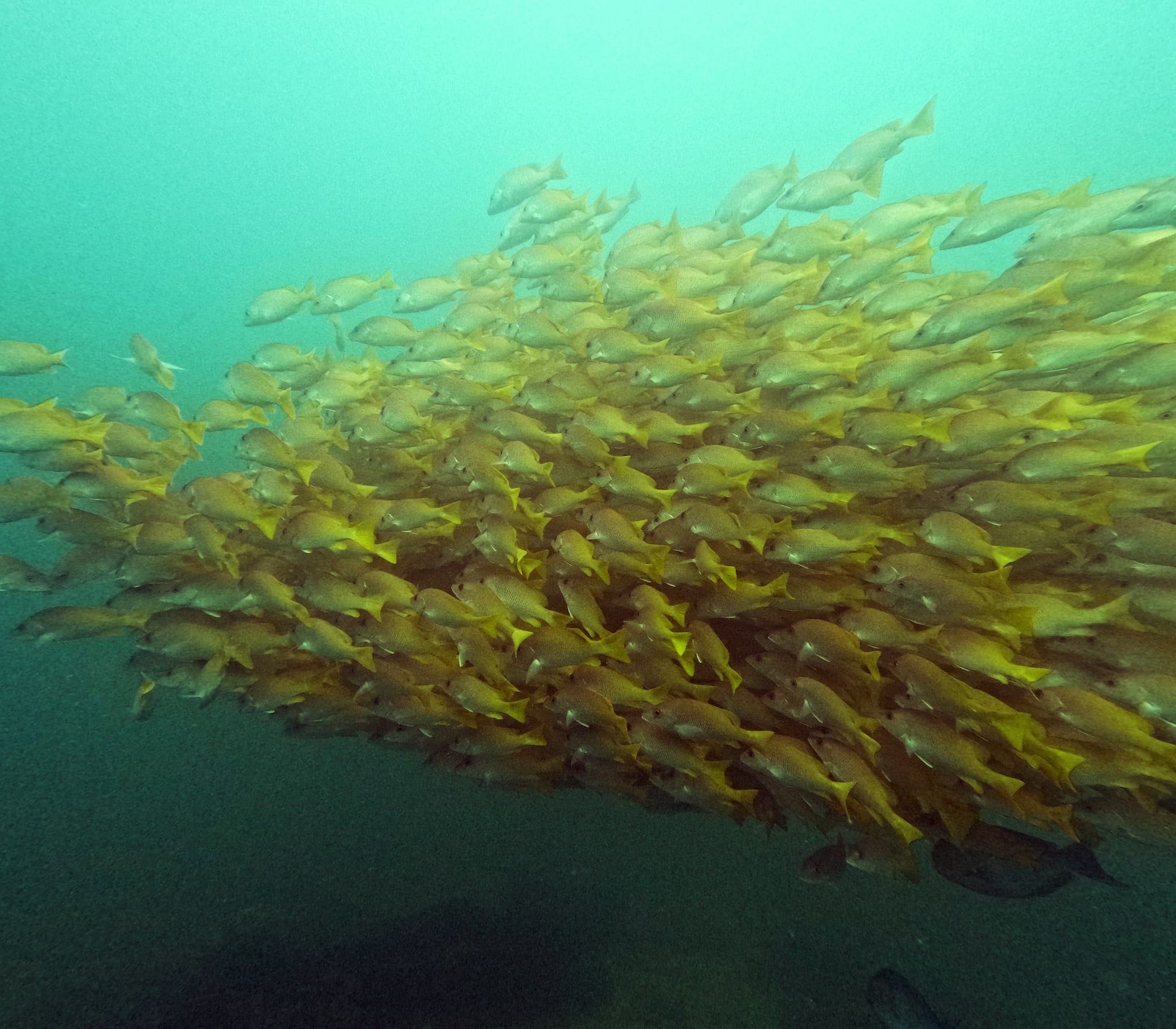 Incredible schools of fish, including yellow snapper (Photo: Erik Olsen)
Marine protected areas are becoming increasingly popular around the world. The recently adopted High Seas Treaty, formally known as the Agreement on Biodiversity Beyond National Jurisdiction (BBNJ), is expected to accelerate the creation of new protected areas in international waters. But I have seen firsthand that simply drawing lines on a map and making grandiose declarations is not enough. Some reserves are basically paper parks, protected in name but still heavily exploited because of weak enforcement. That does not seem to be the case at Cabo Pulmo. Here, protection is taken seriously.
As Aburto explains, the recovery at Cabo Pulmo demonstrates two of the most important lessons in marine conservation. “Number one: Marine life can come back very fast, in this case, just 10 years. Number two: If the local people are involved in protection, you get the best results.”
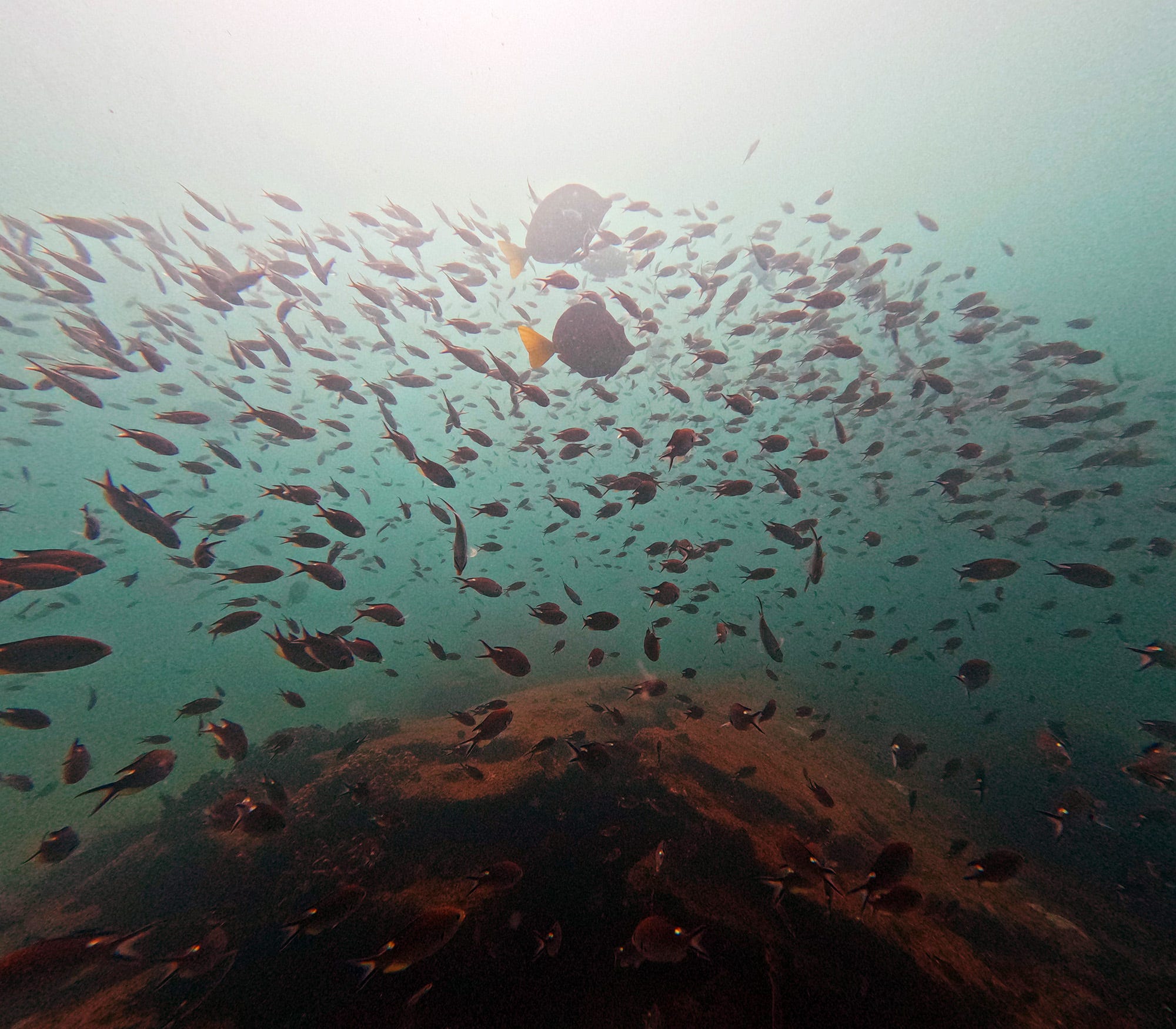 This photo really doesn’t do justice to the incredible numbers of fish around the reef. (Photo: Erik Olsen)
Perhaps the biggest lesson from Cabo Pulmo goes beyond the impressive biology. There’s a critical people aspect to it that deserves recognition. Rather than choose between conservation and economic survival, the village transformed itself and the region. Former fishermen became dive guides, boat captains, and ecotourism operators. Among divers, Cabo Pulmo is widely regarded as one of the world’s must-see destinations. Visitors now travel from around the globe to experience the enormous schools of fish that helped make the reef famous through stunning photographs, including those shot by Octavio Aburto himself.
I was only able to do two dives during my trip. Normally, I would have been focused on photography and videography, but with my kids along, my attention was on them. The visibility during both dives was also fairly poor, so I knew I wasn’t going to capture the spectacular imagery I’d seen from photographers who have visited on better days. It didn’t matter. I was blown away by not only the sheer number of fish, but also by their size. Visiting Cabo Pulmo had been a dream of mine for years. Now the dream is to go back.