
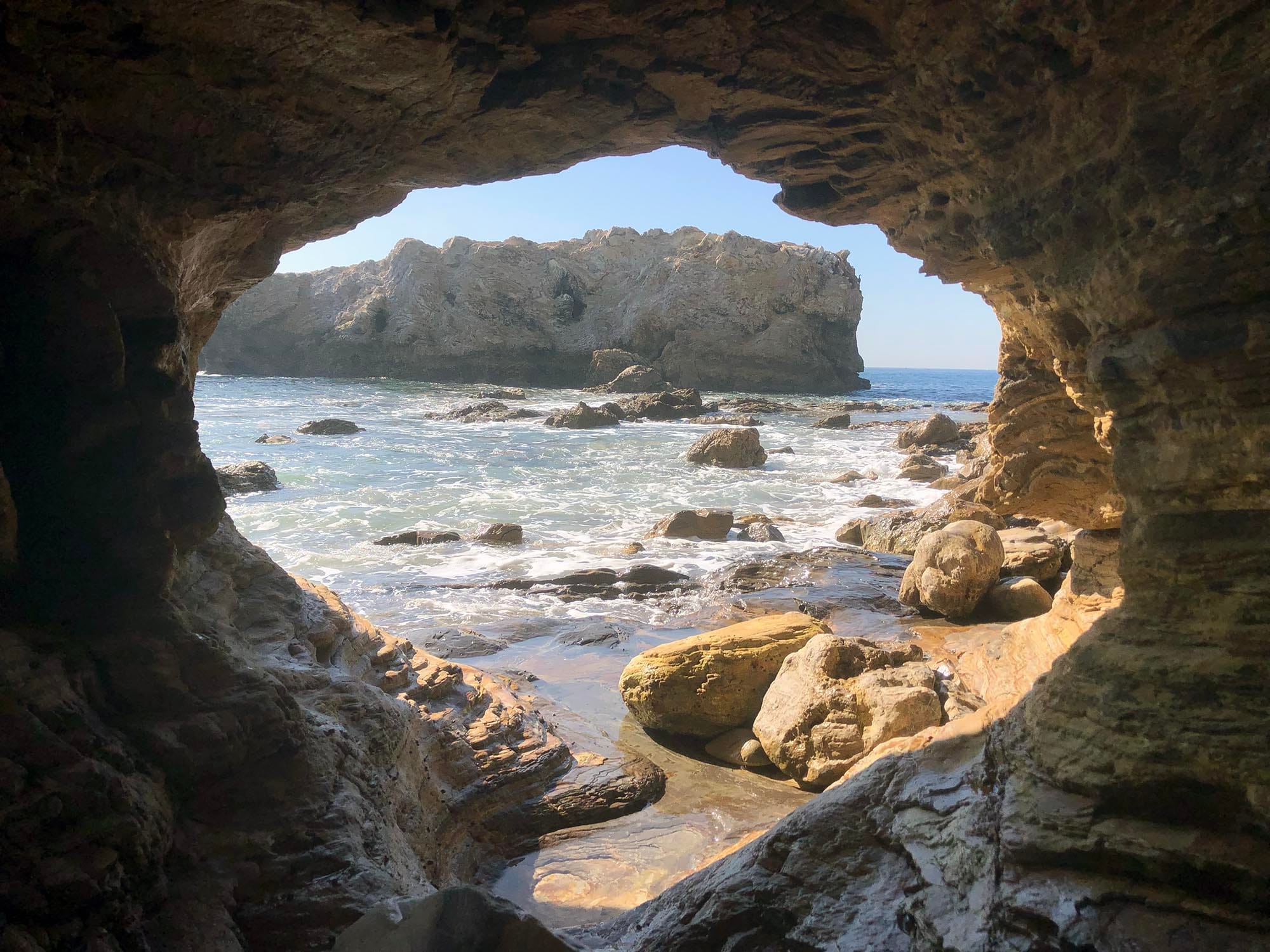
The Rock That Powered California: The Monterey Formation
From microscopic plankton to billions of barrels of oil, few rock formations have shaped California's history more profoundly than the Monterey formation.
We Californians are lucky. The reasons are almost endless. You can start with the mountains, deserts, forests, and coastline, but California’s good fortune goes beyond scenery. The state is also rich in the natural resources that helped shape its history, that built the fourth largest economy in the world. There was gold, of course. There were vast forests that supplied timber for booming cities and expanding railroads. There was/is fertile farmland (remember this piece on the Central Valley?) and relatively abundant water. The list goes on.
But one of the resources that transformed California more than almost any other was oil. For much of the twentieth century, California was one of the world’s great oil-producing regions. And a big part of that story traces back to an unusual geologic formation that lies beneath large stretches of the California coast. Known as the Monterey Formation, this ancient layer of rock proved exceptionally good at generating, trapping, and storing petroleum over millions of years, creating the deposits that would help fuel the state’s growth and prosperity.
Scientists at NASA Jet Propulsion Laboratory have described it as “California’s primary petroleum source rock.”
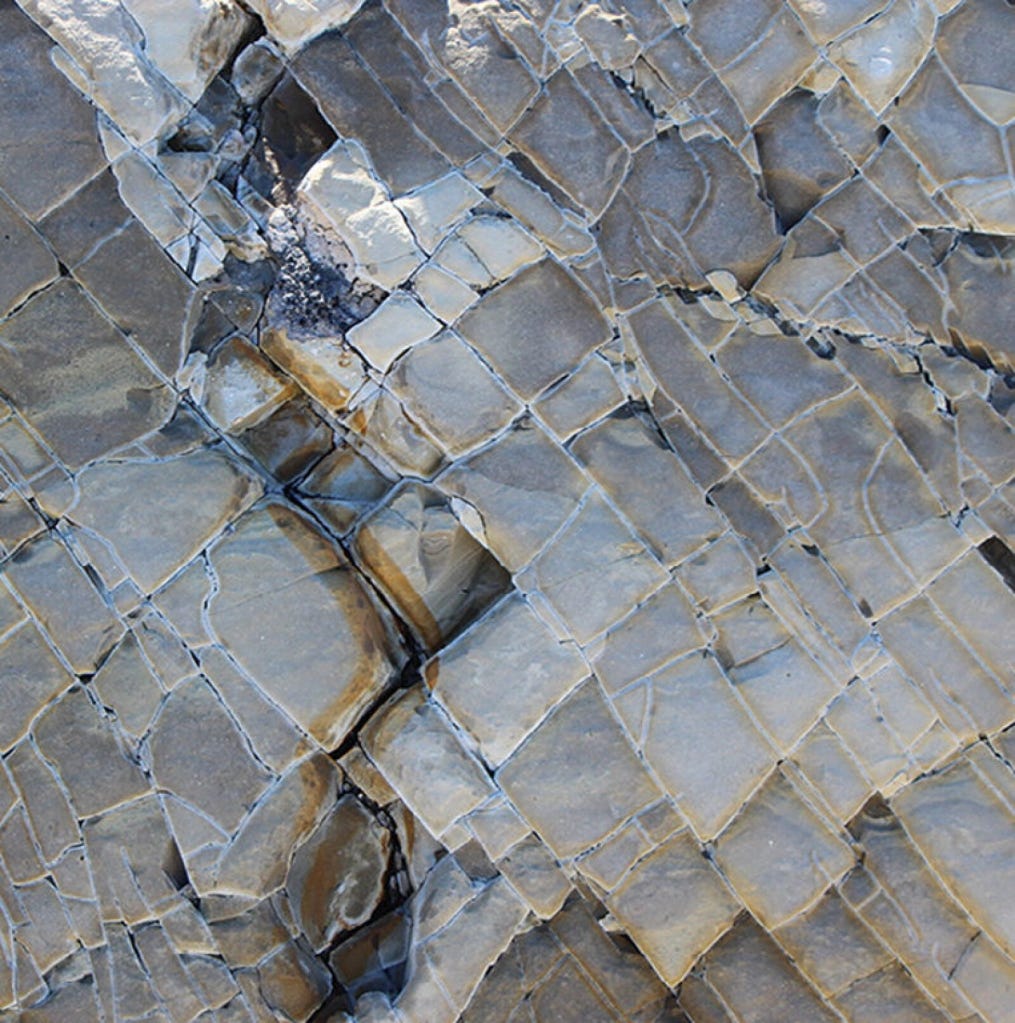 Fracture network of joints and cross-joints exposed on bedding surface of siliceous shale. Note linked, larger-aperture fracture in center with oxidation rim. Montaña de Oro State Park. (NASA JPL)
At the heart of the Monterey Formation’s geology is the unique composition of many different types of rock that come together in such a way that they create an ideal environment for trapping oil. The vast formation creates a complex network of porous and permeable spaces, allowing oil to migrate into these reservoirs. Over time, these rocks act like natural sponges, effectively capturing and holding large quantities of oil within their formations, making the Monterey Formation one of California’s most significant petroleum sources. It is estimated that over 38 billion barrels of oil have been produced to date from fields whose source rock is the Monterey.
So what is the formation made of? Well, there is diatomite, a light, porous rock formed from the fossilized remains of diatoms, microscopic algae with silica-rich shells that thrived in the nutrient-rich waters off California’s coast millions of years ago. Another hallmark of the Monterey Formation is chert, a hard, silica-rich rock that often formed as those diatom-rich sediments were altered over time. Along with these rocks are organic-rich shales containing large amounts of kerogen, the waxy organic material derived from ancient marine life. All of this was buried and heated over millions of years, transforming the kerogen into the oil and natural gas that built the state’s economy. (Again, see my story on the history of the Long Beach oil industry).
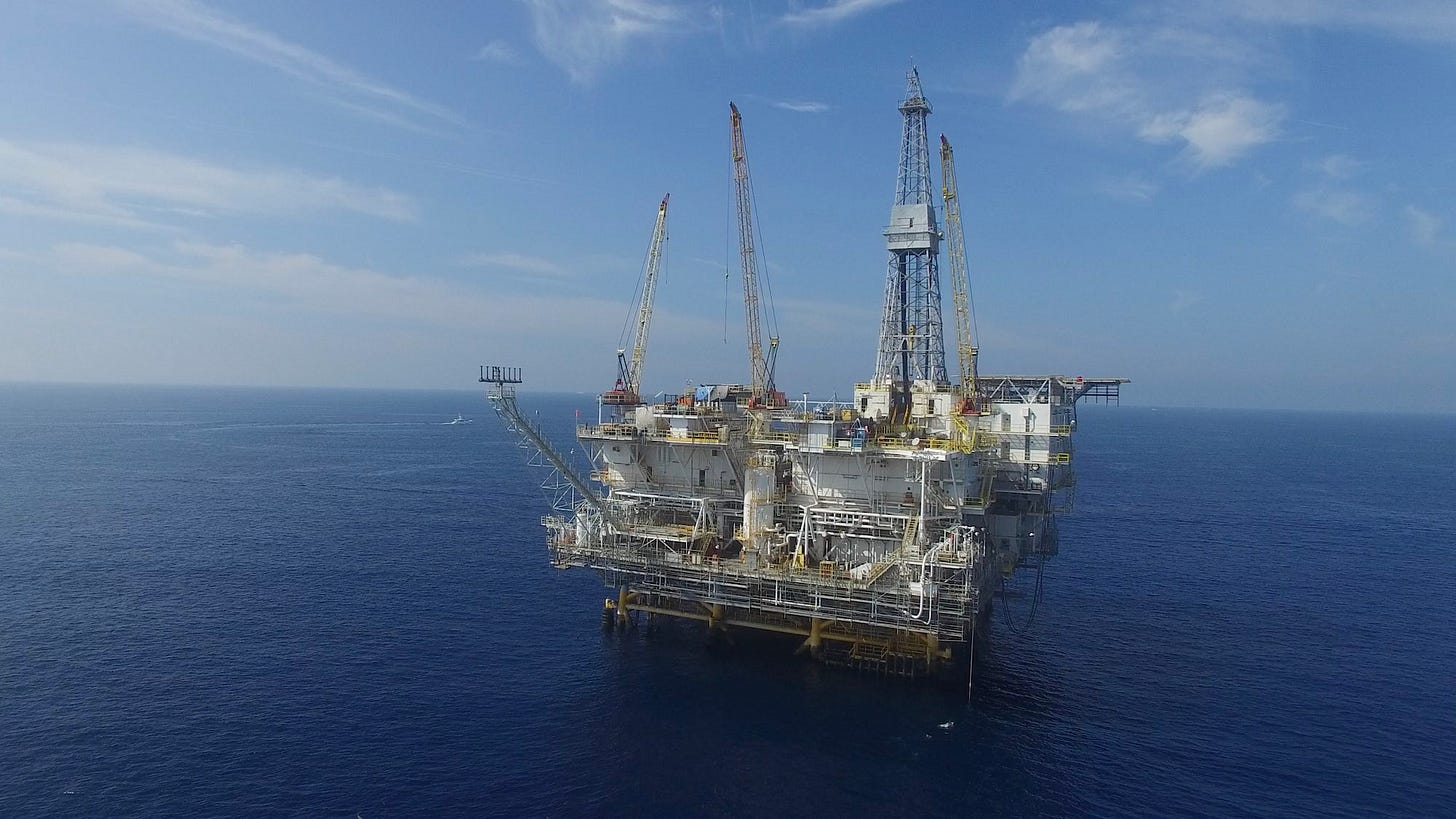 Offshore oil platforms along California’s coast drill into the Monterey Formation, either tapping directly into its fractured shale or extracting oil that has migrated into more porous sandstone reservoirs. (Photo: Erik Olsen)
Much of the pioneering research on the geology, formation, and unique composition of the Monterey Formation was conducted by the late Robert Garrison, a distinguished professor of oceanography at the University of California, Santa Cruz. Garrison was considered the foremost expert on the Monterey Foundation, and his work was instrumental in revealing how the Monterey Formation’s deposits were shaped by a combination of oceanographic upwelling, climatic shifts, and tectonic activity during the Miocene epoch.
The Monterey Formation is one of the most intensely studied petroleum formations in the world, helping geologists better understand how oil is generated, how it migrates through rock, and accumulates underground. But the Monterey Formation isn’t just important beneath the surface. Its rocks are also among the most distinctive along the California coast. Walk along the beach near Crystal Cove in Orange County, for example, and examples of Monterey Formation rocks are everywhere. You can see the layering and porosity of these rocks all along the coast, and one result is the extensive network of tide pools that teem with marine life. As a kid growing up in Orange County, I spent countless hours exploring tide pools up and down the shoreline. Looking back, those experiences helped spark my fascination with the ocean and the remarkable creatures that live there.
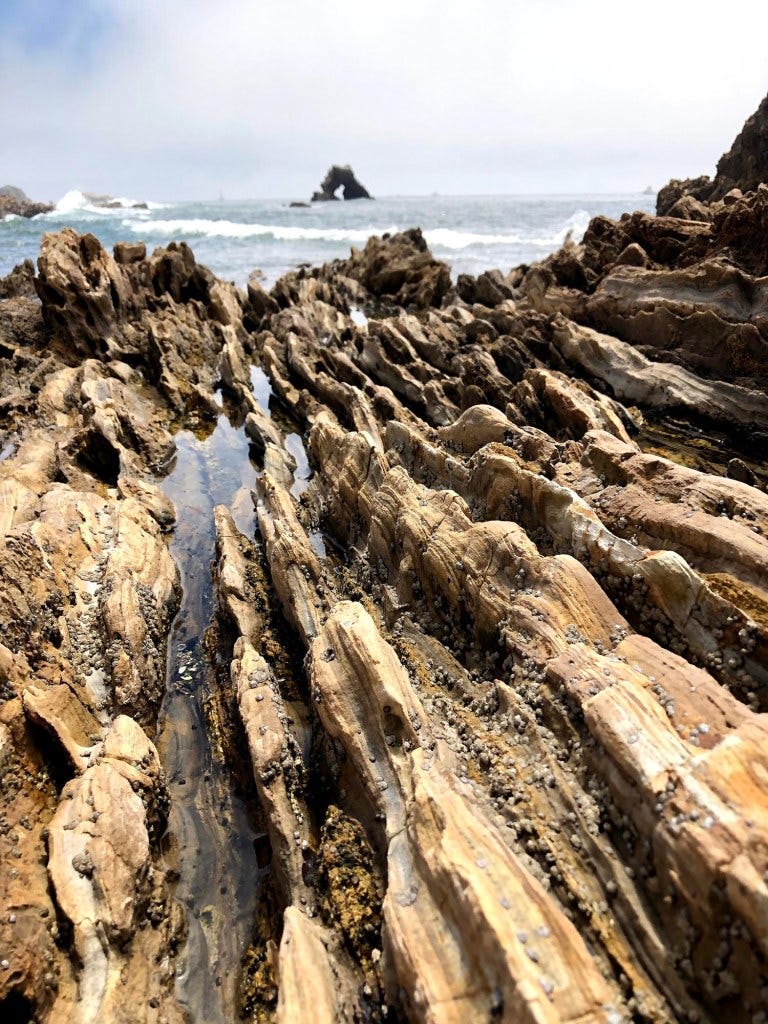 Monterey Formation rocks near Little Corona in Newport Beach with tide pools teeming with sea life. (Photo: Erik Olsen)
Beyond its geological and economic significance, the Monterey Formation preserves an extraordinary record of ancient life. Its layers hold a variety of marine fossils, including diatoms, radiolarians, foraminifera, and coccolithophores. These microfossils offer a detailed look at past ocean conditions, helping scientists reconstruct the climatic and oceanographic history of the state. Additionally, the formation contains fossils of larger marine vertebrates, such as whales, seals, and fish, providing further insight into the ecosystems of ancient oceans.
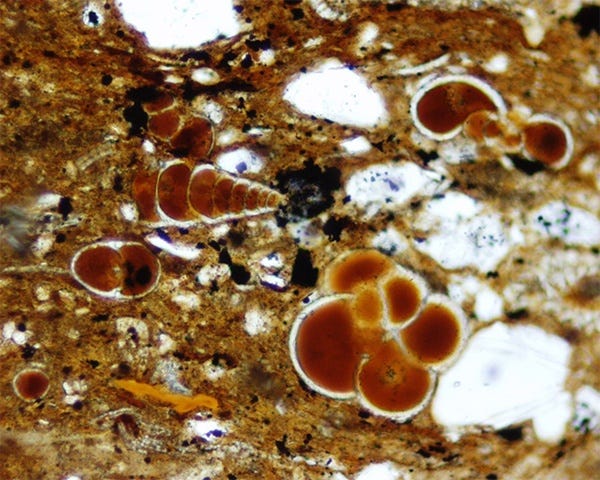 Microscope image of microfossils and organic matter in Monterey rocks. (Cal State Long Beach)
The rock also has its drawbacks, particularly because it is prone to landslides. This makes some coastal areas of California, where the Monterey Formation is exposed, unsuitable for construction and development. Many recent news stories have documented the increasing rate at which the California coast is tumbling into the sea. An excellent recent book on the subject is Rosanna Xia’s California Against the Sea: Visions for Our Vanishing Coastline.
This unique formation is not just rock, it’s a detailed book that preserves millions of years of Earth’s history, from ancient marine ecosystems to dramatic shifts in climate as well as tectonic activity. We’re fortunate that this remarkable formation exists. It helped create the oil resources that fueled much of California’s growth, and it contributes to some of the most striking landscapes along our coast. Like so many of the state’s natural gifts, we have benefited enormously from it. Having extracted that value, the challenge now is to understand it, protect it, and ensure that future generations can experience it as well.