The Long Life and Accidental Death of Prometheus, One of the World’s Oldest Trees
Prometheus, a Great Basin bristlecone pine, was nearly 5,000 years old when a young scientist cut it down in 1964 to count its rings. The story of the tree, the mistake and the ancient bristlecones that still survive.
Updated
Up in California’s White Mountains, above 10,000 feet, bristlecone pines have been hanging on for thousands of years through drought, deep cold and brutal wind. They’re twisted, half-dead-looking and some of the oldest living things on Earth. One of the oldest of all, a bristlecone called Prometheus, grew just across the state line in Nevada, in what’s now Great Basin National Park. It survived nearly 5,000 years of everything nature could throw at it, and then a person cut it down. Not out of malice, like the vandals who felled the U2 Joshua Tree. It was a mistake, made in the name of science.
 The Prometheus stump. All that is left of one of the oldest organisms on Earth.
Prometheus, named after the Titan who stole fire from the gods, was a Great Basin bristlecone pine, Pinus longaeva. It sprouted around the start of the Bronze Age, before the Great Pyramids of Giza were built. By the 1960s, it was nearly 4,900 years old. Nobody knew that yet.
In 1964, a young geographer named Donald Rusk Currey was studying the climate of the Little Ice Age. Bristlecones were perfect for that, because their rings are a record of past climate, the core idea of dendrochronology. Details of the story vary, but Currey had been taking core samples from trees in the area and ran into trouble with Prometheus. By most accounts, his coring tool broke or got stuck. Not realizing how old the tree was, he asked the Forest Service for permission to cut it down so he could count the rings. The Forest Service, which also didn’t know what it had, said yes.
And so he cut it down.
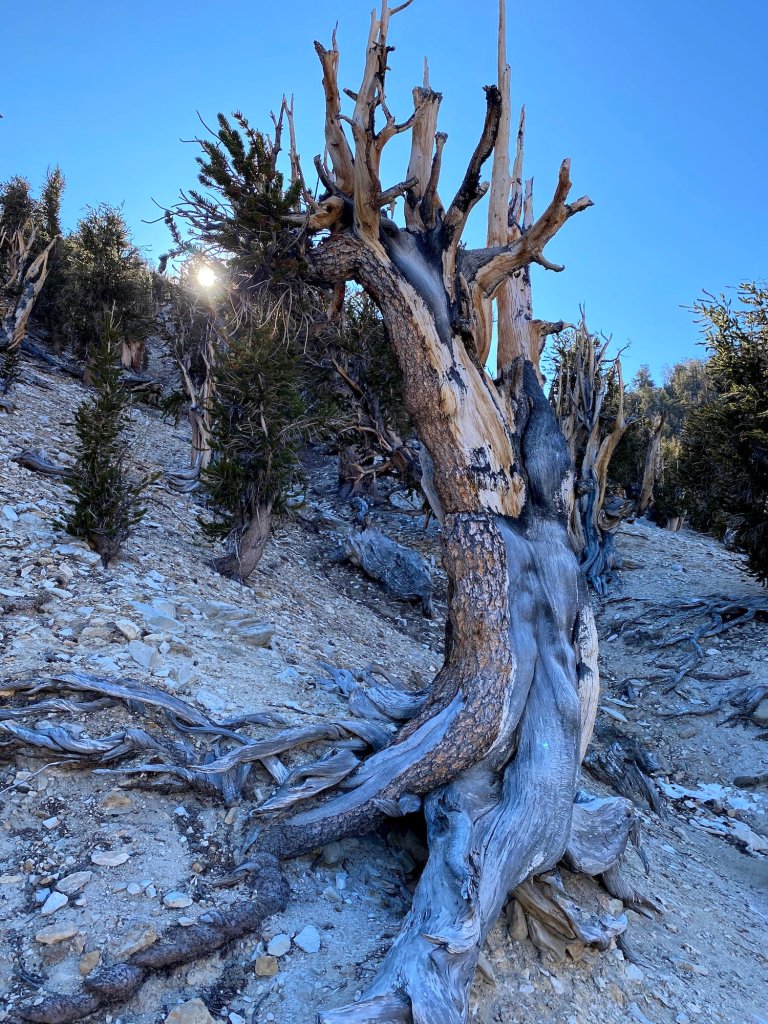 Bristlecone forest in the White Mountains of California (Erik Olsen)
Then he counted the rings. Prometheus was at least 4,844 years old, the oldest tree anyone had ever found. Later, Donald Graybill of the University of Arizona’s Laboratory of Tree-Ring Research recounted and bumped it to 4,862.
When the news got out, people were furious. One writer said Currey had “casually killed (yes, murdered!)” the world’s oldest tree. Currey had to live with that for the rest of his career.
Whether Prometheus was the oldest living thing depends on how you count. Some plants clone themselves and can be far older if you count the whole genetic individual instead of a single trunk. The creosote bush ring known as King Clone, located in the Mojave Desert in California, is estimated at about 11,700 years old. The giant aspen colony known as Pando in Utah covers more than 100 acres and may be well over 14,000 years old. But those keep replacing their stems. Prometheus was one tree, one trunk, alive the whole time.
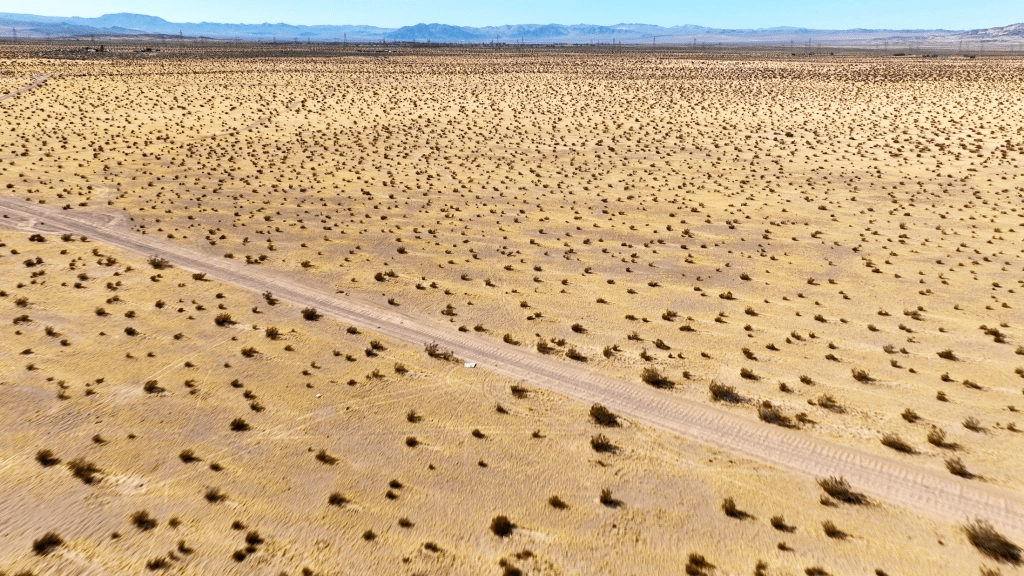 Creosote growing in the Mojave Desert (Photo: Erik Olsen)
If there was any good in it, it’s that Prometheus made the world pay attention to bristlecones, and protections got much stronger. California’s oldest trees are now protected in the Inyo National Forest’s Ancient Bristlecone Pine Forest, which you can drive up and walk through.
California has the oldest, tallest and biggest trees on the planet: bristlecones, the coast redwoods and giant sequoias. Not bad for one state.

CALIFORNIA CURATED ART ON ETSY **Check out our Etsy store. **
And plenty of ancient bristlecones are still alive. The most famous, Methuselah, is more than 4,800 years old and often called the oldest known living tree. It’s somewhere in the White Mountains, but the Forest Service keeps the exact location secret so nobody can hurt it. It’s named after the biblical Methuselah, who supposedly lived 969 years, a youngster by bristlecone standards.
There may be even older ones out there that nobody has found yet.
 California’s White Mountains (Photo: Erik Olsen)
Cutting down Prometheus was a mistake that can’t be undone. But it changed how scientists and land managers treat very old living things, and that’s worth something.
You can still see pieces of Prometheus. Cross-sections are on display at the Great Basin National Park visitor center in Nevada and at the U.S. Forest Service’s Institute of Forest Genetics in Placerville, California. Look closely at the rings, so thin you can barely tell them apart, and remember that every one of them is a year that tree lived, almost 5,000 of them.
More California science, photography and wild places on Instagram @californiacuratedus